Steve Jobs in Exile with Geoffrey Cain

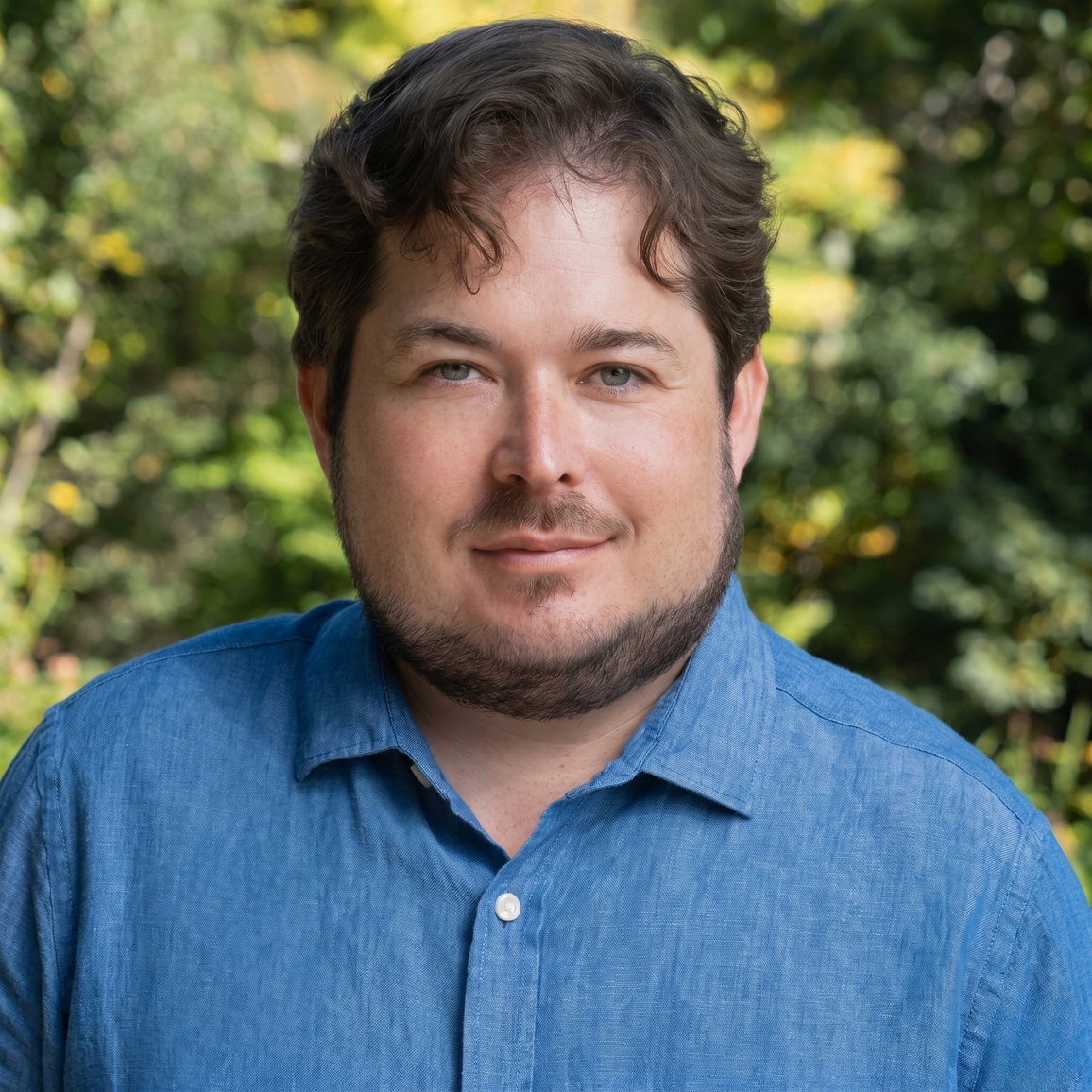
Fresh out of the studio, Geoffrey Cain, author of Steve Jobs in Exile and Samsung Rising, returns to the Analyse Podcast to argue that the twelve years between Jobs's 1985 ouster and his 1997 return to Apple were not a footnote but the forge. Drawing on private archives at Carnegie Mellon and Stanford, unbroadcast footage from inside NeXT, and interviews with the people who lived it, Cain reframes the wilderness decade as the cause, not the gap, in Jobs's transformation. We trace the NeXT collapse and the failed IBM licensing deal, the parallel crucible of Pixar where Catmull and Lasseter barred Jobs from creative meetings, and the deep Japanese and Zen influences — Akio Morita, Sony, the beginner's mind — that Isaacson and Schlender underplayed. We close on Apple at fifty, John Ternus's ascent, and what Jobs would have done with AI.
"The successes that we see in the world for every iPhone there is, for every SpaceX rocket there are perhaps dozens or maybe even hundreds of failures behind that we don't see. And so the wilderness, as they call it, this is the greatest moment in the lives of many founders. It's the wilderness that we all have to go through before we can achieve greatness, and if we don't go through that, then we don't learn those lessons." - Geoffrey Cain
Profile: Geoffrey Cain, Author of "Steve Jobs in Exile" and "Samsung Rising" (Personal Site, LinkedIn, X, Substack)
Here is the edited transcript of our conversation:
Bernard Leong: Welcome to Analyse Podcast, the premier podcast dedicated to dissecting the pulse of business, technology, and media globally. The life of Steve Jobs has fascinated many generations of founders, executives, and technologists because of the extraordinary impact he made through Apple and Pixar, but one chapter remains underexamined. In May 1985, Steve Jobs sat in an Apple board meeting, his voice trembling, as he learned the company he had co-founded no longer had a meaningful role for him. The twelve years that followed — NeXT, Pixar, and an unlikely return to Apple — are often treated as a footnote to the main Apple history. My guest today argues the total opposite: that Jobs's exile was not a detour, but the crucible that made him into the visionary he later became.
Today, we explore three threads. First, the failures that forced a brash wunderkind to learn delegation and leadership. Second, the unbroadcast footage and private documents that reopened this overlooked period. Third, the deep influence of Japanese management and design on Jobs's second act. With me today is a recurring guest, Geoffrey Cain, the author of Samsung Rising and now his new book, Steve Jobs in Exile, which arrives next week. I have a pre-ordered copy. Jeff, welcome back to the Analyse Podcast.
Geoffrey Cain: Great to be here again, Bernard.
Bernard Leong: Welcome back. The last time we spoke was around Samsung Rising, quite a while ago. Quick check before we dive into the new book: what have you been working on, and what pulled you from Korean chaebols back to Silicon Valley?
Geoffrey Cain: So much. It's been the last five years. The book came out in 2020, right during the pandemic. Here's the interesting part. I was writing about the Korean chaebols. I had been in Korea for a long time. I had studied the Korean language, wrote Samsung Rising, and the book was about the rise of a nation — South Korea — not just Samsung, and how the company was so involved in nation-building products.
One of the things we often forget is that South Korea used to be one of the poorest countries in the world, poorer than many Sub-Saharan African countries today. It's one of the greatest economic miracles the world has ever seen. I wanted to help tell that story from an outsider's perspective — to understand how did Samsung help make that happen?
There's another side of the legacy: the government and the corporation were very tightly knit together, and that led to a lot of scandals. The chairman had spent some time in prison. It is what it is. It's just how business has worked there for many decades.
But the pandemic happened, and across the world, especially in the United States and Europe, there were major shortages of everything industrial, anything that was manufactured. Immediately the lessons of that book became clear to me. I thought I was writing about a Korean chaebol, but what I was actually writing about is how do you create an industrial base? How do you create industry that supports national wellbeing, supports the economy, supports healthcare, ensures that supply chains are working? That's one of the biggest lessons coming away from the Korean miracle, and from the Japanese economic miracle too. There are other countries we can get into that are similar, but I was really focused on those two.
To answer your question: I returned to the United States. I'm from Chicago originally, and I spent some time working in government. I was at the US House of Representatives. I was an advisor on technology policy, working on many of the bills and legislation related to supply chains, sanctions, semiconductors. I was using what I had learned in Asia and trying to apply it to the American context — trying to show our leaders how to build a healthy economy, industry, supply chain. One of the big problems in recent American history is the de-industrialisation of the US, especially the Heartland. The pandemic made that clear. A lot of those shortages, economic chaos, and inflation came from this exact problem. I used Samsung Rising as a kind of template for how to rebuild some of that industry at home.
Bernard Leong: Very interestingly, just this week, Samsung just reached a one trillion market capitalisation, all due to semiconductors. I'm going to go straight into the main subject of the day, which is your new book, Steve Jobs in Exile. Let's start from the central claim. The standard telling treats 1985 to 1997 as a footnote, a wilderness walk before the real story resumes. You're inverting that — saying exile isn't a detour, it's the cause. Walk me through how you arrived at that thesis. What was the moment in the research when you knew the missing piece was the right frame, not just another biography?
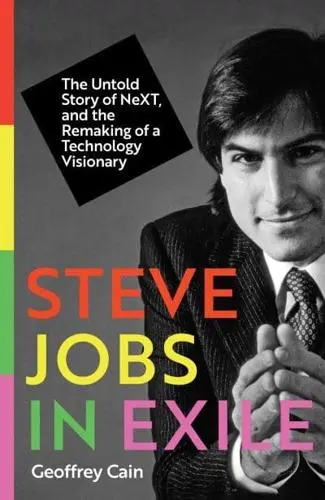
Geoffrey Cain: Going into it, I was a little taken aback by the sheer amount of material that's already been written about Steve Jobs. I knew it was going to be a challenging project from the start, but very quickly, as I dived into the materials, I realised this side of the Steve Jobs story is the one aspect of him that hasn't been told before. The sheer amount of materials proved me wrong myself. There's so much more out there that hasn't even been studied yet, that no one's gone through. I found archives everywhere — private archives in people's homes, the former colleagues of Steve Jobs, and also public archives at places like Carnegie Mellon University, a major computer science centre, and Stanford University, which has an Apple archive.
As I was going through all this material, I was blown away. I thought, "Wait a second. I thought the story of Steve Jobs has been told. I thought we all know this story." But I would go through these old letters he wrote, emails. I found a lot of old private videos people had recorded of him that have never been put on YouTube. They haven't been released anywhere. They all showed a side of Steve Jobs different from the person we know. The Steve we all think of is the man in the turtleneck who stands up on the brilliant stage, the Apple logo behind him, holding up the iPhone, announcing how he's going to change the world. That's the Steve Jobs we all love. We see him as the creator and visionary of so much modern technology, and he turned Apple into the major company it is today.
But this side of Steve Jobs is before all that. This is before he returned to Apple, when he hit rock bottom. He was starting a company called NeXT Computer. He had recently been pushed out of Apple in 1985. He co-founded Apple, had a power struggle with the CEO, John Sculley, ended up leaving and starting NeXT Computer. The goal was to create an advanced computer for university research departments and laboratories, and intelligence agencies too. This was a computer that wasn't selling. It was too advanced for the market. It was a great machine, but the market just didn't want it. Steve Jobs failed. These were his years of failure. Eight years after he founded the business, he was about two to three years away from personal bankruptcy.
The people who knew him best said he had about $100 to $150 million in the bank, which is a lot of money. But when you're Steve Jobs, he was investing his own money to keep this failing company moving. It was not a public company. He didn't have a lot of investment capital. With that amount of money in the bank, he was actually fearful that within two to three years he would be personally bankrupt. This was a moment of terror for him — financial terror. Many of his co-founders were leaving him. His top executives, people he had worked with for years, didn't want to be with him anymore. The media — Fortune magazine, for example — had called him a snake oil salesman. He was seen as a scammer. His products weren't working.
This is not what you think when you think of Steve Jobs. We all think he was brilliant, a genius. But what is the lesson here? Here's what I learned. The successes we see in the world — for every iPhone there is, for every SpaceX rocket — there are perhaps dozens or maybe even hundreds of failures behind that we don't see. The wilderness, as they call it, is the greatest moment in the lives of many founders. It's the wilderness we all have to go through before we can achieve greatness, and that wilderness is where we learn what it takes to really succeed. If we don't go through that, we don't learn those lessons. It's a moment we all have to understand and treasure and learn from.
Bernard Leong: One big criticism of Walter Isaacson's book, the most well-known biography of Steve Jobs, is that the entire wilderness period was treated very much like a footnote. It doesn't tell exactly what happened during the NeXT and Pixar era. Your book starts with the May 1985 board meeting — Jobs at the table, voice trembling, then exiled into an empty project team. It's a deeply vulnerable image of someone the world remembers as the wonder kid. Why start the book there, and what does the audience need to understand about this specific moment to follow the arc you're tracing in the book?
Geoffrey Cain: This is a good question about how to craft a biography. I did not want to set out and write a biography of Steve Jobs from start to finish. That story has been told so many times. The story of Apple has been told. I didn't have much to contribute. That's where I saw there wasn't much new material. The interviews have been finished, the archives have been gone through. There's nothing I can possibly add that would enlighten readers with something new, especially about Steve Jobs, who is so well known.
I decided, instead of starting with the start of Apple in 1977, to move the clock forward and start in 1985. Spring 1985 was when Steve Jobs was just out of the height of his fame. A year earlier, he had released the Macintosh computer, which was his biggest early success. It wasn't really a commercial success — it didn't actually sell that well — but it's what put him on the map as a visionary. The problem is that since it didn't sell that much, Apple was starting to enter a crisis. Inventories were piling up. They weren't selling enough computers. Costs were very high. They had to lay off many people for the first time in their history, and they closed some factories.
This was the source of enormous tension between Steve Jobs and John Sculley, Apple's CEO. We tend not to remember that. We tend to think Steve was the CEO of Apple, but that's actually not the case. He was the head of the Macintosh unit, so he was tasked with creating the Macintosh. Steve saw himself as the heart and soul of Apple. It was the company he co-founded, and he did not appreciate John Sculley criticising his work or trying to assert control. He believed the Macintosh was his. Steve was also extremely difficult to manage. We all know that about him. He would throw tantrums, yell at people, overstep his authority. A lot of people at Apple — something we also don't remember — didn't like working with him. They went to John Sculley and said, "You have to get Steve Jobs under control because he is just ruining our work."
I started here because this is the moment when Steve Jobs is just beginning his descent into the pit he's going to go into. This is the moment when his life starts to unravel. I had to start there because I had to raise the curtain and show how he got to this point. Once things started going south, Steve tried to orchestrate a coup d'état against John Sculley, tried to have him ousted as CEO. The plot backfired. Nobody was going to back him because he actually wasn't well-liked at that point. In the end, the board decided to exile Steve into a different unit. He was given a powerless unit, and he was sent off on his way. Steve decided to resign. He just couldn't handle it. He felt he had been betrayed by the board, by John Sculley, and he said, "I'm going to take five talented Apple employees and I'm going to go and found my new company, NeXT Computer." That's where the core of the book starts.
Bernard Leong: NeXT was founded on the idea of an interpersonal computer — research-grade workstation with consumer product elegance, aimed at higher education. I still remember the first NeXT units I saw in Singapore. From 40 years out, it looks like Jobs was solving a problem the market hadn't articulated yet. Was he early, or was he wrong about what universities actually needed? There was also the famous Silicon Graphics, SGI, during that period.
Geoffrey Cain: It was both, actually. There's no clear answer to that one. He was very early to the market. He wanted to use the most advanced technology available to consumers. What he was saying is that he wanted university students to be able to cure cancer in their dorm rooms with this computer. He wanted the most advanced artificial intelligence of the 1980s. This is Steve Jobs 40 years ago thinking about AI, and now it's a major technology. He wanted to have the most advanced optical drive that was available.
But the problem with using all these new technologies for the age was that the price kept going up, and his customers — which were universities — told him the computer had to be under $3,000. Universities are big bureaucratic institutions and their budgets are set. They're not businesses. They can't negotiate on price with Steve Jobs. In the end, the computer was so far ahead of its time that the price went up to around $10,000 with all the add-ons. The customers did not materialise, and the computer failed.
It really is a tragedy because the computer — it was called The Cube — was shaped like a beautiful cube, literally a cube, with this exotic magnesium alloy. Nothing like a computer that exists now or at the time. It really was a work of art. It was gorgeous, and it really was cutting edge, but a lot of the tech just didn't work well because it was so far ahead. It wasn't ready for the market. His optical drive that he loved — that was the thing of the future for him — kept breaking down on people. The computer itself became a disaster. It was innovative, it was smart, but it was just not working and it was too expensive. In the end, he had to close down the computer business at NeXT Computer.
But here's the catch. Steve has this thing called the reality distortion field. He can convince anybody, and himself, of anything. That was his master talent. Because of that, he was having trouble stepping outside of the reality distortion field. He had to look at things with clean eyes, look objectively. What was really the big innovation at NeXT Computer was the software he was developing. He just didn't quite see it at the time. He was one of the first people to introduce a revolution called object-oriented programming — the style of software development that exists today. If you open your iPhone and look at the icons and the operating system, the drag and drop and all that — if you've ever made an app, you're probably using object-oriented programming. That's the dominant thing today, and he was doing this 40 years ago, just starting it.
This was where his big innovation was, and this is what his customers told him. They said, "We want this from you because this software is so advanced, it's going to lead to massive innovations in finance, in healthcare, in AI, in government intelligence work." The computer was so advanced with satellite imagery, things you could only dream of in the 1980s. There he was, the first guy with this computer. But Steve was so in love with his computer, with the hardware, that he would not see the software. He wouldn't see what the customers actually wanted. It was his big mistake — clinging, trying to keep control over this beautiful computer, so deeply entrenched, that he just loved it and would not abandon it. This was his undoing in the end.
Bernard Leong: Part of the story is the Fremont factory, one of the more painful chapters — a highly automated, beautifully designed plant building a machine the target market couldn't afford. Looking back, what would the Jobs of 1986 have done differently with the wisdom of the Jobs of 1997, when Apple was almost going to collapse? Where does that line sit in your reading between visionary ambition and engineering overreach? I will get back to the OS later because I think that's the one big decision he made later that was very useful.
Geoffrey Cain: The Steve Jobs of 1997 who returned to Apple was not the same person as the Steve Jobs of 1985 who was pushed out of Apple. For readers who aren't familiar with the story, Apple acquired his company, NeXT Computer, for the software — for the operating system actually — and brought him back. He ended up becoming the CEO in the year 2000, and he saved Apple from bankruptcy and released the iPod, the iPhone, the iMac. The rest is history. We all know what happens after that. Apple is in our lives every day now.
How did Steve do that? The Steve who returned to Apple and saved it was a much more pragmatic and even modest Steve. We don't associate Steve Jobs with modesty and pragmatism, but he had learned to build a team, to trust his people. He saw that he had the best talent in the industry, so he learned to manage them and to work with their talents instead of trying to command and control them. He learned to listen to what customers wanted. He realised that building a great machine wasn't just about his vision and his brilliance and showing the world how great he was. It wasn't about changing history either. He even admitted at one point that he realised technology does not change the world. It just makes certain things easier.
Once he had that change of perspective, he was able to go from being this brilliant boy genius who was just a brat and hard to work with, to a tempered leader who knew how to build and lead a company. There's a vast difference between those two. We see Steve Jobs, the brilliant visionary of the younger years, become Steve Jobs the wise, older business executive of his later years. This is what allowed things like the iPhone to happen. The iPhone is such a great example because Steve is not just making a beautiful device — he's making something practical, pragmatically useful for regular people. He's not telling you, "Here's a $5,000 phone with every beautiful technology I can cram in." He's saying, "Here's a simple smartphone I'm going to sell you, and the price is reasonable. You pick it up, you open it, you use it, and that's it. It works."
If Steve had tried to do this stuff at NeXT Computer, he would have failed because his ideas were just too different. He hadn't developed enough yet. At NeXT Computer, he kept trying to show people, "I'm smart. This is what I made. I'm very smart. Buy my computer." But it's not about Steve. It's about what the world needs from Steve, and that's where the lesson was for him.
Bernard Leong: Silicon Valley has a pretty much settled version of Steve Jobs's story — the genius was always there, NeXT was the detour, Pixar was the lucky bet. From your sources, the meeting footage, the private documents, all the NeXT veterans you spoke to, what's the most counter-intuitive lesson you came away with about that missing wilderness decade? Something that runs against what even Apple insiders still believe. Was there a specific scene or interview where the lesson crystallised for you?
Geoffrey Cain: Yes. The lesson where it crystallised — there are some scenes, but I think the most powerful one that crystallises the lessons would be when the NeXT Computer hardware division collapses. This is the most dramatic moment in the book. This is the moment when Steve is at the lowest point of his entire career, when he might be written out of history.
What I found so interesting about researching the book is that there are so many decision points Steve and his executives ran into. It was fascinating to write because I could see that if he had made any decision slightly differently, or if things had played out just a little differently than how they did, all of technology today would be different. The whole universe of technology would not exist. There would probably be no iPhone. Apple would have gone out of business. There would be no Apple. We would be using IBM smartphones now, loaded with NeXTstep, the operating system made by Steve Jobs, because he had a big deal with IBM that he was pursuing and then he blew it up.
It made me realise the importance of the decisions we make in life and in careers. Every decision adds up and opens the door to many other possibilities. Even the smallest decisions you make can wildly change your life — like the butterfly flapping its wings, it can ripple out and change life and change the world in ways we can't imagine down the road. That's the takeaway. When I look at the iPhone now, when I look at Apple products now, I see them differently because I think, "Wait a second, what if Steve Jobs had not returned to Apple? What would this thing look like? This would not even exist." That's just how profound the ability to use your decisions really is.
Bernard Leong: After thinking through the things you talk about in the book, it also reminds me of the first decision he made when he went back to Apple — to do the deal with Microsoft that saved the company. I want to go back to the 1989 IBM licensing deal for NeXTstep, which is one of the closest things to a hinge moment in the book. He tried to hold out for more money, and then Ken Aquino, the executive from IBM, stopped returning calls, and the whole enterprise platform play collapsed. Looking back, was that a failure of negotiation, a failure of self-awareness, or maybe just a structural mismatch between NeXT and IBM's timeline? There also seem to be some lessons he took from that specific moment into when he went back to Apple to negotiate with Bill Gates. It feels like there are mirror things he tried not to do again.
Geoffrey Cain: A lot of corrections, self-corrections that he made. Ultimately it was a failure of ego. Ego was the base of it, and the failure of his ego is what rippled out into these other aspects. It became the mismatch of the IBM and the NeXT culture. It became the fighting that happened. Ultimately it came down to the fact that Steve Jobs was trying to protect his massive ego, and he could not envision himself doing business with IBM, the company he hated.
There's a famous photo of Steve, the rebel at Apple, giving the middle finger to the IBM logo. He had this opportunity open — IBM was going to license his operating system NeXTstep on its machines, which is massive. We don't always remember IBM today; it's an older company now. But back then it was the biggest computer maker in the world. This is so counter-intuitive to Steve because he wants total control over the hardware and software ecosystem. For him to take his software and put it on somebody else's machine, especially a big bureaucratic corporation like IBM, is not what he's willing to do. But that was the best option available to him, and he didn't quite realise it at the time. He thought he would find other ways. He thought he was a smart visionary, so he could figure this out.
There is really a big lesson here in not understanding the limits of total control. This is what he ran into. He didn't realise at the time that having total control over your system requires enormous scale — enormous scale and resources, money, capital, teams. It takes years and years to build that level of scale, what Apple got later with its devices. By going head-to-head with IBM and trying to fight with IBM, he was playing a game of chicken, and he lost in the end because IBM is a major company and they have lots of options. Hate to break it to you, Steve Jobs, but in the year 1988, you were not as cool as you used to be, and IBM is going to drop you like a hat and go to somebody else if you're being too difficult. That's what happened.
There's a lesson for a lot of founders out there — you do have to make concessions in a negotiation. You cannot overplay your hand. You have to realise your self-awareness, where you stand in the world. If there's a bigger player than you, you cannot go head-to-head with a bigger player and expect to win. It's just the reality.
Bernard Leong: A good useful frame for even thinking about platform history is to look through the lens of your book. Companies that survive often do so by abandoning the product category they were founded on. Think about Netflix exiting DVDs. Slack dropping Glitch. AWS turning Amazon's infrastructure into a business that became AWS. NeXT did exactly the same thing — gave up on hardware and became a software company, with the OS eventually returning to Apple as macOS. Does that frame hold for NeXT, or does it understate something specific about what Steve Jobs did? To confess, I have never used a Windows machine since 1995. I was living on Linux for many years until I saw macOS, and I wasn't convinced until somebody opened up the Unix terminal. That was a shock for me. What's your thinking on that?
Geoffrey Cain: The software story — NeXTstep, his brilliant operating system. Steve was so focused on the hardware side of the business. He really wanted to have that total control, and he did not want to unbundle his software from the machine and give it to other people. In the end, that's what people wanted from him, so he had to make that concession, and that was the only way he would survive.
The operating system was the future. If you were standing in the year 1990 looking at NeXTstep, you might not realise it, but that was literally what was going to become the Apple OS later. He ported it over to Apple. If you were sitting there with a NeXT computer in 1990, you were looking 20 years in the future. You just didn't realise it. This shows the sheer vision of Steve Jobs, how far ahead of his time he was. We have to give him credit for this because he was just such a visionary. He could reach into the future and see exactly where tech was headed. That's a talent of his.
Since he was so focused on the hardware, he kept making this one mistake — the thing you're working on right now might not be the thing that actually matters. Sometimes there's a lot of gold in any project, and it's not just technology. It could be anything in life. You're doing something, but the thing that actually matters, the thing that's really going to be valuable, might be the thing you're not focused on, and you just don't realise it.
Steve would often talk about the concept, very inspired by Japanese philosophy: the beginner's mind. He studied Japanese Zen. The concept is that if you're really deep into your thoughts, deep into your project, you need to step back, clear the mind, and look at everything as a beginner would. The beginner's mind has the most possibilities. That's the famous phrase of the Zen Buddhist monk who said it. The master's mind has few possibilities. It is good to be a master — I'm not saying ignore mastery — but the master's mind has few possibilities. Steve was approaching from that perspective. He was a master of his technology craft, but that confined him in so many ways because he didn't realise the window to start a hardware company had closed. There was no more room. Apple, IBM, Compaq, Dell, and so forth were already dominating the computer market by then, and there just wasn't room for another NeXT — another platform separate from them. Either you had a Mac or you had a Windows PC. That was what was happening.
If Steve had earlier on realised this, if he had stepped back and taken that beginner's mind perspective, everything would be different, and he would have been successful at a much younger age. It was that software he was refusing to port to other computers that people really wanted, because it was such a powerful leap ahead in the software development technology of the day. Especially if you were a big corporation, the revolution of the day was that corporations were developing their own custom apps for the first time. Today a custom app is nothing. But back then, if you were Disney or Temasek in Singapore, you needed a computer system across many departments, many executives, many thousands of employees, that functioned well and had apps specific to your company for productivity. Steve refused to see that, but those became his customers in the end — the companies.
Bernard Leong: I want to take a different track during these wilderness years. I'm talking about Pixar. Pixar runs in parallel through the entire exile years. If you read Becoming Steve Jobs by Schlender and Tetzeli, their argument is essentially that Pixar is where he learned a different leadership style — hands-off, deferential to creative talent. You also have Ed Catmull in his book Creativity, Inc., and doing the afterword as well. How do you reconcile the two crucibles? Is NeXT teaching him one thing and Pixar teaching him a different thing, or is it the same lesson coming from two different directions?
Geoffrey Cain: It's the same lesson from two directions, but it's the same lesson because the outcome was different, ironically. Pixar was the place where — the deal going in — Steve bought Pixar from George Lucas. George Lucas had originally created Pixar as part of his film work back in the 1980s, but he had an expensive divorce, so he had to sell Pixar at a fire sale. Steve got it for $5 million, which is nothing for Pixar.
There were two co-founders of Pixar there who resisted him: Ed Catmull and John Lasseter, the two main people who stayed behind. They told Steve, "You are not allowed in creative meetings. That is the condition of you taking over Pixar." They knew Steve was extremely difficult to work with, and from his past work they knew he would go in and interfere and tear things up and tell people they were stupid. If he had been let into those creative meetings, he would have destroyed Pixar. That's how bad it was.
The irony is that because he stepped away from Pixar creative work — he was not doing the storytelling, he was not involved in the films — he became the deal maker. He became the business executive. He would go represent Pixar in front of negotiations with Disney, which later acquired Pixar. That was where his strength was. Steve Jobs wasn't — we tend to think he was just good at everything, brilliant, so he was just good at what he did. But his actual talent was theatrics. He was great at standing up in front of a crowd, going into the negotiation, just so good at commanding the room and convincing people to buy this or sign this deal.
Once he stepped into that role at Pixar, Pixar did great. John Lasseter and Ed Catmull went on to create Toy Story. Ed Catmull was the technologist behind the advances at Pixar. John Lasseter was the storytelling genius. We don't remember this, but Steve Jobs was not that wealthy in the 1990s. It was actually the release of Toy Story and then the IPO right after of Pixar that made him a billionaire. If it were not for Pixar, all this would have not happened, and he would have been forgotten from history.
Pixar is what gave him the money he needed to get leverage. Once he had that leverage, he realised this, and Steve would talk about this. Money — you don't live for money, but money is a tool. It's something you can use in negotiations. You can use it as a lever if you need to get something done. Steve didn't care about money in the sense of wanting to get a yacht and live in a mansion. That wasn't his thing. Once he got that leverage, then it was much smoother sailing going out, because he wanted to stay at Pixar. He had the option to go back to Apple. He didn't have to. He wasn't desperate. Ultimately, it allowed him to reassert control, and he was not backed into a corner anymore like he was at NeXT Computer.
Bernard Leong: The interesting thread is also the role of the people around Jobs. You have Avie Tevanian on the OS side, Bud Tribble on the engineering side, and Dan'l Lewin on the go-to-market and economic side at Pixar. These are the people who taught him how to delegate. Was Jobs also deliberately surrounding himself with people who would push back, or did he learn it the hard way through people who stayed and people who left during this wilderness period?
Geoffrey Cain: He did learn the hard way, because all of his co-founders at NeXT left him. They were all in it together. There were five of them who fled Apple. They had this mutiny at Apple against the CEO, John Sculley. They left, and they were sued by Apple. Two of them — Steve Jobs and his hardware engineer Rich Page — were personally sued by Apple. Apple did not sue the company, which is really unusual. They were trying to bully Steve and Rich Page into not making this new computer.
At NeXT Computer, that created a feeling of being in the trenches together. They were fighting. They were soldiers out in the field. It was a very tight-knit group. But Steve became so unmanageable and difficult that in the end they left him. It was a very hard pill to swallow for Steve because his closest people did not want to work with him anymore.
Yes, Steve learned the hard way. The thing he kept learning over these years was that to succeed, he needed to hire people who had a force of personality — people who would not cower down to him. He wanted people who would stand up to him and push back against him. He believed that's how you arrived at the best idea. A lot of people got this part wrong about Steve Jobs. They would go into NeXT Computer or Apple back in the day and assume Steve is the boss, therefore I should just do what Steve says. If he says do it this way, they do it this way. But no — when Steve was commanding the room, he wanted people to fight him. If Steve said, "This idea is a bad idea," he didn't want you to agree. He wanted you to tell him why it was a good idea. The force of personality, the tug of war, the conflict — that is actually what Steve valued. People thought it was him being a narcissist or an egomaniac and being difficult, but the truth is he was trying to get you to fight back against him, and if you fought back against him, that's how you got into his good graces.
Bernard Leong: What is one thing you know about the NeXT and Pixar years from the documents, the footage, and the people who lived it that very few people do — something that fundamentally changes how people should understand what was happening about Steve Jobs inside these companies?
Geoffrey Cain: The fundamental thing to understand is that Steve was really in the wilderness. He was going through a transformation, a very difficult transformation, but one that was necessary. The key takeaway here is that any great success you look at in the world — whether it is the iPhone, or a president — there are many examples in history. I've studied a lot of biographies as I was writing this book. In the American context, there is Abraham Lincoln and Theodore Roosevelt, two great presidents who went through the wilderness themselves, and they later said that their failures were actually what turned them into leaders.
In the case of Europe, there's Winston Churchill, who was in the wilderness and failed. I'm not an expert in Singaporean history, but I would venture to guess that Lee Kuan Yew might have gone through this at some point. I'm sure he was not the winner from the outset, right? He was somebody who had to earn his position. I could see this in a lot of places. Sony — Akio Morita, one of my favourite founders. I love Sony, I love the story of Akio Morita, how he came out of the devastation of World War II. Tokyo was literally burned down, and he managed to build Sony from that. Not anybody can walk into the wreckage of war and create one of the most successful companies ever in history.
These are the kinds of stories — it's not just Steve Jobs. It just happens to be that I was writing about Steve Jobs. But it's a universal story that appears across time, across places. It appears in literature, in ancient mythology. It appears in film — in Star Wars, for example. There's always a middle section where the hero is cast out and must fight his demons and then return older and wiser. That's what Steve Jobs went through. It's a beautiful story. It's a hard story, but it's beautiful in the profound nature of it.
Bernard Leong: Take all three books and put them on a table. I haven't read your book yet, but I will, because it's already on my pre-order list. Walter Isaacson's book on Steve Jobs is really consistent across time — same intensity, same age, same flaws. Schlender and Tetzeli's Becoming Steve Jobs is about evolving from Steve 1.0 to 2.0, but the mechanism is soft — Pixar mellowed him, time also helped shape him before he returned to Apple. The story, from reading some of the interviews you've given and understanding the perspective of our conversation so far, is that your interpretation of Steve Jobs in the wilderness is actually his forge. Failure as a specific causal mechanism that produces him as a different person before he goes back to Apple and creates all those legendary products we talk about today. Isaacson, Schlender and Tetzeli, take the story in their own perspectives. What in your evidence base lets you make a much more interesting claim in this place compared to the other authors who interpreted the Steve Jobs story very differently?
Geoffrey Cain: I'm honoured to hear you say that. There are lots of books about Steve Jobs, and I've read all of them. They're all great. They all have their own aspect of Steve Jobs they look at. Every writer has their own style, and we're all different. We have our own personalities that go into the page, the way we write.
In my particular case, especially now that I'm getting older — when I was younger I was different — I try to stay out of the page. I don't want to be seen. When readers are going through it, I don't want them to be reading my book and thinking, "Oh, this is a book written by Jeff Cain." I want them to be thinking, "Oh, this is a book about Steve Jobs." When I write, I try to allow the page to breathe. In the same way that if you open a nice wine, you have to let it decant. You have to let it sit out, 30 minutes to two hours. By the way, I am a sommelier, so I use a lot of wine comparisons. You have to let it sit. You have to let the tannins aerate, it has to kind of ripen. It opens up the flavour. Same for a lot of food — you have to allow it to open. Artwork — the best artists step back from their painting in the middle of it and take it all in before going into every detail.
When I was writing this book, I removed myself and only allowed the evidence, the quotes, and the documents to speak for themselves. I did not tell readers at all what to think because I thought the stories should be obvious. Read this story about Steve Jobs and make up your own mind. If I have succeeded at my task, you will have made up your own mind about Steve Jobs. These are the hardest years of his life, and it's hard to read because he's really suffering. He's really having a hard time. But being able to see the reasons, the purpose of the hard times, to see what comes out of them at the other end of the tunnel — that's really the important part here.
Bernard Leong: Tim Cook has also criticised Isaacson's book as a disservice to Steve. Does your account vindicate that criticism or complicate it when you examine his life from a different perspective?
Geoffrey Cain: Humans are complicated creatures, and we all have different sides to ourselves. To the point of other books about Steve Jobs — NeXT Computer has always long been seen as a failure. If you're looking at the list of priorities and you're writing a book, you only have X number of pages, and you have to tell the whole story in those numbers of pages. The priorities are going to be Apple and Pixar for Steve Jobs, and the story of his family, his daughter. There are lots of things to write about with Steve Jobs. It's understandable that a lot of books out there have tended not to look at NeXT as closely because it's kind of the ugly duckling of the Steve Jobs story. But what I found — that's a blessing — is that the story of Steve Jobs was not complete. There was still something more to tell, and once I went into those archives and started doing my interviews, it became so obvious that this was a story that needed to be told.
Bernard Leong: You have unprecedented access to the unbroadcast footage of the NeXT meetings — a kind of artifact that doesn't really exist for business biographies. Walk us through a specific scene from that footage that you couldn't have reconstructed from any other source. What does Jobs in an unguarded internal meeting actually look like? After watching it, how did it change your perspective for when you tell the story from your lens?
Geoffrey Cain: When I watched those videos — Steve is theatrical. He's still got that theatre, and he's still able to give a great presentation in the conference room. But I saw the cracks. He would be speaking to his sales force, for example, and I saw that — this was already at the point where NeXT was failing — he was going in and saying things he did not know to be true. I thought that was the most interesting part about him. I could see the balance sheets. I had all the archives, so I could see how much money they were actually making. They were selling anywhere from 20 to 100 computers a month at that point. Nothing.
Steve goes in, ignores all that, and just says things he doesn't know are true. He's not quite lying, but he was always really good at fudging — manipulating the real story. It was interesting because I would also watch videos of him from earlier years at Apple. I watched everything, stuff on YouTube too. He was definitely mellower during this time at NeXT. I could see the uncertainty wearing down at him. He didn't have quite the same bravado. He just wasn't quite the same person. He really was changing.
Bernard Leong: One thing you mentioned before we had this podcast conversation — a trait that hasn't really shown up in most of Steve Jobs's biographies — is his deep admiration of Japanese management and design philosophy. Even Isaacson and Schlender didn't pull on that much. Where does the admiration come from in his biography, and what specifically did he learn from Japan operationally, aesthetically, and philosophically? How does it show up in NeXT and then in Apple's second inning? I always like to make this comment about Apple — Apple is actually like a Japanese company, because very few American companies value engineers the very different way Apple values them. It has always felt to me Apple is actually Japanese — it just happens to be an American company pretending to be Japanese.
Geoffrey Cain: The Japanese story, the influences on Steve Jobs, is one of the areas where I actually gathered a lot of material and a lot of interviews. But I couldn't fit it all into the book. That's perhaps for another book one day, or maybe an article or a podcast. Who knows?
Steve Jobs, from his youngest years, was always influenced by Japan. From youth, from being at Reed College. He travelled to Japan when he was young. I was talking to an executive who was with him in Japan. There was one point where he went to a Zen monastery and got one of the bricks. For people not familiar with Japan, there's a tradition of writing calligraphy on bricks. He had learned to write the calligraphy for Mac, and he wrote it on one of those bricks and put it in the Zen monastery — a kind of blessing for the computer he was going to release.
He was always so influenced by the minimalism, the design. That also led him to be influenced by Sony. I met an executive from Apple who travelled with him to Sony. The year was 1983. He met his hero, Akio Morita. Akio Morita was the co-founder of Sony, and Steve just adored him. He fell in love with the Sony Walkman, the old tape player. Japanese craftsmanship was very aligned with Steve Jobs's values because Steve valued simplicity, and he valued the miniaturisation of items. What Sony really did — their big innovation — was taking the stereos of the age, these giant stereo players, and Akio Morita was famously on an overnight flight to, I think, Los Angeles. He wanted a way to play music, and that's one of the innovations that allowed him to build the Walkman — to miniaturise the stereo into a little tape player. It's gorgeous. You still look at those Walkmans and the design is gorgeous. They still look good today.
Steve really valued the full integration of design, hardware, software. He didn't want any one of these parts to stick out. He didn't want to put a phone in front of you where the software was different from the hardware. He wanted it to be seamless and gorgeous. That's what he took from Sony — studying their processes, studying the Walkman. At one point, he proposed to Apple employees, inspired by Sony — they had company uniforms back in the day, a Japanese tradition — Steve wanted to do that at Apple. The employees rebelled against that. They said, "We're not going to wear uniforms." That just shows how deeply ingrained the Japanese management philosophy is with Steve.
Bernard Leong: He carried the essence without the dating. The standard turtleneck is one example. I want to take it off from Steve into the current age. Apple is 50 years old this year. I have also been an Apple fanboy for many, many years, taking all the products into every part of my life. You wrote a column recently in The Spectator earlier this year arguing that Apple's new CEO will play it safe — I think that's John Ternus — that the company in 2026 will drift toward execution over reinvention. If the Steve Jobs in the wilderness era, in the exile era, were to walk into Apple Park today, what would he see that would need killing? Does your book end up implicitly being a critique of the current Apple, or a defence of it?
Geoffrey Cain: I think he would be proud of Apple today. I don't think he would dislike it. He would be proud of what Tim Cook has accomplished as a supply chain expert. Tim Cook basically took Apple, after the iPhone — when Steve died, he became CEO — and what he's famous for is building a global supply chain that could sustain and continue to grow Apple. You have to remember just how complex all these devices are. The iPhone, for its time, might be the most complicated device ever created by humankind at the time. The sheer number of components — the semiconductor, the display — there's so much that goes in there and so much that can go wrong. When they do go wrong, it's not good. In the case of Samsung, the phones started catching fire when they tried to cram in too many features. It's a very delicate product that relies on vast, complicated supply chains from all over the world. There's another good book, Apple in China, that goes into this, by Patrick McGee.
Bernard Leong: He was on the show as well.
Geoffrey Cain: Yeah, he's great. I love his book and I love his writing. When Steve passed that torch to Tim Cook, Tim did a great job of continuing to grow Apple, but he sacrificed innovation. There hasn't really been an iPhone moment in a long time. Now, with John Ternus taking over in September, what's going to happen is Apple's just going to — he's been hired to preserve the line, preserve the success. I think Steve would be mostly okay with how things look now, but if he were around, he would still be concentrated on one big question mark for Apple: how do you integrate AI into Apple products?
Most companies — OpenAI, Google — tend to make their AI products very loud. You know that it's AI. It says, "This is AI," and it gives you an AI summary. They're starting to introduce agents that can go out there and do things on your behalf, which is the next frontier. What Steve would want to do is find a way to integrate these new technologies. He might want to release an agentic iPhone. Instead of apps, maybe the iPhone would move to an agentic model where there are agents on there. You load an agent — it's the hotel reservation agent, and it'll make the reservation for you. But I don't think Steve would make it a big deal. It would be very much in the background. You'd open your iPhone and maybe you would still have all the icons there, and you don't quite realise they're agents. It's not in front of you. With his philosophy of perfect integration, he would want AI to be very quietly put in there. It's not Apple becoming an AI company. That's his model.
Bernard Leong: The flip side of it is that Apple's been criticised for their bad rollout of AI and how they missed the entire AI era. They're going into a partnership with one of their frenemies, Google Gemini, which is going to be adapted into the next Siri. Do you think the partnership with Google Gemini is the next style of "swallow your pride and acquire what you can't build" move? Or is it a sign that Apple is just content to become the distribution layer for someone else's intelligence? The whole AI bubble could burst, and then they are the only ones untainted by it. They can go out and pick anyone if that situation happened. I spoke to Horace Dediu, who's pretty well known for analysing Apple privately, and he told me this is a position they walked themselves into by accident rather than really deliberately thought through.
Geoffrey Cain: You're right. Apple has been criticised, and they have a big partnership with Google now. No, I don't think Steve would like that. That's not him. He would want to — he would probably scold Apple. This is all speculation.
Bernard Leong: But they have kind of done exactly the chip thing, right? Taking off the Intel chip and waiting to try to do Apple silicon after 18 years of iteration. That would be what I think this move would look like for them.
Geoffrey Cain: You're right. I think he would not favour the Google deal, and he would want to find a way to get ahead in AI and to release AI products that are more refined than the alternatives. I don't think he would be the first mover on AI, because you have to remember — with every product Steve released, the iPhone, the Macintosh, they were not the first movers. They were actually second movers. Other companies had already released their own smartphones, but he's the one who combines all the technologies and creates the leap forward — the easiest thing to use for regular people. He would call it the bicycle for the mind. That was his saying.
That's what he would be doing with AI now. He'd be watching ChatGPT, Claude. I don't think he would like their software. I think he would see it as a little ugly and clunky. He would probably laugh at the way that it writes, because it's got the patterns it uses, the same patterns over and over. He would strive to make AI feel a lot more human-friendly. People are really scared of AI right now. They're going to lose their job. He would find a way to cut through that and to show people a friendly, helpful AI that's not going to replace you. It's the human promise that Steve Jobs is really good at.
Bernard Leong: I'm actually surprised to hear you say that, because I find that Anthropic and Claude are actually much more aligned with how Apple designs products, when I look at the way they've been thinking about it. Ethos-wise closest, I always felt Tim Cook should just suck it up and pay them, and they would have been the preferred partner. Let's get back to John Ternus. Do you think he's the right person for the market moment, or might Apple risk the same situation that John Sculley fell into in the early 1990s?
Geoffrey Cain: I don't think Apple's going anywhere. It is a $4 trillion company, so it will continue to succeed, but the success is going to look different. Apple is so integrated into our daily lives that it's still going to be there. A lot of people worldwide use iPhones. They tap into the train, the subway. They use FaceTime to call people. That's not going anywhere any time soon. But the question is — as that technology ages and newer technologies come out, especially with AI, what is Apple going to start to look like?
If we were having this conversation in ten years, I would guess Apple is going to start to look like a company maybe like General Electric. That's a good example because Thomas Edison's company invented the light bulb. It's still massive. It's still very successful, but we don't really walk around asking questions about what GE is up to these days. It's not really the player. Every big company sort of becomes like that after a while. IBM has certainly become more like that. I think that's just the natural progression. Barring some other circumstance we can't see right now, Apple's going to slowly evolve into a General Electric. Yeah, we all have the iPhones. Maybe it's the year 2050, and we're still using some older version of this technology. Apple's still going to be making it, and Apple's still going to be there.
Bernard Leong: For all that criticism about them missing AI, all Mac Minis are now three weeks in waiting because everybody wants to buy a Mac Mini to do open calls on it. The irony is they still have the best hardware. Coming back to this — if you look at your sources from NeXT, the veterans, the Lewins, Tevanians, and Tribbles, what would they say the right Apple CEO actually looks like? Does any of them map onto Ternus?
Geoffrey Cain: Actually, I haven't had this conversation with a lot of people from NeXT, just because the announcement was so recent and I think people are still figuring out what this all means. But the general feeling among the people I've talked to is that things are fine. People are still betting on Apple's future. They don't see a crisis or a reason to be worried right now. It's hard to predict — technology can change fast, and it's hard to predict what would happen in the future. There seems to be a sense of, Apple is already successful. We don't have to change things right now. Let's just continue to ride the wave.
Bernard Leong: What is the one question you wish more people would ask you about the exile years, or about Jobs in general, or even about your book, Steve Jobs in Exile, but they don't?
Geoffrey Cain: What should they be asking? That's a good question. The big thing they should be asking — this story applies to a lot of lives out there. The question, especially if you're a founder, entrepreneur, business executive, is: what is the purpose of this failure? We've all failed at some point. What is the purpose? What can I learn from NeXT Computer about how to deal with failure, and what is it showing me? Is this time for me to course correct? Have I been focused on the wrong things, or am I just not seeing something?
A lot of humans — we have a psychological guard, a tendency. When something fails, we don't want to take responsibility for it. We want to blame some other circumstance. "Oh, it failed because there's something with the market this year. It failed because of that decision somebody made." It helps to always look at our role. Even if we're not the decision maker and something's not working, what is our role in perhaps helping make this happen, and what can we learn from it and do better in the future? That's really the question to be asking.
Bernard Leong: My traditional closing question: what does success mean for your book, Steve Jobs in Exile? What do you imagine the right reader closing the book and taking away as the one thing? I'm looking forward to reading the book.
Geoffrey Cain: Thank you. The one takeaway — let's phrase it this way. Let's say a reader has just been fired from their job, laid off. That happens a lot these days. If they were having a conversation with Steve Jobs, he would probably tell them getting fired was the best thing that ever happened to them. Those are literally Steve's words. He said that in the Stanford commencement speech, the viral one on YouTube.
Bernard Leong: But what does success mean for your book then?
Geoffrey Cain: Success for the book. Sorry, I diverged from the question actually. I don't measure success in sales or profit or anything. I would measure success as whether this gets people thinking. People finish the book, close it, and they see things in a new way. They start thinking about things differently. That's really my goal here. I'm not trying to tell people what to think. I just like to put something out in the world that makes that little ripple. Next time you're in a business meeting, or next time you're having a hard conversation with your spouse, hopefully there's another way of thinking about it.
Bernard Leong: Thank you so much, Geoffrey, for coming on this time to talk about Steve Jobs in Exile. I really enjoyed the conversation. I wish you all the success, and thank you for spending the quality time with me to discuss this new book. It's a favourite topic of mine — reading all his biographies. In closing, two quick questions. Any recommendations that inspire you recently?
Geoffrey Cain: Recommendations for books specifically?
Bernard Leong: Anything. Books, movies, TV shows.
Geoffrey Cain: Sure. I've been reading the book [Poor Charlie's Almanack] by Charles Munger — I forget how to say his name — who died a few years ago. He was Warren Buffett's right-hand man at Berkshire Hathaway. I've been reading his book that came out a couple of years ago from Stripe Press. I just find it full of wisdom. I read it and it's well-written, it's simple, easy to follow, and it's one of those things where it's not even just about business — it's just about life, and it's helpful as a guide.
The other thing, in terms of storytelling: I've been watching the TV show The Pitt. It's a show on streaming about an emergency department at a hospital. I find the storytelling in that show to be a masterclass. It is just so well-written. I wish I had that level of talent that I could write a fictional show like that. I can't imagine the level of work and care that went into making that happen.
Bernard Leong: Noah Wyle happens to be playing Steve Jobs at one point and showed up in the Apple keynote before.
Geoffrey Cain: Yes, and you are right.
Bernard Leong: Where can my audience find you and the book? Definitely very important.
Geoffrey Cain: I'm on X — my handle is @jeffrey_cain. That's my name. I'm on LinkedIn too, GCain. I have a website, jeffreycain.net. The other place you can find me — I'm now a regular contributor at The Spectator, the British magazine. I'm with the US edition, writing every two weeks now about technology, business, global geopolitics — another area I focus on. It's been a really fascinating time with everything going on in the world right now.
Bernard Leong: It's quite interesting you covered the $1 trillion company, now it's the $4 trillion company. Maybe the next time will be something much more interesting. Geoffrey, all the best for your book. Definitely you can find this podcast anywhere — from YouTube to Spotify — and of course, subscribe to us. Thank you so much, and I look forward to your success with the book.
Geoffrey Cain: Thank you, Bernard. Great to be here.


Podcast Information: Bernard Leong (@bernardleong, Linkedin) hosts and produces the show. Proper credits for the intro and end music: "Energetic Sports Drive" and the episode is mixed & edited in both video and audio format by G. Thomas Craig (@gthomascraig, LinkedIn).