
How to Actually Read China's AI Ecosystem with Jing Yang

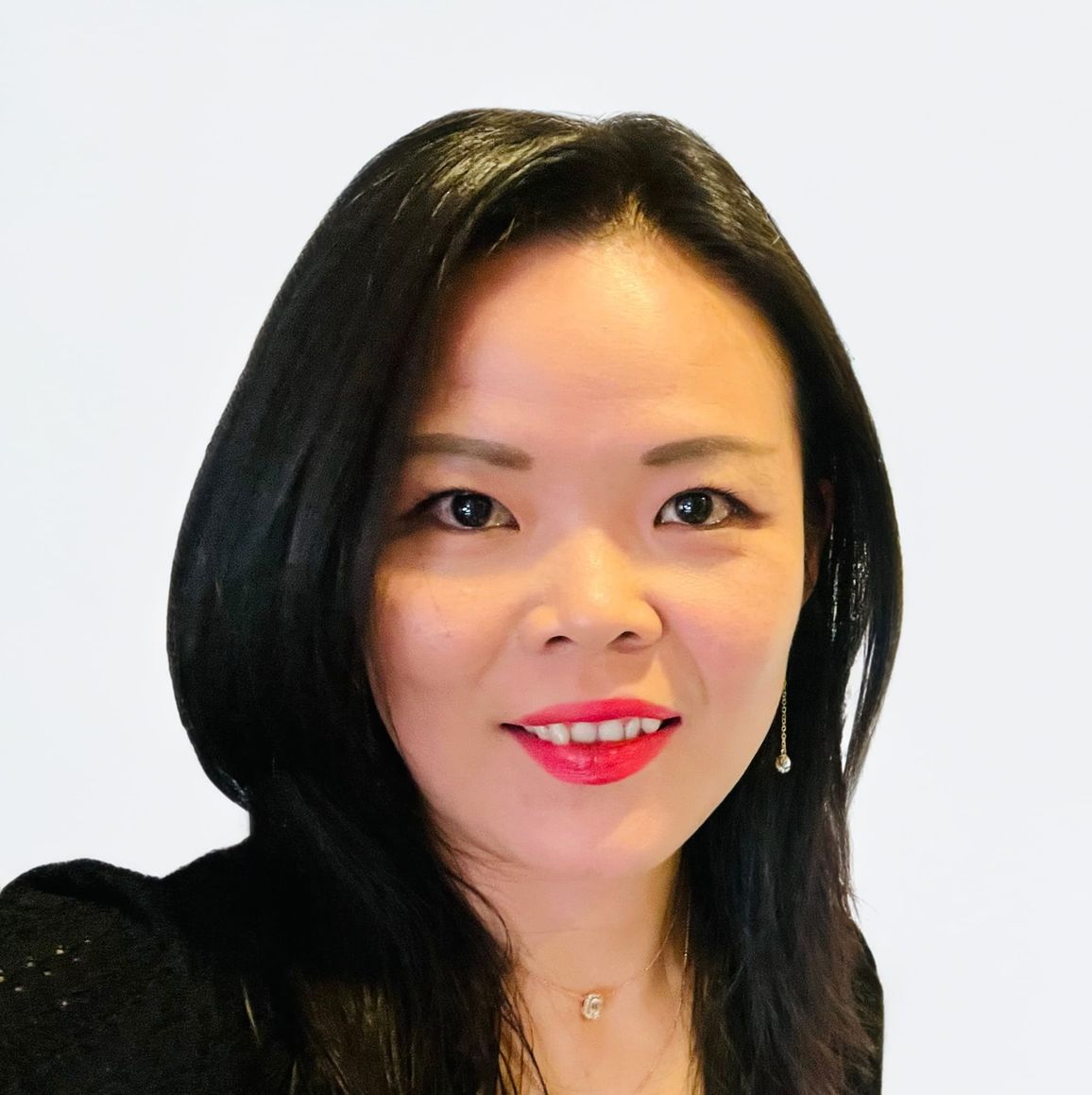
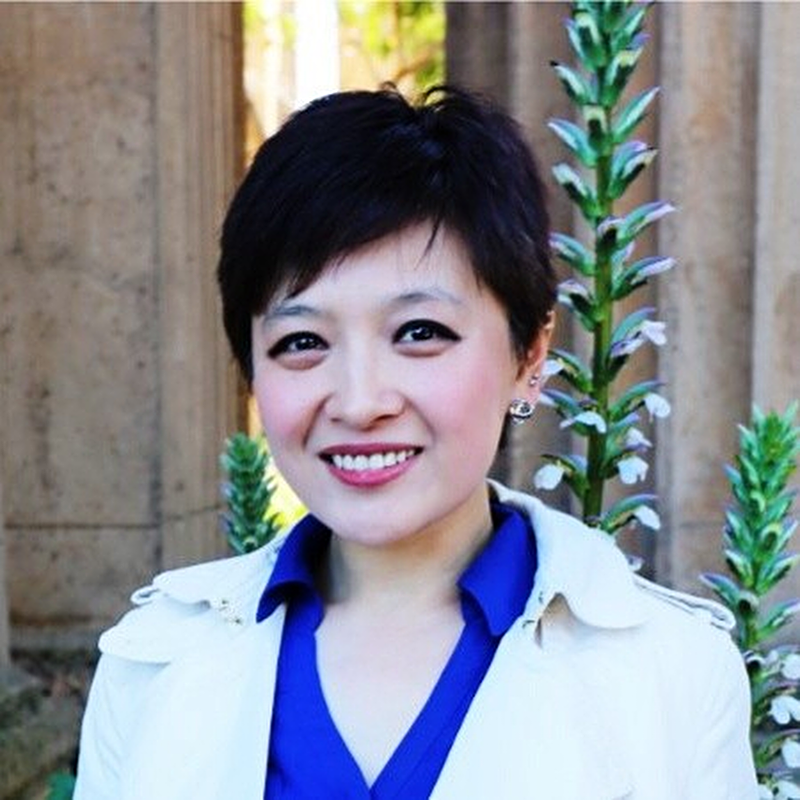
Fresh out of the studio, Jing Yang, Asia Bureau Chief at The Information, joins us to explore how China is building frontier AI under chip constraints, state capital, and open source ambition. Jing breaks down her scoop on DeepSeek's $7.4 billion round at a $50 billion valuation, unpacking a deal structure in which the founder wrote two-fifths of the check and outside investors got no voting rights. She explains why Chinese AI valuations trail US labs, why seven to eight language model players refuse to consolidate, and why DeepSeek chose Huawei chips before Huawei knew about it. Last but not least, Jing shares the indicators she is watching from now to 2027.
"This is one of the things that really surprised me when I was working on this story: DeepSeek had spent a lot of time last year retrofitting their models and software with Huawei chips. I think a lot of people assumed it's because the government ordered DeepSeek to work with Huawei to embrace the domestic ecosystem, but it's actually the opposite. It was DeepSeek that voluntarily started using Huawei, experimenting with the Huawei chips, and Huawei actually only found out after. Then they started sending people to DeepSeek to help..." - Jing Yang, Asia Bureau Chief, The Information
Profile: Jing Yang, Asia Bureau Chief from TheInformation (LinkedIn, @jingyanghk, TheInformation Profile)
Here is the edited transcript of our conversation:
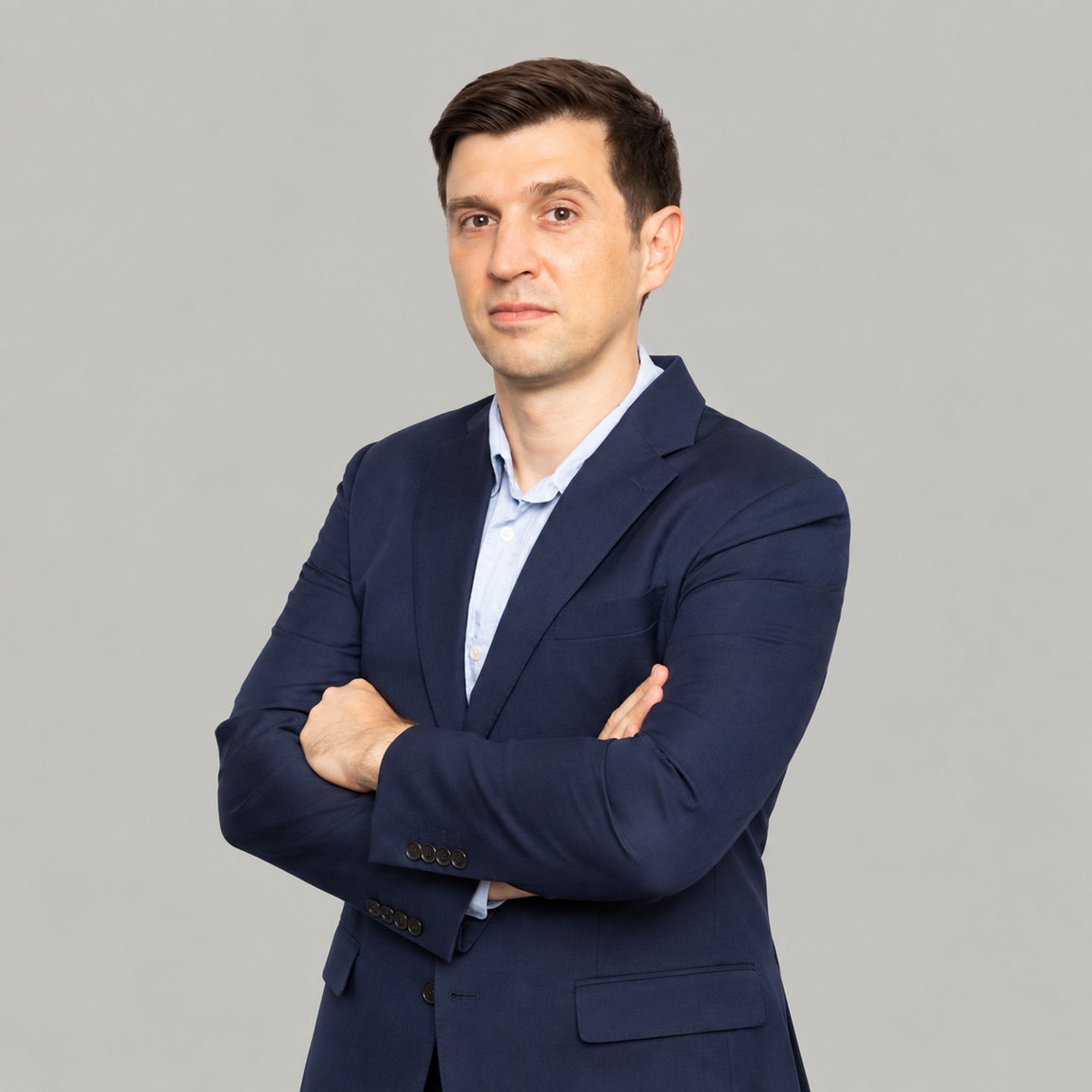
Bernard Leong: Welcome to Analyse Podcast, the premier podcast dedicated to dissecting the pulse of business, technology, and media globally. I'm Bernard Leong, and the last time we spoke, the story was Chinese AI startups going global. Since then, the map has shifted. DeepSeek has raised more than 7.4 billion in its first external funding round, valuing the company at more than 50 billion.
Meanwhile, Junyang Lin, the former lead researcher on Alibaba's Qwen models, has launched a new AI lab that has reportedly completed its first fundraising round at a post-money valuation of around 2 billion US dollars. These stories raise a bigger question: how is China building their frontier AI under chip constraints, state capital, open source ambition, and scarce elite talent?
With me today is Jing Yang, Asia Bureau Chief at The Information, who has been reporting these stories from Hong Kong, and I think she probably goes into China all the time. So Jing Yang, welcome back.
Jing Yang: Thank you for having me again. Just for the purpose of legal compliance — no, I don't go to China all the time.
Bernard Leong: Really? Okay, I'm just joking. All right. Since we last spoke, we were in studio together. What have you been up to since?
Jing Yang: I was actually reviewing our last conversation, because that was in September last year, I believe. So much has changed. The one thing — not really a correction, but if you recall, we talked about how we don't know what ByteDance is up to, how they stopped participating in the AI model leaderboard, and how they hadn't at the time open sourced any of their big models. It was a bit of a mystery.
Now we all know. With Seedance making waves and controversies, we know what they're doing.
Bernard Leong: That was fast.
Jing Yang: This is a way of saying that with the development of AI in today's age, everything is developing and iterating at such an unprecedented pace. I definitely struggle to follow and make sense of things. I don't know about you — if you have any tips, I'd love to hear them.
Bernard Leong: Every few days there's a change, and I am not surprised anymore by any changes. In fact, when Seedance came out, until today I think we can't even use the API on Seedance. You actually have to subscribe to their models as a consumer user. They have another model called Lumina. But if you look at the leaderboard, Seedance is now number one, followed by Google's Veo models, I think, if I'm not wrong. This whole space is really moving so fast. I used to think that China AI is like, every once in a while they make an announcement and it will shock everybody.
That's why I got you here today — to help our audience understand how China's ecosystem is developing on its own terms, not simply as a reaction to the US, but as a distinct model of frontier AI development shaped by their talent, open weight models, chips, capital, and developer adoption.
Of course, UBTech is going to launch their first humanoid robots, and we know this is where all of this is going. So I want to first start off with DeepSeek, because this is the most interesting company ever. Earlier it was seen as a capital-efficient research outlier, a lab funded by Liang Wenfeng and High-Flyer, known for pushing frontier performance with unusually efficient model design.
Usually when people ask me, "Where should I learn all the tricks to do open source AI?" I think you should just go to DeepSeek's GitHub repository. They just let out so many things that people don't know about. Now the reports are that DeepSeek has raised more than 7.4 billion in its first external financing round, valuing the company at more than 50 billion US dollars, making it China's most valuable AI startup — if I'm correct, and maybe something has changed today.
How should we understand DeepSeek's evolution from a highly efficient research lab into one of the most closely watched AI companies in China and globally?
Jing Yang: That's quite a big question you have there for me. Let's try to break it down piece by piece.
One, we were the first to report that DeepSeek was doing fundraising for the first time ever, and that was in mid-April. I still remember it vividly. It was a Friday night. One of the reporters on my team, Chen Anlu, got the first tip at around 8:00 PM. I was going to wind down and start my weekend, and obviously then Chen, me, and Drew — the three of us quickly mobilised and tried to reach out to sources and people we thought might know this.
Within an hour and a half we had the story out. But in all of the hustle, I was reporting and writing the story in a state of huge disbelief. You know how, as a journalist, when you're covering something that is breaking, you have to put your own personal feelings and opinions aside and just try to get the news out first?
In the ensuing two months, we covered very closely almost every major step of the road with the fundraising, and we saw how the valuation started to multiply. Our initial story said they were seeking to raise about $300 million at a $10 billion-plus valuation, which was considered quite low. Then it quickly became 20, and then quickly we now know how much it is.
When I was drafting the story — because we wanted to get it out as soon as we could — I needed to make sense of all of this. The first draft I had was actually pretty unintelligible. It wasn't until after I finished writing the whole thing that it dawned on me: actually, I should have written it this way.
So I went back to change it. The editor who was editing the story said, "I cannot edit a story if you keep making changes." I said, "I'm sorry, my brain literally shut down for five minutes because I don't know how to make sense of this." That shows you how unusual this is.
I got a team, including myself, to start preparing for a step-back story. In my vision, by the time we could report the funding had closed, we also needed to start right away on a story to review the whole process — what really happened behind the scenes that made this such a notable strategy shift.
A week later we had that story, and we can talk about all of this. But the first thing — the whole two-month-ish reporting process on this story — I personally just feel a little bit sad, if that makes sense. I know that nobody cares if I'm sad or not. I guess my point is that as journalists we sometimes have romantic or idealistic thinking when we look at the things we cover.
With DeepSeek, they came out of nowhere to a large part of the world. Remember, this is a lab that became famous, became a global superstar, for not embracing the scaling law pioneered by OpenAI — this endless chase after compute and therefore capital.
They were so refreshing, so different from the dominant trend, from the path that everybody was on. For them to be the holdout to external capital and to this race to secure more compute to scale up — they were the holdout for almost a year and a half since they became famous. If you trace back to when they were founded, then it's several years.
For that last holdout to also have a change of course, a complete U-turn, and then embrace what seems like the mainstream way of developing frontier AI models, is quite striking. As someone who's watching this closely from the peanut gallery, I secretly, personally hoped that they would not have done that — that they could stay being this really special lab and existence in the development of frontier AI models. But it looks like they are going to join.
Bernard Leong: One thing you alluded to just now was the unusual deal structure. Do you want to talk a little bit about the unusual deal structure behind this deal?
Jing Yang: Yes. There's quite a lot to unpack there. In order to talk about the structure, I would first categorise the investors in this round into four types.
The first is the CEO, Liang Wenfeng himself, who wrote the biggest check — two-fifths of the entire fundraising amount. The second type is the corporate VCs, the who's who in China's tech land: Tencent, JD.com, CATL, et cetera. The third type is the typical VC firms — IDG Capital and a couple of others. The fourth type is China's National Artificial Intelligence Industry Investment Fund. I just want to make sure I get the name right.
Within these four groups of investors, Liang — it's his money and essentially his company. I don't think anyone would have anything to say about how he wants to use his money.
Bernard Leong: He put his money where his mouth is. He's probably one of the largest shareholders.
Jing Yang: He was before the fundraising and he continues to be. So we can put that pocket of money aside. We don't care how he uses it.
For the second type, the corporate VCs, and the third, the typical VC firms — they both have to invest their money into a limited partnership solely created for the purpose of this fundraising. These two types of investors wired the money into that LP structure, which is managed by Liang himself.
Only the National AI Fund — which, by the way, has China's Big Fund, the big semiconductor fund, as one of its anchor investors — can invest in DeepSeek's corporate entity directly. For the type two and type three investors, they have to invest in this LP. What this means is that they will not have any voting rights, because you are not investing in the company that you are funding.
All the voting rights are still controlled by the GP of that LP structure, which is Liang himself. They also all have to agree to a five-year lock-up period. One of the few exceptions to this lock-up would be if DeepSeek goes public within the five-year period.
What this lock-up really means is that you cannot sell your shares to another party. This is quite unusual, because in ginormous VC deals — whether those raised by ByteDance before, or OpenAI and Anthropic — usually you have the investors investing, but behind them there could be different layers of SPVs set up for other investors to have an opportunity to invest indirectly in the round, and also usually after the round is closed.
If you don't want to wait for the IPO exit, if you want to do some partial taking, you can sell these shares on the secondary market. You see, for example, ByteDance's private shares being traded fairly actively all throughout these years on the secondary market. Because of this lock-up, it's unlikely we'll see DeepSeek shares being peddled on the secondary market.
As we were reviewing the story — this structure is all to ensure that DeepSeek will only attract investors that are in here along for the ride to AGI in the long run, not people who just want a quick gain or a quick exit.
One more thing that is also unusual within this deal structure: during the deal-making process the company also did — I guess you can call it reverse due diligence — on the investors' LPs. They were adamant, because this is such a hot deal. You can imagine a lot of people would want to get in, and there are people who may not have direct access to funding, so they will be pooling together some money, maybe in a newly established fund, and then try to squeeze in. A lot of murky arrangements could happen, which by the way is quite common in large deals.
However, in this case DeepSeek was adamant that if you want to invest, it cannot be a new fund, or a fund with new LPs. If I'm letting you, this GP, invest in me, that's because I know you and your track record and who your backers are.
This is an attempt to eliminate strange actors, unfamiliar faces trying to ride on the deal. They were asked to provide a list of all the LPs that were going to invest in the fund, to see who they are and whether they are credible people — to really make sure who really owns DeepSeek's shares.
If you combine this with the lock-up requirement — they have this lock-up also because if private shares change hands on the secondary market, oftentimes some companies may not know who ends up really owning their shares. That's exactly what they want to avoid as well.
Bernard Leong: It's interesting, because the deal would have taken a bit of a long time to come together. They have to first do reverse due diligence, then construct such complicated SPVs in order to structure the deal. The founder is so deeply immersed in it.
Another way I can frame this is that DeepSeek is trying to balance three things at once. They have their open source ambition, they want to do long-term AGI research, and then there are the realities of operating in a strategically important sector where everybody's going to IPO and somebody's going to tell him, "Hey, you should IPO too, because Anthropic and OpenAI are going to IPO."
From your reporting, how does the founder, Liang Wenfeng, appear to balance these priorities?
Jing Yang: Well, obviously I wouldn't claim that I really know him.
Bernard Leong: But just from your perspective, when you look at how DeepSeek has evolved in the last one and a half years since its rise.
Jing Yang: The deal structure tells you a lot about how he's trying to balance that. The irony is definitely not lost on me. His AI vision is that any advancement of AI should be made available to all and benefit all. I sort of summarise it as: AI should be inclusive.
However, in order to ensure that you get to that goal, you have to actually have the opposite of an inclusive deal structure, and really grip control of the company firmly within your hands.
A similar irony I can think of is that when OpenAI was founded with a similar ambition — and therefore the word "Open" in their company's name — they pretty early on realised that we actually cannot open source our technologies, because we are so great and so far ahead of everyone else. We cannot afford our technologies ending up in the hands of the wrong people, therefore we have to close everything.
Does the end justify these kinds of means? I don't know. What I kept thinking while reporting everything I just shared with you is this paralleled irony. I feel like we're in such an unprecedented and crazy era that these kinds of ironies are — I don't know if people talk about it, if it bothers people. But as someone who's not in AI but watches it from the sideline closely, I can't help but think about these ironies.
Bernard Leong: There is a Chinese phrase for that: 人在江湖,身不由己。
Jing Yang: Well, I'm not sure. Obviously it's easy to criticise. It's easy to say, "Oh, you should have done this or that." So I'm not saying they should or should not have done this. I'm just pointing out the irony. Whether the ends justify the means they are using — the jury's still out, or we'll just have to see.
Bernard Leong: I wanted to point to one of your articles after the reporting of the funding. It's about Anthropic's Mythos preview. I think it really changed Liang Wenfeng's view of what DeepSeek needed — that frontier AI is no longer about efficiency, but about having sufficient capital, compute, and talent to stay in the race.
Just look at the last few months while you're reporting on DeepSeek. You have Andrej Karpathy joining Anthropic. You have John Jumper from Google DeepMind, a Nobel Prize winner, also joining Anthropic. What does that actually tell us now in this next phase of frontier development? Specifically thinking about it from China's perspective — I think a lot of people know what the West's perspective looks like, but very few people really understand the Chinese side.
Jing Yang: We reported that it was the preview of Mythos in early April that prompted Liang Wenfeng's change of heart and change of strategy. The kind of advancements that Mythos demonstrated made him realise that the scaling law, for lack of a better alternative, still exists and still works, and has proven to be working.
There was a period of time last year when people were not sure if that is still the way to go, if you remember. So that reaffirmed, or maybe showed him, that yes — DeepSeek needs a lot of data and compute. That's why they need the capital. It's not just compute, but also data.
I understand that we are marvelling at how this DeepSeek fundraising, the money they raised and the valuation they have now, is a landmark event in China AI. However, when I was sharing my stories on X, there were also a lot of people saying how this is just tiny compared to what US AI labs have been raising. For sure. The valuations in China, not just in the AI space but also in robotics, compared to the US definitely seem super undervalued.
Right now, Zhipu (or Z AI now) is probably the most valuable — around $100 billion in market cap — which is still a fraction of Anthropic and OpenAI. But I would like to point out — there's a whole three-hour conversation we could have about why there is such a discrepancy in the valuations.
Bernard Leong: But—
Jing Yang: The one thing I would point out, which will hopefully answer your question, is that a lot of times companies are valued based on expectation, based on their future projection. There are two things going on here.
The enterprise software market in China is just so underdeveloped. It's gotten a little bit better since this generative AI wave, but it's still very underdeveloped. It's still super hard to make money from enterprise customers compared to the US.
By the way, this is one of the reasons why you see a lot of Chinese entrepreneurs, when they launch some kind of agentic product overseas, go to the consumer market. Very few people in Silicon Valley are doing that, because there's already a lot of money to be made doing agentic AI applications serving enterprise customers, while doing something for consumers is considered quite hard in terms of monetisation.
I think one of the underlying reasons is exactly this. There's been this hope among the VCs and the tech people I talk to that hopefully this will change — that hopefully when the technology really advances to a point that Chinese AI model developers can start to shape the habit of paying for software, paying for services that are value-add. I mean enterprise customers doing that.
You must know this. In China, everybody's been trying, from the dawn of the internet age, from Web 1.0, to find the pirated version of software. I remember growing up using a pirated version of Microsoft Word — and it's not that I wouldn't pay. I don't think it was even possible to find a licensed version at that time. They were just not sold on the market. This shows you how endemic the problem is.
To answer your question, this lack of a sophisticated enterprise software customer base — customers who are willing to pay, who recognise the usefulness of technology.
Bernard Leong: It's a bit weird from my point of view. Okay, I understand why enterprise SaaS doesn't work in China, because there's a tendency for companies to build their own. Now with generative AI — let's say GLM 5.2 from Zhipu — is as good as what it claims to be, as good as the frontier labs can do.
That means more people would be able to build out their own software without that reliance. That should have also increased their token usage. Plus, of course, US companies are quietly not admitting it, but they are all routing to Chinese models as well. They do have a significant user base from that point of view.
Sometimes China to me is a big paradox, because I find that they are probably going to dominate the models despite how good the frontier models are for Anthropic and OpenAI. I wouldn't even be guilty to say that I route to all the models. First, I would try everything on Anthropic and OpenAI, and if they get good results — and if things are just as good in the Chinese AI, I would just route the task to the Chinese AI because of one-tenth of the cost.
So it does really make it very strange to me why they are also focusing — I can understand why they're focusing on consumer, but I see products like Kimi, I see stuff from Moonshot and a couple of other Chinese AI companies, because I see their use in my part of the world, Southeast Asia.
I find it actually quite strange that the willingness to pay is still not there, given such high usage.
Jing Yang: It's not just that Chinese companies want to build on their own. It's also that they are super price sensitive — the worst of customers. Whenever you get a cheaper option, they immediately go. There's no loyalty.
Bernard Leong: But that's the same with all the rest of Asia's customers too. If you are saying exactly that to me, I will tell you: if you're in Southeast Asia, that's the same situation here too.
Jing Yang: I wonder — maybe you could investigate and tell me what you find out, since you are also a startup founder yourself. At some point I thought it's because enterprise SaaS is still too commoditised. Product A that charges 10% more than product B is not really 10% better than product B. But now in the AI era that didn't seem to be the case anymore. Some of the models are much better than others.
Going back to the second thing I wanted to talk about, about the valuation — you asked me how things are different in China. Another common difficulty facing all the Chinese AI labs is the lack of compute.
Combined with the much less lucrative prospect on the customer end and this huge constraint of compute on the supply end — that's why I think collectively you see the valuations much lower. This is something that people outside China may not necessarily fully appreciate.
In terms of the lack of compute, this has also really limited the possibilities for Chinese new labs. You asked me earlier about Junyang Lin's new lab. If you look at what the US new labs are doing — some of them, it's up to them what they want to do — but at least from the day they are born they are not facing a lack of compute.
For new labs in China, from day one they immediately have to think about, "Where do I get compute?" And for new labs or any startups in the US, if I fail, at least my goal would be to try to get acquired by a big tech giant. In China, that's also much harder.
So basically, on one hand you are building with substantially weaker infrastructure and supply, and on the other hand, your exit also looks a lot more challenging for you.
Bernard Leong: But the energy and the infrastructure part — they can build faster. What they are lacking, the only constraint, is the chips.
Jing Yang: That's what I meant.
Bernard Leong: If I may just ask — for example, the only thing that constrains China now is chips. As of today, I saw The Information headline this morning in my newsletter that the Chinese government is going to allow them to purchase NVIDIA H200 chips. So they have the energy. They have the data centre infrastructure build, definitely more sophisticated than what the US have. The US on the other hand has the frontier labs on the software side and very, very good chip designs, but they are lacking in energy and infrastructure.
It's almost like they have each other's strengths, and where they're limited is where the differences are between them. Do I read this correctly, or is it that things are in a way that is also advantageous for the Chinese ecosystem — that maybe they could figure out a way to leapfrog at some point? Because you can only throw so many algorithms at the problem, and most of these state-of-the-art algorithms are actually quite publicly known among the AI researchers themselves.
Jing Yang: The leapfrog thing has always been there. If the entire Chinese engineering base along the AI stack is being pushed to a corner, then you just have to innovate. That's been proven the case with DeepSeek last year.
But on the chip front we still haven't seen it, and I think it's because of the constraint in the manufacturing equipment. You can engineer your way out of having — for example, if you look at Huawei recently with their new process, they can achieve the efficiency without the EUV machine and all that.
But that doesn't mean they don't need other types of advanced manufacturing equipment that are also under export restriction. When you are talking about the hardware, it is a lot harder to have that leapfrog moment exactly because of this.
Bernard Leong: I want to talk about something else in the latest DeepSeek round about this unusual structure. One interesting thing is that only a state-linked fund invested directly and has voting rights.
How should we be reading this kind of funding structure? Can you see this as conventional startup financing, strategic ecosystem building, or maybe something distinctive to China's AI market? I always say something like, you know, fundraising with Chinese characteristics. Government state capital is also involved.
Jing Yang: The fact that the National AI Fund can invest in a company directly is because government funds come with — you can think of it this way — even stricter compliance. That's why they cannot follow the LP structure. They have to put their money, because it's essentially taxpayers' money, into the company itself.
You can say yes, that the government-backed fund in the round gets special treatment. But the reason for that special treatment is not because the government fund or the officials just muscled their way into DeepSeek's office and said, "Hey, I'm not going to follow this." That's not why.
Bernard Leong: There's this big misconception from the US side. That's what they think.
Jing Yang: It's because the government-backed fund is essentially public money, fiscal money, taxpayer money, and it has to follow a set of much stricter compliance rules — otherwise the government's auditor will not let this pass. You tell me that this 1 billion yuan is invested in DeepSeek, but I don't see that's the case on paper. It seems like you're investing in the sky instead.
When you look at Tencent or the VCs — private enterprises, private investment funds — they have much more discretion, or flexibility, in participating in a less conventional structure.
Bernard Leong: I'm glad you actually talk about this, because I have been trying to explain to people that it's not the way they think, the way the American media is putting that perception through.
But I want to get to another side of it, because Liang Wenfeng invested quite a lot of his own money inside. What does that also tell us about founder power now in China's AI sector? What I'm alluding to is how founder control works differently when a company's operating in a field where investors, industry players, and policymakers all see this as strategically important. No guesses here — when Ke Jie lost the match to AlphaGo, that was the Sputnik moment for China's AI development.
Jing Yang: Obviously I don't have to be the one telling you this. When you talk about founder control — founders of big startups, superstar startup companies in China have a very difficult tightrope to walk. Including in Liang's case and many others before him.
You really are not only the one calling all the shots. As you get bigger, your orbit will inevitably be pulled closer to the central government. You may have to do things that you don't necessarily want to do, or prioritise things not necessarily strictly in the order that you want. You just have to walk this really fine line. That's the one thing that makes it very different.
But we also see increasingly, I guess, in the US, this contentious relationship at times — for example, between the White House and Anthropic, and also OpenAI. OpenAI wasn't allowed initially to release GPT 5.6 to the public. So I guess this is probably a year in which founder control is getting less pure. It's getting more complicated. There are more fingers in the pie than previously.
Bernard Leong: I wanted to also spend a little time on the other story, which is Junyang Lin, the former Alibaba Qwen leader, who was seeking a 2 billion valuation for his AI lab, and I think now he has already raised it. Does this give us any indicator about the scarcity premium on elite AI researchers in China? He's the one who built the original Qwen models, just for our audience's understanding.
Jing Yang: His title when he was at Alibaba was the tech lead of Qwen, just to be specific. He was considered instrumental in making Qwen — after DeepSeek — probably the most popular open source models. He's also known as someone who really believes in the open source mission.
I think this funding definitely shows the scarcity of elite researchers. We've seen several companies being funded this year, all fetching similar valuations in their first round — a billion or $2 billion. But I think it also shows a lot of FOMO by investors too.
Bernard Leong: I guess FOMO happens everywhere, including China.
Jing Yang: Oh, absolutely.
Bernard Leong: One interesting thing — you probably also know that Alibaba's Qwen models have now become one of China's strongest open source AI efforts. One of the things that has been talked about a lot is that his departure followed Alibaba thinking of going towards proprietary AI products.
How are you thinking about Chinese AI companies, or maybe including the BAT, balancing this open source influence with the need to build sustainable commercial models?
Jing Yang: We can see ByteDance — with the exception of some versions of Seedance, their large language models they have not open sourced.
I would say this balance is much more acute for the smaller companies. Within the BAT they all have cash cow businesses. They can afford to open source if they want to. For them, open source also generates more users, therefore more data, and then makes their models smarter.
But it's the smaller labs, especially the ones that have already gone public — Zhipu and MiniMax — that probably have to face this problem.
If you look at Zhipu — we also reported earlier this week that Zhipu is actually thinking of finding a partner to design its own custom inference chip, which is something that, as you know, a lot of other companies are doing.
When Zhipu and MiniMax went public within two days of each other — Zhipu was two days ahead — back in December when people were comparing these two companies, the overarching feeling or commentary I got was that they thought MiniMax was the better bet. That was the sentiment at the time, and it has already shifted, which is reflected in the diverging stock price trends between the two companies.
People were not optimistic about Zhipu back then because more than 80% of the revenue at the time came from what they call private, on-premise deployment. These are basically largely one-off revenue. You go to a customer's data centre, you help them install your model, and then bye-bye, I won't see you for another 10 years.
Bernard Leong: But then you forgot there's also maintenance, and these models will get better. There's actually what I call maintenance and run cost that a lot of people don't think about. They think they're very commoditised, but actually the on-prem market is a little bit more fluid than that.
I'm speaking as a practitioner dealing with on-prem sites now. A lot of my clients are asking me — I have more clients talking to me on on-prem AI than on cloud-based AI.
Jing Yang: That's very interesting, because that's not the direction that Zhipu is travelling in right now. If you look at what has happened since they've gone public in the last six months — they published the annual results of 2025, and you can see the clear direction of travel.
They are trying to sell more cloud-based API access and trying to rely less on on-prem deployment. I don't know how much you can charge for maintenance in China. But what's interesting is that you see companies like Zhipu, clearly now one of the leaders in open source AI models, also trying to generate more recurring revenue from cloud-based API access.
That again is where the lack of compute probably emerges as a big bottleneck. I actually talked to a startup founder recently who was building some kind of agentic application. His team traditionally preferred OpenAI and Anthropic models. But GLM 5.2's recent explosion made them think of trying it.
Then he told me that they couldn't actually buy the access from Zhipu, because it's running so short. Zhipu actually cannot supply the growing demand that is out there.
Bernard Leong: GLM 5.2 is still not on any of the major cloud providers on the US side. Case in point, Amazon Bedrock or the other parts.
But I have one more question. I thought I'd get your sense of it, because you look across today at DeepSeek, Zhipu or Z.AI, Qwen, MiniMax, Moonshot, Kling, Manus. What is the best mental map for you when you look at China's AI ecosystem? Is it useful to divide the market into foundation models, application companies, and infrastructure? That's the US way of thinking. Or do you need a much more China-specific framework?
Jing Yang: That framework that you mentioned is definitely one of the ways. Another one would be the upstarts versus the tier one tech giants versus the tier two tech giants. I would put Kuaishou and Pinduoduo under tier two.
One thing I was actually going to say earlier is that I don't know about you, but I am actually really surprised that by now we still haven't seen actual serious consolidation happening. How can this go on?
You asked me about the need to balance commercial and open source. We've seen in the US that basically now, in terms of frontier models, it's just consolidated within three or four companies. Llama is pretty much out, I think. But in China, you still have BAT — and the B here means ByteDance.
Bernard Leong: I feel bad for Baidu, but they are also an AI player too.
Jing Yang: Obviously it's in the race. If you look at just the language models, there's already the BAT. If you look at the video models, then there is—
Bernard Leong: Owned by ByteDance.
Jing Yang: No, there's also BAT plus — Alibaba and Tencent also have their own video models too. Tencent's video model is actually not that bad, because they have a lot of applications in gaming.
Bernard Leong: That's right.
Jing Yang: So in the video models, there's also BAT, and then there is Kling, and then there are also some startups.
Let's go to the startups. On the startup side, on the language model, there are four serious ones: Z.AI, MiniMax, Moonshot. On the video models, there is PixVerse and Shengshu and a bunch of others.
I just can't imagine this going on. After Kai-Fu Lee's Zero One essentially got folded into Alibaba, people thought that consolidation was going to happen — but that was over a year ago. We still haven't seen that happening. Now it looks like Moonshot is also preparing for an IPO, likely next year. DeepSeek is definitely going to stay here.
So basically, within language models we already have seven to eight serious players that are still in the race, and no one wants to give up. I think that's pretty interesting.
Bernard Leong: What you are alluding to is that probably in the next six to 12 months, if there is some activity happening in consolidation, then something is happening to the ecosystem.
Jing Yang: I don't see any trends emerging right now that could lead to consolidation. I can tell you that I have reporting — I never wrote about this — that say 18 months ago, 24 months ago, one of the BATs wanted to buy one of the other four companies I was talking about. The deal didn't happen because the price was considered too low by the to-be-bought company.
This shows you the big reason why the consolidation hasn't happened. When you look at how many companies SpaceX, or NVIDIA, and all the others have bought — it's very different. Even though the valuation here in China is already considered a lot cheaper, the willingness to acquire a company at a slight premium is still not there.
Bernard Leong: Since we have a bit of limited time left, I only have two more questions before we close. What is the one thing that you wish more people would ask you about the Chinese AI ecosystem that they don't? I think the misconception we have identified — but what's the one thing that you wish more people would ask you about the Chinese internet ecosystem?
Jing Yang: I'll use an example to answer that question. Until our story came out, there was a lot of reporting — including by myself, and others too — that DeepSeek had spent a lot of time last year retrofitting their models and software with Huawei chips, which is what caused a — I wouldn't call it a delay, because they never said they had a target — but which is what caused them to take so long to release.
I think a lot of people assumed it's because the government ordered DeepSeek to work with Huawei, to embrace the domestic ecosystem. But what we revealed with the latest story is actually the opposite direction. It was DeepSeek that voluntarily started using Huawei, experimenting with the Huawei chips. Huawei actually only found out afterwards, and then they started sending people to DeepSeek to help them. This is one of the things that really surprised me when I was working on this story.
Why did Liang want to do this? Because he believes the so-called AI stack cannot just be — you cannot just have one NVIDIA-dominated AI stack. There should be more. There should be room for more. He wants to play his part in charting a different ecosystem, a different path alongside the NVIDIA-dominated order.
What this tells you is that even I could sometimes have some kind of misconception when it comes to the relationship between the government, the regulators, the companies, and the founders.
One thing I will point out is that we and others also reported that the National AI Fund was going to invest a much bigger amount in DeepSeek. At one point there was an article — not us, but some other outlet — reporting that this National AI Fund was going to be one of the lead investors in this round. Now that the jury is out, we see that the National AI Fund actually wrote the smallest check.
What does that tell you? It tells you that it's not as if the government can just say one thing and then do whatever they want. It's also not that frontier labs like DeepSeek resist. If they are collaborating with domestic AI stacks, it's not because they are necessarily told to. It's because they actually see the need to do that for the longer-term survivability and sustainability of China's AI development.
Bernard Leong: That is a great insight. This is something a lot of people don't realise.
My final traditional closing question, and I'm going to phrase it differently this time. We're going to have the next six months all the way to 2027. What are the key indicators you'll be watching? No need to predict this time — we are not in the prediction zone anymore, because anything can come out almost the next week. So what will be the things you look at? Is it model releases? Chip adaptation? Funding rounds? IPOs? Regulation? Developer adoption? Talent movement?
Jing Yang: I think talent is definitely one of them — the direction of travel by top talent. I don't know if you noticed this, but there's a trend of academic talent, ethnic Chinese or Chinese-born researchers working in big US companies moving back to China. A lot of them are in Hong Kong. A lot of them have come to Hong Kong. That's one thing to watch.
The other would be on the chip front. Supposedly Huawei's Ascend 960, coming out next year, would have a capability on par with the H200. That's something we definitely need to watch for.
One thing I would also want to know is the popularity — can Chinese models sustain their popularity in the open source world? One of the things we haven't talked about, but maybe we can use this as a forward-looking ending: I'm sure you've seen that Anthropic had this geolocation tracking code in their software, and then the Chinese government came out and said, "You are aware of these security risks from Claude, and you should try to uninstall all of that." Alibaba was the first one to tell all of their employees to uninstall this from your computer and everything.
So if that's the case, if more Chinese AI model makers are uninstalling Claude, and if that were to continue, what will happen? Because so far, let's just say that distillation is very commonplace, which is why you see Chinese open source models always playing catch-up. It's always whether you say it's a one-month distance, three months, or six months. But because you rely, to some extent at least, on distilling from the best model, that means you can never overtake the best.
If the Chinese government can really order, or strongly discourage, all the model makers to not use Claude and Claude Code anymore, what will happen to model development in the next six months? I'm very curious about that.
Bernard Leong: I actually have a slightly different take. Being an academic, and having read the original DeepSeek paper myself, I find that one of the most under-thought discussion points on the Chinese AI models is that they are pretty capable of building their own AI algorithms.
I think this is very under-appreciated in the US, which keeps having the perception that they are not innovative and are distilling from them. One of the biggest advances in the last three years is in reinforcement learning. That's why your AI model seems to be getting better. Part of it was because it was the DeepSeek team that generalised the reinforcement learning formulas so that the rest could use them.
If they can make that kind of algorithmic progress — in fact, I saw a pretty interesting paper by DeepSeek early this year about optimisation across different network paths. It was quite surprising, because one of the formulas they used was a Russian math formula that is pretty unknown. The reason why was that there were research collaborations between Russia and China, so they were aware of this kind of algorithmic advance.
What I think is really the limiting factor now is the chip. If that is a problem they can circumvent, given the circumstances, I think there is still a leapfrogging path. That was the surprise when DeepSeek came out, and I thought this would be a much more optimistic way of looking at this conversation.
Jing Yang: Actually, what you said and what I said can totally coexist. I cannot name any names, since I don't want to get into trouble. But if you have friends working in any of these models we've talked about — from Anthropic, OpenAI — and you ask them to do this, you will know what I'm talking about.
Bernard Leong: I do know some of them, so yeah. We used to be colleagues in research in machine learning before, so I know what you're talking about from that point of view.
Okay. Jing, many thanks for coming on the show. I'm going to quickly ask you: any recommendations — a book that you enjoyed reading recently?
Jing Yang: Not AI related, though. Is that okay?
Bernard Leong: Sure. I think people like all the other recommendations you do.
Jing Yang: The last book I just finished reading, which was last week — you must know Wang Gungwu. I only got to know about him recently. I visited Penang for the second time in May. I really like it there. I like the whole Nanyang history, and I like how the Chinese culture and traditions were preserved so well in that part of Southeast Asia.
I picked up a few books from a little bookstore in Penang, and one of them is Wang Gungwu's memoir called Home Is Not Here. In the book, he details how he grew up in Ipoh, Indonesia, and Malaysia, and also how he briefly studied at the National Central University in Nanjing right before the civil war expanded to Nanjing. He also included diaries he translated into English from his mother, talking about how, when World War II spread to Southeast Asia, they were fearing for their lives, and how the sentiment changed in Southeast Asia as well. It's a really good read. I like reading history books that are told from—
Bernard Leong: —a different perspective.
Jing Yang: —a very personalised one.
Bernard Leong: Where can my audience find you? The Information — that's where I read my articles these days.
Jing Yang: I'm on X, or Twitter, at jingyanghk, and jing (at) theinformation (dot) com is my email address. I'm on LinkedIn as well.
Bernard Leong: Definitely can find us anywhere. Jing, many thanks for coming on the show. We'll talk again — maybe either I come to Hong Kong or you come by Singapore again.
Jing Yang: Yes, let's do that. Thank you.
 gtsp1257
Podcast Information: Bernard Leong (@bernardleong, Linkedin) hosts and produces the show. Proper credits for the intro and end music: "Energetic Sports Drive" and the episode is mixed & edited in both video and audio format by G. Thomas Craig (@gthomascraig, LinkedIn).