
Attention Is the Scarce Resource, Not Creativity in the Age of AI with Steve Clayton

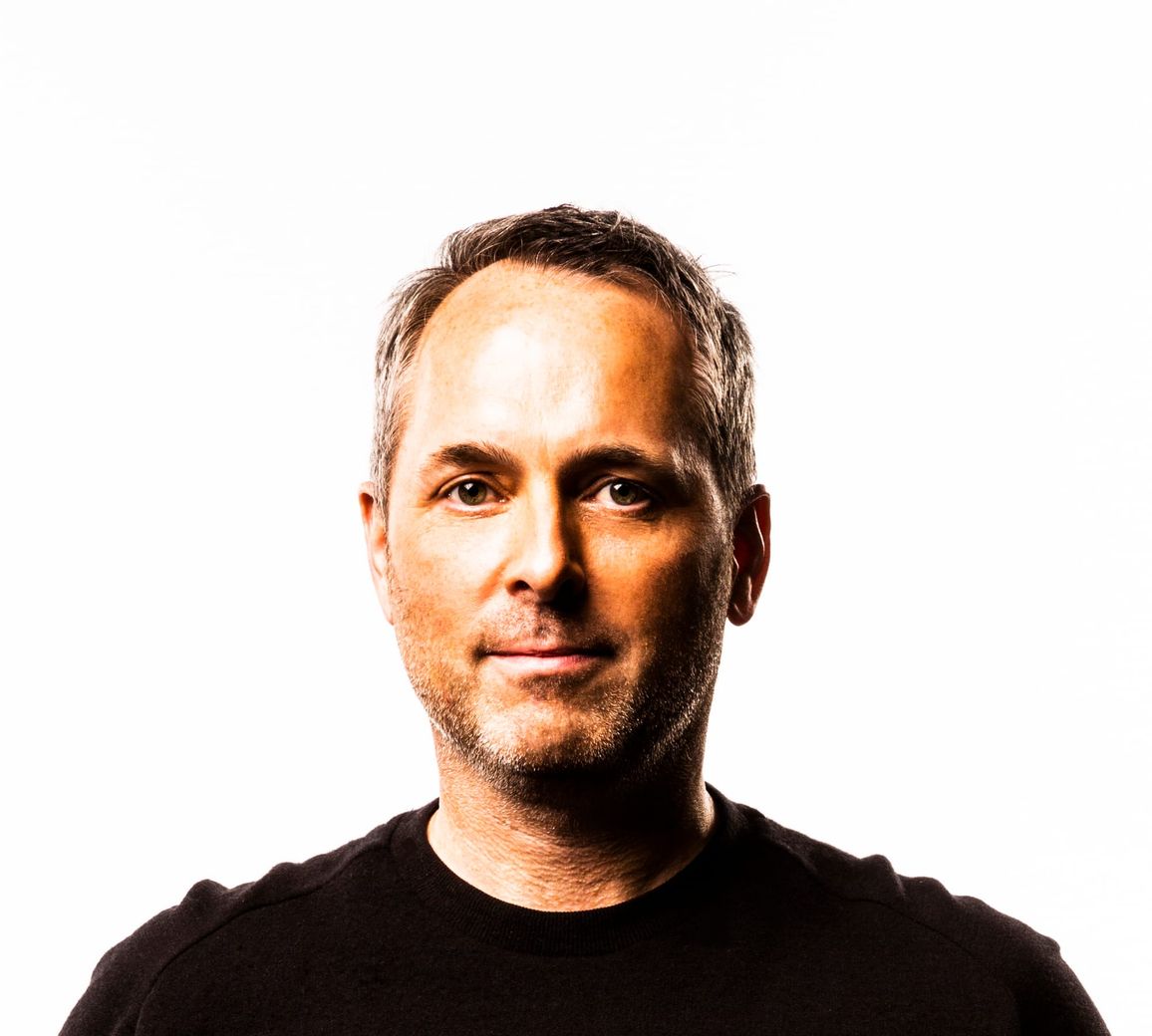
Fresh out of the studio, recorded in Singapore, Steve Clayton, Senior Vice President and Chief Communications Officer at Cisco, joins us to discuss what it takes for AI to scale inside enterprises globally. Steve argues that narrative belongs at the top of the AI pyramid, not the bottom — in an era when models generate more material than any organisation can absorb, the story a company can credibly tell becomes the scarce asset, not the technology itself. He explains why the truth lies in the field rather than at global headquarters, how regional dynamics reshape where a story lands, and walks through Cisco's advances in silicon and quantum computing networking. Showing a real customer deployment, he argues, is what earns permission to talk about security and trust at all. Last but not least, he shares what great look like for Cisco to build their story in the age of AI.
"Take your phone and switch it into airplane mode and see how much you can do on your phone. Very little. You can use the calculator, but you can't use an AI model. You can't surf the web, you can't send messages. And people get excited about GPUs and data centers and models and applications and devices. But sitting at the center of all of that is the network. And that's what Cisco is all about. So that's our job, is to help people understand the value of the network and to realize that AI, as exciting as it is, it simply doesn't happen without the network." - Steve Clayton, SVP & Chief Communications Officer, Cisco
Profile: Steve Clayton, SVP & Chief Communications Officer, Cisco (LinkedIn, Friday Note Newsletter)
Here is the edited transcript of our conversation:
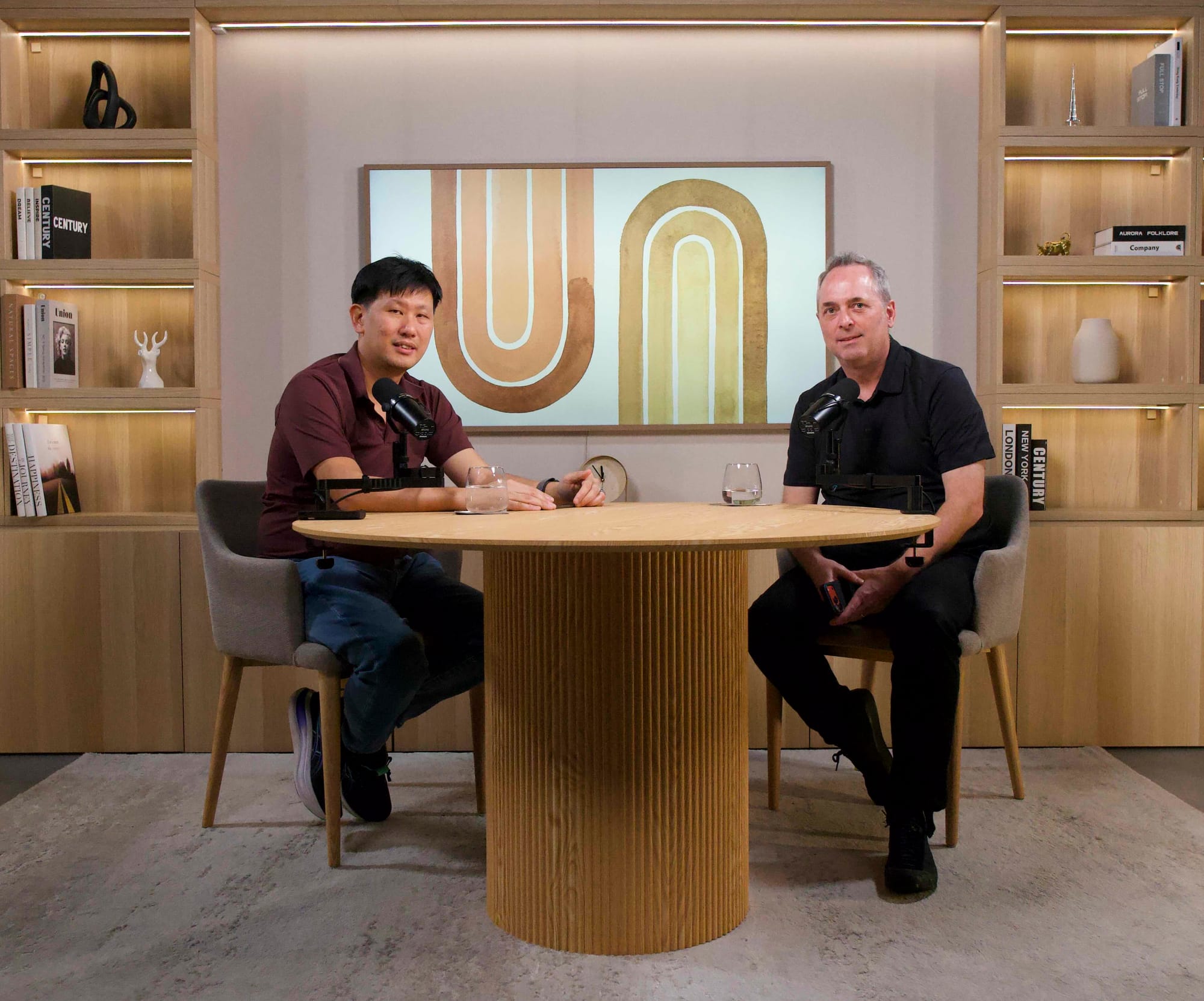
Bernard Leong: Welcome to Analyse Podcast, the premium podcast dedicated to dissecting the pulse of business, technology and media globally. I'm Bernard Leong and today we explore a different but critical layer of the AI conversation — not just the models, but the infrastructure, trust and storytelling required for AI to scale inside enterprises. With me today is Steve Clayton, Senior Vice President and Chief Communications Officer at Cisco. Steve previously spent more than 28 years at Microsoft, including as Chief Storyteller, helping shape the company's technology narrative, culture and executive communications during a major period of transformation. He now leads communications at Cisco as the company frames its role in networking, security and AI. Steve, welcome to the show.
Steve Clayton: It's great to be with you, Bernard.
Bernard Leong: To start the conversation, I did some background research on you. You spent more than 28 years in the tech industry, including as Chief Storyteller and later as Vice President of Communications Strategy, before becoming Cisco's Chief Communications Officer. Your career has involved translating complex technology into stories that employees, customers, policymakers and markets can understand. What did your journey teach you about making technology feel more human, and what feels different at Cisco now, in the AI era?
Steve Clayton: I strongly believe that storytelling is a very human thing. It started with cavemen around campfires. Once they invented fire, they had nothing else to do — they no longer had to keep the ferocious animals away. So they sat around campfires and started to tell each other stories. We are biologically predisposed for stories.
When we meet people, we tell them stories. We ask them about journeys they have been on. We ask them what books they have read. We ask them what music they listen to. The language of humanity is stories. In the world of technology, we tend to get very excited about the technology. But the thing that I think is important is telling stories about the impact that technology has on people's lives.
That is what I spent a lot of time doing at Microsoft, and it is why I am at Cisco — because there is a huge opportunity to help people understand not technology for the sake of technology, but what the role of technology is. What impact can it have on people's lives? How does it make our world better? That is why storytelling is, and always will be, incredibly important.
Bernard Leong: Especially now, with stories being so important to the AI debate itself. Let me get straight into the subject. One way to frame the AI debate is that the first wave focused heavily on model capability, but the next wave will be about whether AI can be deployed safely, securely and at scale. So the question I will start with is this: from Cisco's current vantage point, why does the public conversation still over-index on models and under-index on infrastructure? Every other week we get a wave of announcements on AI models, but we hear very little on the infrastructure side.
Steve Clayton: When we come to a city — here I am visiting Singapore — when I get here, I am more interested in which restaurants I should go to, which bars I should go to, which hotel I should stay in. I do not think about how I am going to get there.
I am going to get there on the roads. I am going to get there with transport. The network is the same sort of analogy. In some ways they sit in our subconscious. We take them for granted, but nothing would happen without them. If there was not a road between the airport and the city centre, I would not get to my hotel or get to the restaurant.
We have a similar phenomenon going on with AI. The media like to report on models, on the latest devices, on the latest applications, on the competition between the model makers. But things are changing a little, and the reason I say that is the same analogy — nothing happens without the network.
I said to people this week at events I was presenting at: take your phone and switch it into airplane mode, and see how much you can do on your phone. Very little. You can use the calculator, but you cannot use an AI model. You cannot surf the web. You cannot send messages.
The network is this crucial component that is fundamental to all of AI. People get excited about GPUs and data centres and models and applications and devices. But sitting at the centre of all of that is the network. That is what Cisco is all about. Our job is to help people understand the value of the network, and to realise that AI, as exciting as it is, simply does not happen without the network.
Bernard Leong: I can definitely relate to that. Recently, at my son's chess competition, I had to tether my phone to the nearest network, and it was still running, and I was hoping the phone signal would not die. That is when you really appreciate that infrastructure is core to what we are doing.
I want to test a simple mental model with you. Capability determines what AI can do. Infrastructure determines whether we can scale. Trust determines whether and how organisations will deploy. Narrative determines whether people understand what is actually changing. Does that model hold up from where you sit, or where would you refine it?
Steve Clayton: The model holds up completely. If you think about it as a pyramid, the one thing I would do is switch the pyramid around. Often we start by talking about the models, and as I mentioned earlier, the models are exciting, the technology is exciting — I come from a technology background. But what I am really interested in is what it is going to do for people: for a company, for an individual, for a country, for an organisation. So I would prefer to put the narrative on top of the pyramid, versus the bottom of the pyramid.
Bernard Leong: If you think about the top and the bottom of the pyramid being inverted, can you talk a little more about how organisations need to change the paradigm in terms of how they communicate this?
Steve Clayton: It depends on the organisation.
From a communications view, the way I have always approached things is: let us not talk about technology for technology's sake. When I think about narrative and storytelling — and I look at my time at Microsoft, and even the six months I have been at Cisco — what matters is how you tell a story to somebody you are meeting for the first time.
Being able to tell it in very human terms means not starting with the technology, not leading with the product, but talking about what this thing does. What is the impact it is going to have on somebody's life? How do we enable somebody to do things they could never do before? That is why I am in the business of storytelling.
In some ways, in the technology industry, it is counterintuitive. Technology companies — and I have worked for a few of them now — like to celebrate the technology. We like to talk about products and features and capability. But what I have learned over the years is what really breaks through, because everybody is doing that. Maybe another way to answer your question, Bernard, is that oftentimes the way to break through in a very busy, noisy communications and media environment is to do the opposite of what everyone else is doing.
Bernard Leong: You describe communications as evolving from a content provider into a business architect. What mental model do you use to explain that shift?
Steve Clayton: One of the models I use is that I try to reject the word content, because content has just become a very bland term for anything that is now in our digital ecosystem. A podcast — I think it diminishes the value of this podcast to call it content. It is a conversation between two people.
When you create a video and call it content, or create a website, or a magazine, whatever it may be — content is this unbelievably vague and valueless word. I reject the notion of content and really try to celebrate all of the different forms of communication, whether that is a podcast or a radio show or a book or a movie or a written piece, whatever it may be.
That is my philosophy. Content has become a bad word in our industry.
Bernard Leong: If that is the case, how does it change the way communications leaders engage with product engineering, policy, security, and even customer strategy? Storytelling becomes more important, as you alluded to earlier — you are trying to give people the story on what this does for them. How does that work?
Steve Clayton: The way I think about it is always to take an audience-first mindset. Who is the audience — whether it is a policymaker, or a school kid, or a technologist, or a colleague, or an employee? Start with the audience, and then establish where that audience is right now.
What is their mindset? Let us say it is a policymaker with a different point of view around sovereign AI. Our job is to say, where do we want to move them from and to? That is the gap communications can help with. Very often what I have seen in communications is that people run to a tactic: well, I have a slide deck, and I am going to present you my slide deck and tell you all about my technology.
A policymaker probably does not care about the technology. They probably care about the implications of that technology on the government, on the country, on the sovereign.
Bernard Leong: Security, for example?
Steve Clayton: Exactly. You have to meet people where they are, versus assuming they are just going to be ready to consume what you want to talk about. I talk with my team a lot about this — you always have to start with the audience and then work back from there. A lot of people fall into the trap of just filling the pipeline with content that is not relevant to the audience.
Bernard Leong: So the medium is the message.
Steve Clayton: Exactly. Marshall McLuhan had it right all those years ago.
Bernard Leong: In an era where AI can generate more content than any organisation can consume, is the scarce resource creativity? Or is it judgment — knowing what not to say, what to simplify? Or is it attention?
Steve Clayton: We will come back to judgment. The scarce resource is attention. That is why storytelling is important, because we are bombarded with information whether we like it or not. On my journey to work this morning, I was bombarded with billboards, with TV, with radio, with email, with WhatsApp messages, with blogs, with news, with newspapers.
The most scarce resource — maybe it is time, but you cannot manufacture time. The one thing you cannot buy on Amazon.com is time. That is what I keep telling my kids. But the scarce resource, I think, is attention. It is this thing we have to cherish and pay attention to as communicators.
How do we get permission to capture people's attention? The way to do that is through careful curation, and through judgment. In a world where the internet is increasingly filled with so-called AI slop, the thing that will break through is stories that a human created — that show judgment, and show a deep appreciation for people's attention.
Bernard Leong: So attention comes first, and judgment is the next part, where you try to sort out the stories.
Steve Clayton: Attention is the thing we just have to be aware of. We are not entitled to people's attention. We have to create something that is worthy of their attention. In order to do that, one of the ways is to apply great judgment, and not to just create a story using an AI model.
Bernard Leong: Which goes back to your other point about working backwards from what the audience wants. A quick question on this: what is the one thing you know about Cisco's role in the AI era that very few people outside the company fully appreciate?
Steve Clayton: There are many ways to answer that question, but I will give you one that has been quite profound for me since I joined the company. I have been in the technology industry for over 30 years, and Cisco has been in the technology industry for over 40 years. Cisco has always been there in my journey in technology.
I thought I knew Cisco, and I do, but I did not know everything about it. When I joined the company, one of the first things I learned about was Silicon One. It is a set of silicon technology that came from a company we acquired over ten years ago, an Israeli company, and Cisco really had the foresight to say that in the future, owning your own silicon design and that silicon is going to be incredibly important to the future of the business. That has proven to be the case, and will continue to prove to be the case.
If you had asked me six months ago, before I joined Cisco, whether Cisco was in the silicon business, I would have said no. I would have said they are in the networking and switching business, and they own a company called Splunk. That has been a real revelation for me. I am also going to give you a second answer.
I am fascinated by quantum computing, and I had no idea that Cisco was in the quantum business — in particular, creating a universal quantum switch, which can allow different types of exotic quantum computers from different manufacturers to be connected together at room temperature. Maybe that is the way to actually accelerate and unlock the speed of getting to a scalable quantum computer more quickly — through the network, versus trying to scale up the computers themselves.
Bernard Leong: We live in interesting times. Now we have AI, and quantum computing is going to take a square root of the speed and go much, much faster.
There is always a tension in technology communications. The story has to be ambitious enough to lead the market — sometimes we have to think big — but it also has to be grounded in order to be credible. How do you manage that line when talking about agentic AI, security and network readiness? These are three different things. People are wowed by the agentic AI demo, but they sometimes do not see that security matters too, because we are in an enterprise environment, or that network readiness matters, as we alluded to earlier — especially when the technology is moving faster than most organisations can absorb.
Steve Clayton: It is about keeping ourselves grounded in reality. The technology industry has a bit of a reputation for hyperbole, and sometimes for overuse of the word innovation. That is what I talk to my team about. Let us keep ourselves grounded. Let us be ambitious, but let us also be honest, and let us be realistic.
What that means to me is going beyond just talking about the art of the possible, and showing people the possible. One of the things I really enjoyed doing in my time at Microsoft was building technical demos and putting them into keynotes. Instead of just talking about things or putting them on a slide deck, show them — and ideally show them in real-world use cases. Take people behind the scenes at a customer and say, here is how this company is actually using agentic technology.
Once you have got people hooked on that story, you can then say: in order to do this, it needs to be done in a secure way. That gives you permission to talk about security and to talk about trust. As you can probably gather, a lot of my philosophy around storytelling is that we have to capture people's attention and get permission to tell them these stories — not just the ones they want to hear about all the depths of the technology.
Bernard Leong: Let us switch subjects and talk about diversity in the region. How do you ensure the story resonates across different markets, when different parts of the world have different cultures and look at these things so differently?
Steve Clayton: The most important thing — and I say this to my team — is that the truth lies in the field. Let me explain what I mean by that. Working for globally headquartered technology companies, and I have now worked for two, it can sometimes be very easy to only see the world through the lens of a global headquarters in the United States.
For me, the most important thing is to step outside of that. It is part of the reason I am in the region this week. I have been in Hong Kong for a few days, I am here in Singapore for a few days — not to come and talk at people, but to come and listen. To come and understand the dynamics of the region.
What does the partner environment look like here? What is the geopolitical environment? What is the IT environment? Understand the region, but then also be on the lookout for stories. Who is the small company in Singapore doing something incredibly innovative with Cisco's technology? How do we take that story, help them tell it, and help them tell it on a large stage, maybe at one of Cisco's keynote events?
I am constantly on the lookout for big stories with big-name brands, of course. We have great partnerships with lots of big companies. We have this amazing partnership with the McLaren Formula One team, and in some ways it is the easiest story to tell, because everybody knows who McLaren are, and it is a great story. But there are also great stories about young entrepreneurs who have just joined the Cisco Networking Academy and have been able to create entire new careers for themselves, supported on their journey in life by Cisco.
The short answer is that I am constantly on the lookout, and encouraging our teams to look, for stories that go beyond the most obvious use cases.
Bernard Leong: I hope you found a lot of stories moving across Hong Kong.
Steve Clayton: New stories every day.
Bernard Leong: What is the one question you wish more people would ask you about communications, trust and enterprise AI, but do not?
Steve Clayton: The one question I wish people asked is: how do you break through?
Bernard Leong: How do you break through?
Steve Clayton: How do you break through. I said this to my team yesterday. One of my favourite books — I forget the precise title, but I will make sure to send it to you — is essentially, whatever you think, do the exact opposite. That has proven very successful for me in a lot of the communications tactics I have used over the years.
The analogy I will give you is this. Imagine you are stood on a beach looking into the distance, and there is a sailing regatta. You see a set of sailboats all sailing in one direction, and then there is one boat sailing in the other direction. I look at that and I say, what is that other boat doing?
What the other boat is doing is that the captain has realised the wind has just changed, and he is ahead of the game. So he has started to tack in the opposite direction. That is going to be the boat that wins the race, because it is thinking differently to everybody else in the race, and getting ahead of the game.
That is what I am constantly doing — looking for the ways we can communicate that are not the same as everybody else. If we just do the same as everybody else, we fall into this blandness of communications, and we look the same as everybody else. It is not about being different just for the sake of being different. It continues to come back to this: how do we earn the permission to capture people's attention?
Bernard Leong: It sounds a lot like using AI tools. You should not ask the AI tools to generate the marketing message. You should be testing your marketing messages, doing the opposite, and trying to figure out what the best messaging is. Did I get that right?
Steve Clayton: I did this literally this morning. I write a thing every Friday and publish it on LinkedIn — it is called The Friday Thing. I always write the first draft. I write the first draft, and then I use AI as my editor, to ask: how can I make it better? Does this flow well?
It has proven to be a real craft for me. It has made me a better writer. But I am never going to give up the profession of writing — of being the person who always writes the first draft.
Bernard Leong: Also the ability to be creative, as we humans do.
Steve Clayton: AI is an incredible tool. I think it is phenomenal. I use it all day long, on my phone or my computer. But ultimately it is humans who come up with novel ideas, and humans who bring the creativity. AI is a great ideation tool and support system, but it is humans who are creative, not AI.
Bernard Leong: My traditional closing question: what does it look like for Cisco in the agentic AI era — not just as a networking company, but as a company shaping how enterprises build trusted AI infrastructure?
Steve Clayton: I will answer your question with my own observation from earlier: it depends on the audience. What do I want businesses to think about when they think about Cisco? I want them to think about Cisco as the company building the critical infrastructure for the AI era.
But what do I want my sixteen-year-old daughter to think about when she thinks about Cisco? She is not a customer of Cisco. I want her to say, my dad works at Cisco and they do amazing things in the world. They help bring education to people. They help connect people. They help me do things on my devices. It really depends on the audience.
I would not recognise who Cisco are today. We are a different company than the company we were 40 years ago, yet we still have a lot of the original heritage. We are a networking company, securely connecting every device on the planet — hopefully making AI become reality for people anywhere in the world, hopefully improving people's lives, improving economic outcomes, helping businesses, helping governments, helping countries.
That is what I really want people to know about Cisco.
Bernard Leong: I think there will be a lot more stories for you to tell.
Steve Clayton: So many more stories.
Bernard Leong: Steve, many thanks for coming on the show. In closing, I just have two quick ones. Any recommendations that have inspired you recently?
Steve Clayton: I am going to recommend a book. I am reading it right now, and I am going to write about it in a few weeks. It is called Without Reservation, by Jeremy King, the British restaurateur. You might think that is a very odd thing for me to recommend when I am here talking about storytelling.
Bernard Leong: Interesting — I have read the book.
Steve Clayton: It is an incredible book. It teaches you a lot about humanity, about storytelling, about dignity, and about life.
Bernard Leong: The book talks about hospitality as well. That is a good book. Where can my audience find you?
Steve Clayton: I have LinkedIn, so you can find me there. My handle almost everywhere is Steve Clay. I am on Instagram, I am on X, I am on LinkedIn. I publish this thing every Friday — I literally just finished the draft of today's before I arrived here, and it is all about gratitude. That newsletter is called The Friday Thing. You can find me on all of those platforms under stevecla.
Bernard Leong: Many thanks for spending this quality time with me. You can find the podcast everywhere. Many thanks for the conversation, and let us talk again sometime in the future.
Steve Clayton: It is a real pleasure. Thanks.

Podcast Information: Bernard Leong (@bernardleong, Linkedin) hosts and produces the show. Proper credits for the intro and end music: "Energetic Sports Drive" and the episode is mixed & edited in both video and audio format by G. Thomas Craig (@gthomascraig, LinkedIn).