
Inside the War on Southeast Asia's Industrial Scam Economy with Rafael Frankel

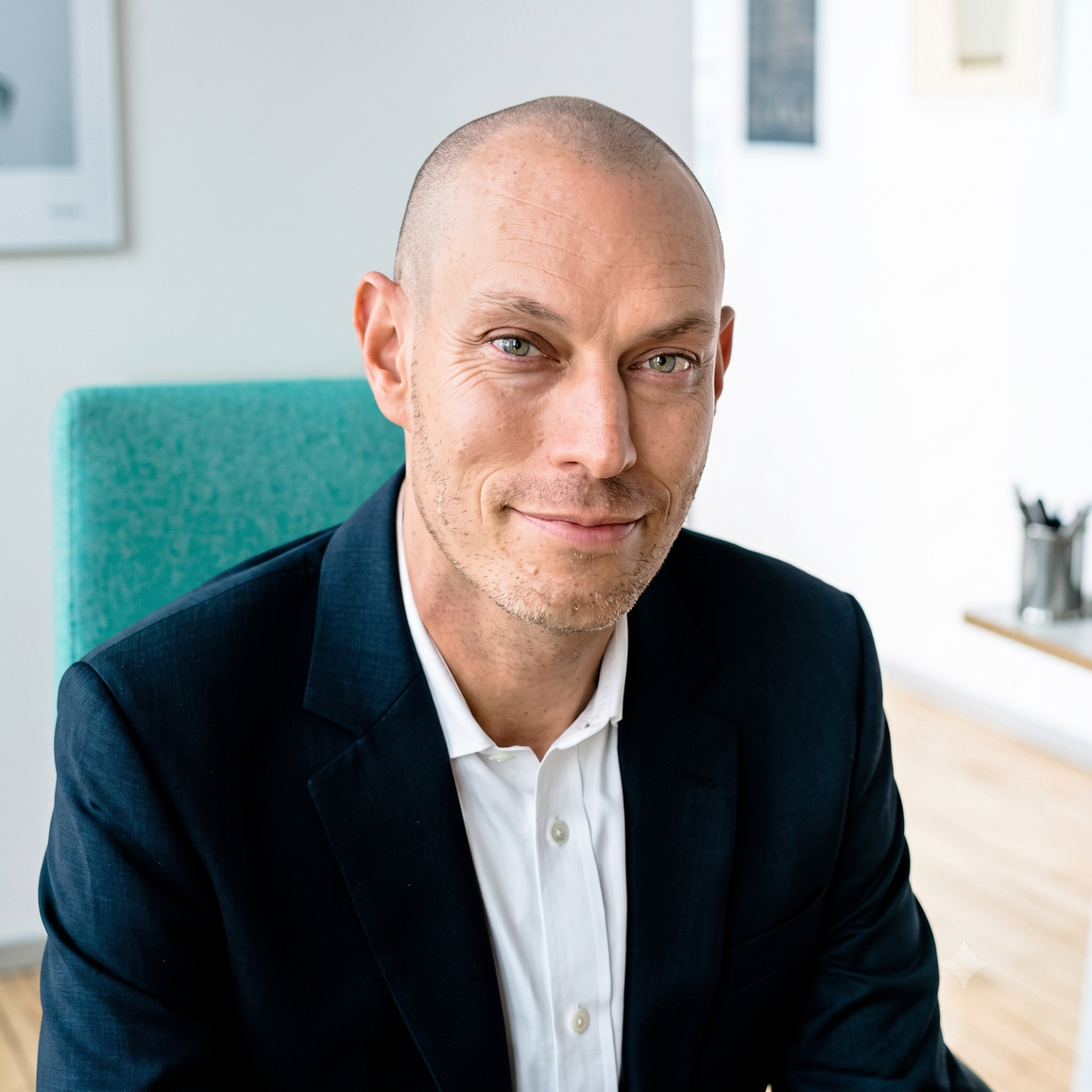
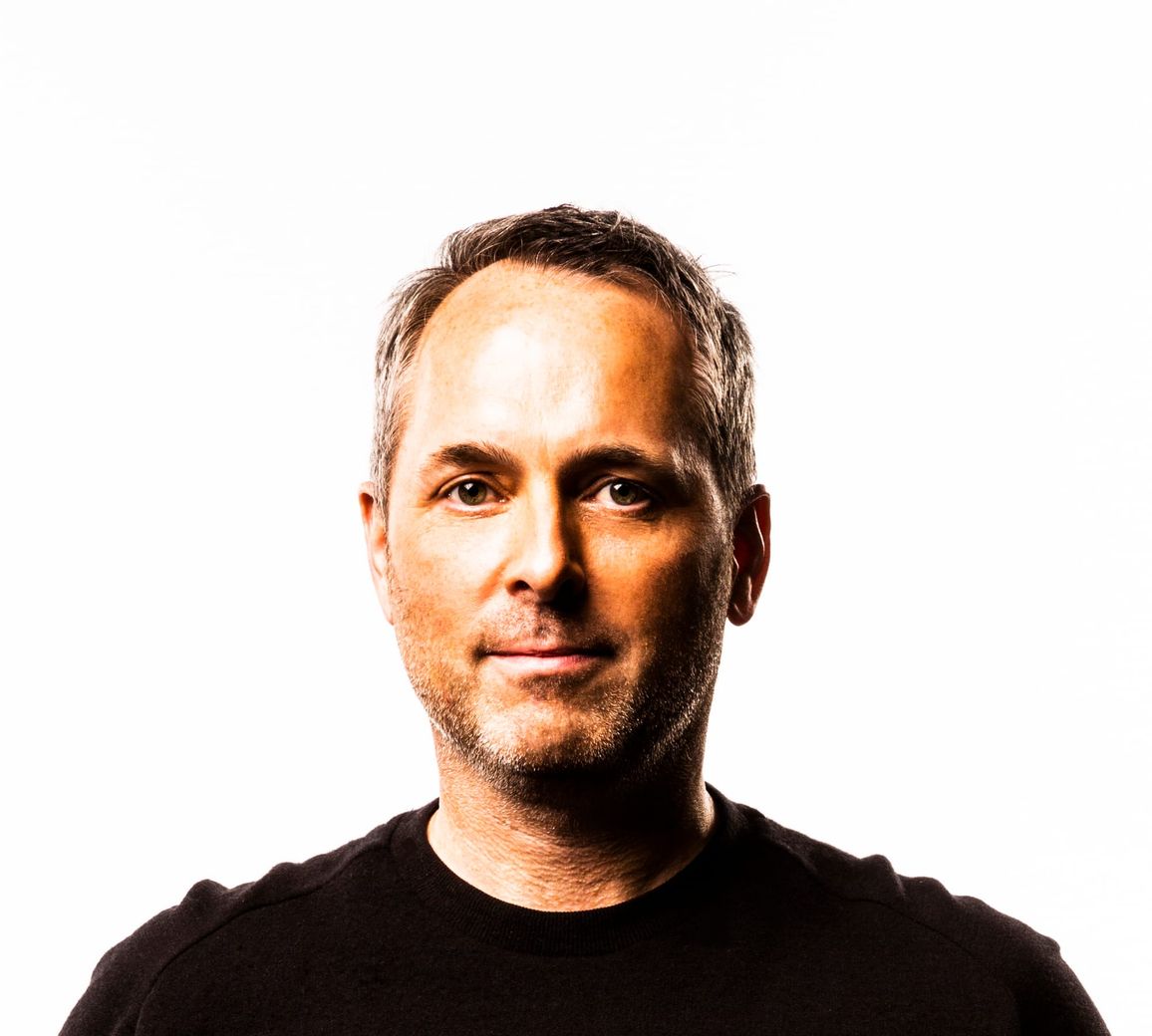
Fresh out of the studio, Dr. Rafael Frankel, Head of Public Policy for Asia Pacific at Meta, joins us to unpack how Meta is stepping up on the fight against scam syndicates in Southeast Asia along with a coalition of partners. He explains why today's syndicates operate with state-like capabilities and forced labor at scale and how AI has become both the scammers' sword and Meta's shield, powering the removal of hundred million scam accounts in 2025. Frankel walks through the disruption-sprint model that took down the million accounts in a single week alongside the FBI, Microsoft and Starlink, and argues that beating scams demands a coalition matched to the criminal supply chain. Closing out, he reminds us that crime is never zero — but through sustained, collective pressure, it can be cut by orders of magnitude.
"I think that people underestimate the criminals that are the drivers of the scams. Mostly what we're talking about at this point is extremely well-financed, highly sophisticated transnational criminal networks that have turnover in the billions, tens of billions, and have the finances, the technological know-how, the sophistication to really be trying to scam people 24/7, 365 days a year. That's a tough adversary to be up against." - Dr Rafael Frankel
Profile: Dr Rafael Frankel, Head of Asia-Pacific Public Policy at Meta (LinkedIn)
Here is the edited transcript of our conversation:
Bernard Leong: Welcome to Analyse Podcast, the premium podcast dedicated to dissecting the pulse of business, technology and media globally. I'm Bernard Leong, and today we are examining how Southeast Asia's scam economies have shifted from opportunistic fraud into industrialized cross-border enterprise — complete with scam-as-a-service kits and sanctioned conglomerates like the Prince Group — and why defeating it now takes platforms, banks, telcos and governments moving together. With me today is Dr. Rafael Frankel, the newly appointed Head of Public Policy for Asia Pacific at Meta, a 25-year veteran in the region as a journalist, academic and policy leader, who will unpack where the fight stands today and where he sees it heading. So, Rafael, welcome to the show.
Rafael Frankel: Thanks, Bernard. I'm really happy to be here.
Bernard Leong: I want to kick off with your background — your origin story. You spent years as a foreign correspondent in Bangkok and Jerusalem before moving into tech policy. What instinct from chasing stories did you carry into fighting scam networks?
Rafael Frankel: Searching for the truth and the ground reality of what's going on is a pretty strong through line from those two things. Understanding what's really happening on the ground — the local environment, how people are using technology and interacting with each other, how the politics comes into play — all of that is highly transferable to the work we're doing now to fight scams.
Bernard Leong: From the different roles you've undertaken over these past few years, what are the lessons from your career journey that you can share with my audience?
Rafael Frankel: I love the way Steve Jobs put it at the Stanford commencement address — you can only connect the dots going backwards. Having said that, one thing I really relied on over the years is my gut instinct — what I was feeling deep down about certain career opportunities and whether to seize them, and the willingness to take risks: to move to different parts of the world, to try new things, to put yourself in uncomfortable situations, and always be ready for change because it could come any second. If you put yourself in that mindset, always looking for growth and where the trend lines are going, you can get yourself into some pretty interesting situations — a fun career, and a highly varied one.
Bernard Leong: You've now been appointed as Meta's Head of Public Policy for all of Asia Pacific. What drew you to this role at the current moment?
Rafael Frankel: I can scarcely think of a better role to have right now. It's a moment where politics, technology, social development and economic development are all intersecting — and they're all intersecting here in the Asia Pacific, which is the clear growth region of the world, both in population and economy. In many ways, technology in the realm I work in — public policy — very much as well. We're talking about scams today, but it's not just true of scams. It's also true of AI, and of how people are using digital platforms, not just ours. When you put all those things together, and you're the kind of person I am — interested in all those things and in the policy and political environment that underlines technological development — then it becomes a really fascinating place to work. I'm always up for a good challenge. It's very hard, very challenging, but to me the intellectual stimulation is a positive.
Bernard Leong: You're also in a pretty complex market — reading policy across a very diverse set of markets, from India to Japan, Australia, the Philippines. They can be developing, emerging, or even frontier. How does that diversity shape how you think about the challenges we're going to discuss today?
Rafael Frankel: You have to think about the challenges from different points of view and the different people experiencing them, because they come at these issues from different places — different levels of knowledge, different cultural experiences, different vulnerabilities and different strengths. Political systems are different. There are many countries in the region where we can work really well and collaborate on a policy and law enforcement basis. There are other countries, unfortunately, like Myanmar, which are in the middle of a civil war and have a different type of government, where that kind of collaboration is really hard. So it forces you to think about the issue from all sorts of angles, and to come up with solutions you want to be as scalable as possible — while recognizing you'll sometimes have to adapt on a country-by-country basis.
Bernard Leong: I want to go specifically into how Meta is currently dealing with the scams situation. I had the fortune of interviewing Wong Sue Lin, the correspondent from The Economist who created the famous scam podcast series — it was really great. So when we look at scams from your perspective, what is the one thing people don't understand about the challenge itself?
Rafael Frankel: I think people underestimate the criminals that are the drivers of the scams we mostly experience. It's a big world — there are individuals just sitting in their basement trying to scam. But mostly what we're talking about at this point is extremely well-financed, highly sophisticated transnational criminal networks with turnover in the billions, tens of billions of dollars. They have the finances, the technology, the technological know-how, the sophistication to be trying to scam people 24/7, 365 days a year. When that's your adversary — and in many ways they have state-like capabilities — that's a tough adversary to be up against. We'll get into this in a bit, but what it means is that when you mount the most aggressive response you can, you can't go alone. You have to have a lot of partners to go up against it.
Bernard Leong: Online scams in Southeast Asia have gone from basic opportunistic fraud to something quite industrial in scale. Coming from Meta's vantage point, what has fundamentally changed in recent years?
Rafael Frankel: As you put it, the industrial-scale aspect is certainly different. We see in Cambodia — and there's obviously a ton of reporting on this — these scam centers where tens of thousands of people operate huge industrial complexes. That was not there a few years ago. When you have that kind of scale, and you have the forced-criminality aspect of it, it's really sad. There are around 300,000 people, studies say, trafficked to these centers and forced to engage in criminal behavior and scams. That is new as of a few years ago.
A few other things worth noting: connectivity around the globe continues to get better. For the most part that's great — it connects people, drives economic opportunity, and Asia Pacific is one of the regions that has experienced this the most. But it does mean there are more opportunities for the criminals to connect. Crypto is another thing that has come on the scene in a bigger way in the last four or five years — it's harder to move money if you use established mainstream financial institutions. Crypto has very positive uses too; I'm not suggesting any of these technologies are inherently bad. But with technological development there are very strong benefits, and often the unfortunate parts you also have to take care of. That's the way technology develops.
Bernard Leong: Since you mentioned technology — how is AI now being used as both a sword and a shield, from the policy perspective you come from?
Rafael Frankel: AI is certainly one of those tools scammers use as well. It allows them to manipulate images and voices in ways that previously weren't available to them — impersonation. The flip side is that, for us, AI is a really extraordinary tool to use against the scammers. We can ingest billions of signals from our platforms, and we fortunately have access to some of the best AI systems and models ever deployed. That gives us the ability to deploy AI as a great shield. We use it to look at how people are using our platforms, and we can identify certain patterns that allow us to take down accounts at scale. Last year, in 2025, we removed 159 million scam accounts on our platforms. There's no way we can do that without AI. These systems are getting better and better, so we're going to continue to deploy them as a really strong tool to combat scams.
Bernard Leong: Very few people know — and I actually found this out in preparation for this interview — that Meta led two major disruption operations this year, in March and June, working with law enforcement from around the world. Can you walk me through what coordination with Meta actually looks like in practice?
Rafael Frankel: Let me go back even further, to the genesis of this. It was basically Bangkok, November 2024, if I'm not mistaken, when we hosted for the first time a group of civil society, law enforcement and policy people — mostly from around the Asia Pacific, but including other places; I think there were a couple from Africa, the Middle East, the United States — to really focus the problem on what we saw at the time as this emerging scam issue around our region. It was when the public consciousness first started to be trained on the fact that there were these industrial-scale scam centers, mostly in Cambodia and Myanmar. We convened it as Meta to make a first effort at putting heads together and thinking: what can we do to collectively solve this problem? Because when this is the adversary you're up against, it's an all-hands-on-deck fight.
That got everyone thinking about what could be done collectively. It took some months, and then in December of last year we had our first real major disruption in Bangkok, where we brought together law enforcement from around the region and some policymakers. We focused the problem in Thailand on the surrounding scam center areas, working with the US FBI and Justice Department and a few other partners. We saw it was a really effective collaborating model — in that first disruption, we were able to take down about 59,000 accounts and issue six arrest warrants.
We saw that was a really effective model, so we said, let's make this even bigger. Then we had another disruption sprint in March — one week long — and another in June, which started in Washington and then moved to Bangkok. The model has been the same, and each time we try to expand the number of partners we're working with. If you fast-forward to the last one in June, we had a huge number of law enforcement agencies — not just from Asia Pacific, but also Europe and the United States: Japan, Singapore, Australia, Korea, Thailand, obviously the FBI, the Justice Department, the scam strike force, UK law enforcement, and a number of others. This time, for the first time, we also convinced some of our tech partners to come join the fun — we had Microsoft there, Starlink joined. This time around, we were able to take down 1.5 million accounts in just one week on our platforms, 20,000 Microsoft accounts, and thousands of Starlink kits. The Royal Thai Police made 63 arrests. So you can see how, over just a six-month period, we were able to really scale that up.
Bernard Leong: The coalition now actually mirrors the criminal supply chain itself — matching the coalition to the chain. Is that the blueprint for making these operations work, from your point of view?
Rafael Frankel: It has to be, and it's got to be an always-on exercise. We're talking about specific scam-sprint disruptions, which are pointed and have a specific target — really these scam centers in Southeast Asia. But if we're talking about the always-on work, then yes, we have to collaborate with the telcos, the financial institutions, law enforcement and policymakers. There are a couple of pieces we should mention to the public. We have to have public awareness. We have to have everyone in civil society involved. You've got to put all that together, because the scam chain involves — in many cases, not all — the digital platforms, the telcos and the financial institutions. Then you've got to have law enforcement to put them behind bars. You've got to have governments to create the right policy framework and political cooperation to make this actually happen. Then you've got to have civil society and the public involved, to make sure people are aware and know what they can do to help.
Bernard Leong: I would not underestimate the effort required to coordinate between these organizations. So how are you actually building trust between them to share intelligence or approach the issue as a collective? And what challenges do you face? Three disruptions is not easy — from the planning all the way to the operations.
Rafael Frankel: We're really proud of the disruptions work — it's amazing what we've achieved. But we should be talking about the larger effort that's always on and ongoing. Is it challenging? What builds trust? Results. Results build trust. If you can show that you can take down scammers and put them behind bars, and you can have offline law enforcement action that takes down these scam centers and denies the scammers the impunity of operating in broad daylight — and you've done that because you've collaborated, because you've shared intelligence, because you've put all the pieces together — then you get the results, and that is a positive snowball effect. You create a positive feedback loop, and then more people want to join and more people share intelligence. That's why, every time we do one of these disruptions, the number of stakeholders participating grows.
On the always-on work, we've also established the Global Signal Exchange to combat scams, where the digital platforms, the financial institutions and law enforcement are all sharing data signals. So if someone's operating as a scammer on Facebook and we have some identifying information, we can put it in the signal exchange. The banks get that information, the telcos get that information — hopefully that means they'll be denied the use of those services too, so they can't use any of us. We have the FIRE program, where we share information with the banks to help ensure scam transactions don't go through. Then there's the work we do with civil society — the public service announcements and campaigns we run with governments so people are educated and know how to spot a scam, so they're aware of scammers' techniques and the different types of scams, and can identify them and not fall prey. That's always-on work we've been doing for a number of years now. When you put all that together, it's a really big collaborative effort — but it requires all those different stakeholders to make it work and make a good dent in it.
Bernard Leong: There was one part of the conversation where the FBI laid out that this isn't really a country-specific problem — compounds simply relocate whenever pressure eases. Is disrupting these scam networks fundamentally a game of whack-a-mole, or do you need source-level pressure that can actually shrink the market itself?
Rafael Frankel: Both are true. You need both. You do need the source-level pressure — I 100% agree with the FBI on that. But it was also really important that this action against the scam centers was taken, because you just got to the situation where you had these massive industrial-scale scam compounds operating in broad daylight with total immunity. Everyone knows where they are. Everyone knows there are 10,000 people sitting there day after day scamming people. You have to put that to a stop. You have to raise the cost to the scammers of engaging in this activity, and tell them that if you try, you're going to get thrown behind bars. It doesn't mean scam centers or scammers won't pop up in different places — that comes back to the source pressure. But it means that's how you squeeze them from both ends. One or the other isn't sufficient, but if you pressure it from both sides, you can make some headway.
Bernard Leong: What was the most counter-intuitive lesson you've learned from being inside Meta's fight against these syndicates?
Rafael Frankel: One thing people probably assume — and I understand why — is that because our platforms are so big, so many people use them, and we ingest a lot of data, we know everything. But we don't. There's a limit to what we know, and the limit is what's on our platform. Anything that's not on our platform, we don't know. So when scammers are operating on other digital platforms, using telcos, the banks, the crypto exchanges — that's beyond our ability to know. It drives home the point about the need for collaboration. We can see our part of the scam chain, but we can't see beyond it. That's why you need the collaboration.
Bernard Leong: The Asia Pacific region is probably described as the front line of the scam problem. But could the argument also be made that it's actually the front line of the solution? What do you see happening in this region that isn't happening elsewhere?
Rafael Frankel: I certainly hope so. I think we've been really innovative in the way we've approached it. The scam disruptions are the best example — that entire model started out here, through the dogged pursuit by people in this company. I give the Royal Thai Police a lot of credit, the Department of Justice in the United States, the Singapore Police Force — that core group of partners that really got the effort off the ground, and that tied in the real government too, just to be clear, not just the police. So what we've done out here is demonstrate a proof of concept that works. Now the question is how you scale it up and do it in other places around the world.
The other thing is what we've been able to identify as scam types out here — for better or worse, a lot of the scam types we see also, to some degree, originated out here. When we can pass that knowledge along to other regions and say, here's the activity we're seeing, here's how scammers operate — then if they see them in the US, Europe, Latin America or Africa, they already have that point of reference from the work we did. I also want to say there's a really highly collaborative effort and spirit among most of the governments and law enforcement agencies out here — they really are trying to pull on the same rope on this one. That's another thing I hope we've been able to demonstrate around the world: we can all work on this together, even if there are other things we disagree about.
Bernard Leong: The fact that all these different governments are working with you is a testament to humanity — the positive of what we should do. But how does Meta calibrate its approach across such different markets? Clearly what works in Singapore is very different from other countries around the region.
Rafael Frankel: We obviously prefer to have really strong government and law enforcement relationships everywhere. There are some countries where the circumstances make that challenging — I already highlighted Myanmar. But the other part is that scams are different in different places. One thing in the Philippines is the POGO centers — that's been something very specific to the Philippines, and we've put a lot of work into helping the Philippine National Police shut down those centers where there's criminal activity operating from them. That's in some ways a uniquely Philippines thing. We've talked about the scam centers in Cambodia. Thankfully, we don't have anything like that here in Singapore. But in Singapore you've had different criminal groups operating, some of which were sanctioned by the US Treasury Department, and then the collaboration becomes really pinpointed police action. You mentioned the Prince Group — that's one example. In Thailand, one thing we see is that the Thais don't have a lot of people setting up and scamming from Thailand, but it's a point of transit. So one thing we've been able to do with the Royal Thai Police is catch people when they're transiting through Thailand. Those are examples of the different ways we work with different law enforcement agencies and governments, based on the local exigencies and the ways we can get at people.
Bernard Leong: The skeptic's case is that sanctioning a Prince Group, or extraditing a kingpin, is theatre — the compounds, the trafficking and the laundering rails still survive intact. Where does that argument go wrong?
Rafael Frankel: If that were the end of the action and not the beginning, then you might have a point. But I really give a lot of credit to the US Treasury Department and the OFAC office. They put a lot of effort into tracking down the financial networks these criminal syndicates use, and they've thrown a few waves now of sanctions on the criminal groups that have established themselves in this part of the world. Those are really effective at giving law enforcement out here the tools they need to go make arrests. Sure, if they had started and stopped with that one action, it wouldn't be sufficient — but that's not what's happening. In fact, we're seeing an expansion of that work all the time. The DOJ strike force is very active now in this part of the world, and I think they're pretty committed to staying active. What you need is sustained pressure over a long period of time to tackle any criminal enterprise. I'm American — go back to the 1920s and the gangsters that used to roam around Chicago; you don't get them overnight. You get them over a long period of putting a lot of pressure on them, a lot of sustained law enforcement and prosecutorial action. In a similar way, we've just got to keep the pressure up. Over time, if you can raise the cost and lower the profit through the collective actions everyone is taking, then eventually — you're never going to get to zero. Crime is never zero. But you can reduce it a lot. You can get it down by orders of magnitude, and that's where we should be shooting for.
Bernard Leong: What's the one question you wish more people would ask you about the scam landscape in Southeast Asia and Meta's efforts to fight it?
Rafael Frankel: Going back to the theme that this is a collective-action environment — what I sometimes wish people would ask is: what can I do to help? My answer would be that there is a lot of material out there now that we've developed in cooperation with the Singaporean government and other governments in the region, law enforcement, the banks, the telcos. We've all put out a lot of material to help citizens around the region and globally identify scams — to understand and start thinking critically when they see certain messages on SMS, when they're asked to engage in a suspicious financial transaction, or they get an approach on Telegram — to identify that and really educate themselves so they don't fall victim when it happens. We're going to keep doing our best, together with our partners, to deny scammers the ability to use our platforms and others. But it's an incredibly strong tool when the citizen him or herself knows when to say, "I'm not falling for that."
Bernard Leong: My traditional closing question: what does success look like for this fight, say three years from now?
Rafael Frankel: We've done a lot of work building up the institutional capacity to collaborate across the different sectors I've mentioned. There's still more we can do. We must have had a dozen government and law enforcement agencies in the last disruption — but we can always bring that number higher, and continue to expand the partners we work with. So looking forward, what we'd want to see in a few years is even stronger institutional, collaborative tissue developed over time. A year or two ago, someone was talking to me about this and said it reminded them of the early days of the effort to combat terrorism content online, which we now call GIFCT. I thought that was a really interesting analogy, because at this point that capacity — that muscle — has been built up across the platforms, governments and law enforcement agencies. Everyone knows who to talk to and how to share intelligence, and it's really effective. So in another few years, we should hope we're in that same kind of space when it comes to anti-scams work.
Bernard Leong: I find it very refreshing. From first covering that story on scams to now hearing Meta take action together with your partners, this has come a very long way. I'm sure the road ahead is still pretty tough in order to really bring this down to near zero. Please check out Meta's scam protection centre.
Rafael Frankel: It takes a sustained effort among a lot of people.
Bernard Leong: Many thanks for sharing the story today with me — and, of course, for hosting me here.
Rafael Frankel: I hope you've enjoyed our library here in our Asia Pacific headquarters.
Bernard Leong: I totally enjoyed looking at the books. Just two quick closing questions. Any recommendations that have inspired you recently?
Rafael Frankel: For books — it's completely off topic, though. One of the last books I read that I really loved was The Ministry for the Future by Kim Stanley Robinson. Have you read it?
Bernard Leong: I haven't read that, but I read his famous Mars trilogy — Red, Blue and Green Mars.
Rafael Frankel: I strongly recommend it. It's also a little scary — the vision of where things could head with global warming and everything. But what he does as an author is always show you how things can get better. In some ways that's on topic for what we're talking about. That's my recent recommendation.
Bernard Leong: Where can my audience find you, and the resources you can share so people can help you get the word out?
Rafael Frankel: I'm on LinkedIn — somewhat active there — and I welcome people to follow me. I post a significant amount about our anti-scams work, but also about the AI models we're developing and the tools we're bringing to market that are incredible for economic impact around the region, supporting SMEs. If you want to talk about driving economic growth and potential — some of the tools we're rolling out for small and medium-sized enterprises, and how they interact with our platforms and others, are really impressive. They're going to continue to drive opportunity in this part of the world, which is so digital-native at this point, and also forward-looking and dynamic. So you can find me there — I'm often talking about how we can combat scams and how we can use AI for good, and all these awesome topics.
Bernard Leong: You can find us anywhere — subscribe to our newsletter, on LinkedIn, on our main site. And of course, give us your feedback. So Rafael, many thanks for coming on the show.
Rafael Frankel: Thank you very much for having me.

Podcast Information: Bernard Leong (@bernardleong, Linkedin) hosts and produces the show. Proper credits for the intro and end music: "Energetic Sports Drive" and the episode is mixed & edited in both video and audio format by G. Thomas Craig (@gthomascraig, LinkedIn).