Inside "Defending Taiwan": How to prevent a war between China and the US with Eyck Freymann

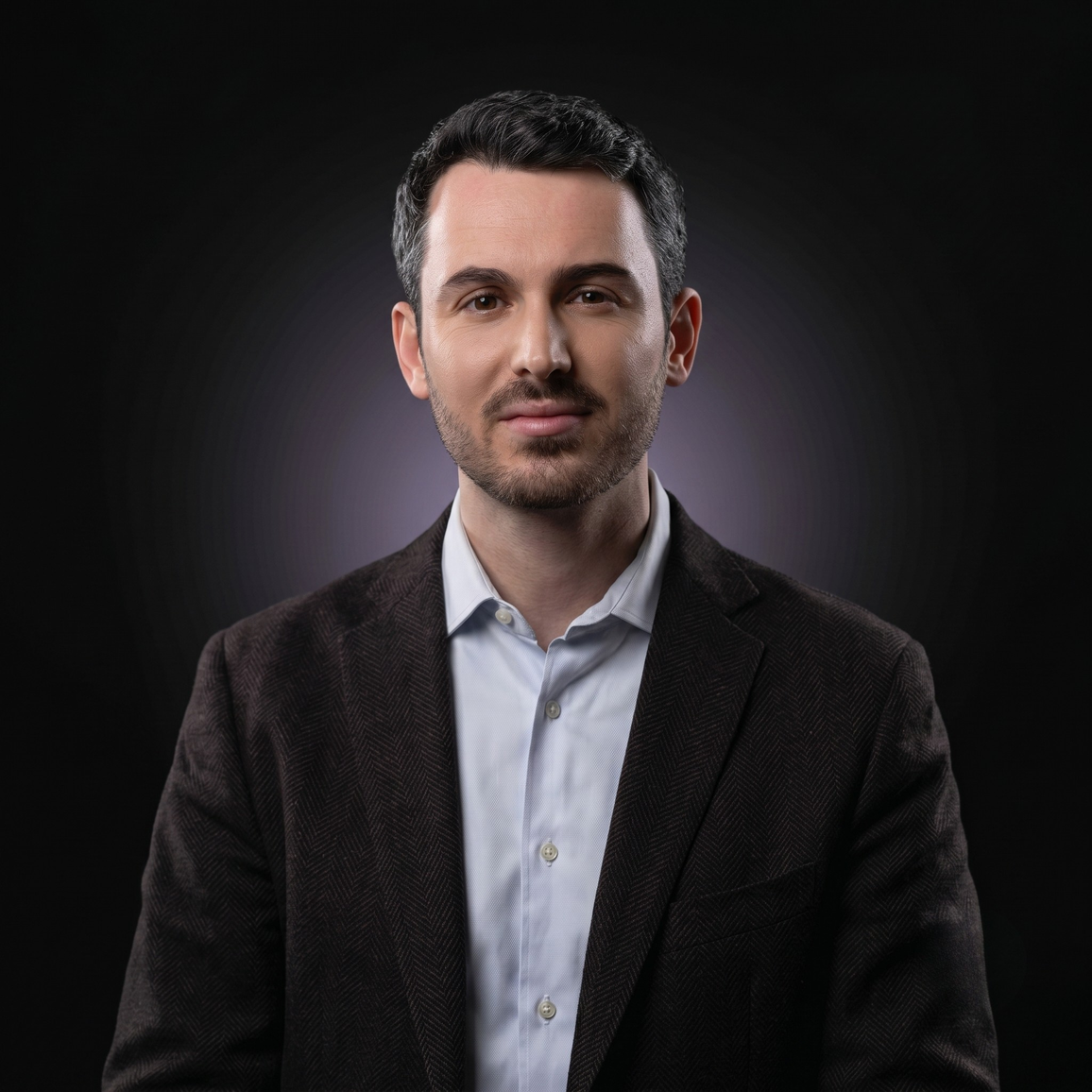
Fresh out of the studio, Eyck Freymann, Hoover fellow at Stanford and author of Defending Taiwan: A Strategy to Prevent War with China, joins us to explore why the Taiwan question will be decided by economics and coercion, not by invasion. Eyck unpacks the Thucydides Trap as a warning, not a prophecy, traces how Chinese President Xi Jinping's Belt and Road statecraft shapes his approach to Taiwan, and contrasts a kinetic invasion with the "quarantine" scenario he fears most. He reframes 2027 as a capability milestone, recasts TSMC as a "silicon magnet" binding America to Taiwan, and flags Taiwan's 2028 election as the real flashpoint. Last but not least, Eyck argues the real task is to deter the crisis, not the war.
"For Beijing, I hope they will say: the United States actually does have a strategy to use every element of its national power to preserve peace and stability without provoking us, and we should not assume the United States is incapable of an effective response. In Taiwan, I think the lesson is: the United States trusts the people of Taiwan to choose the best future for themselves, and ultimately Taiwan's fate is up to the people of Taiwan to choose. That is the heart of what the American One China policy is about and must be about. The people of Taiwan must choose, and the United States will respect their choices. That is a profound insight that doesn't get said often enough." - Eyck Freymann
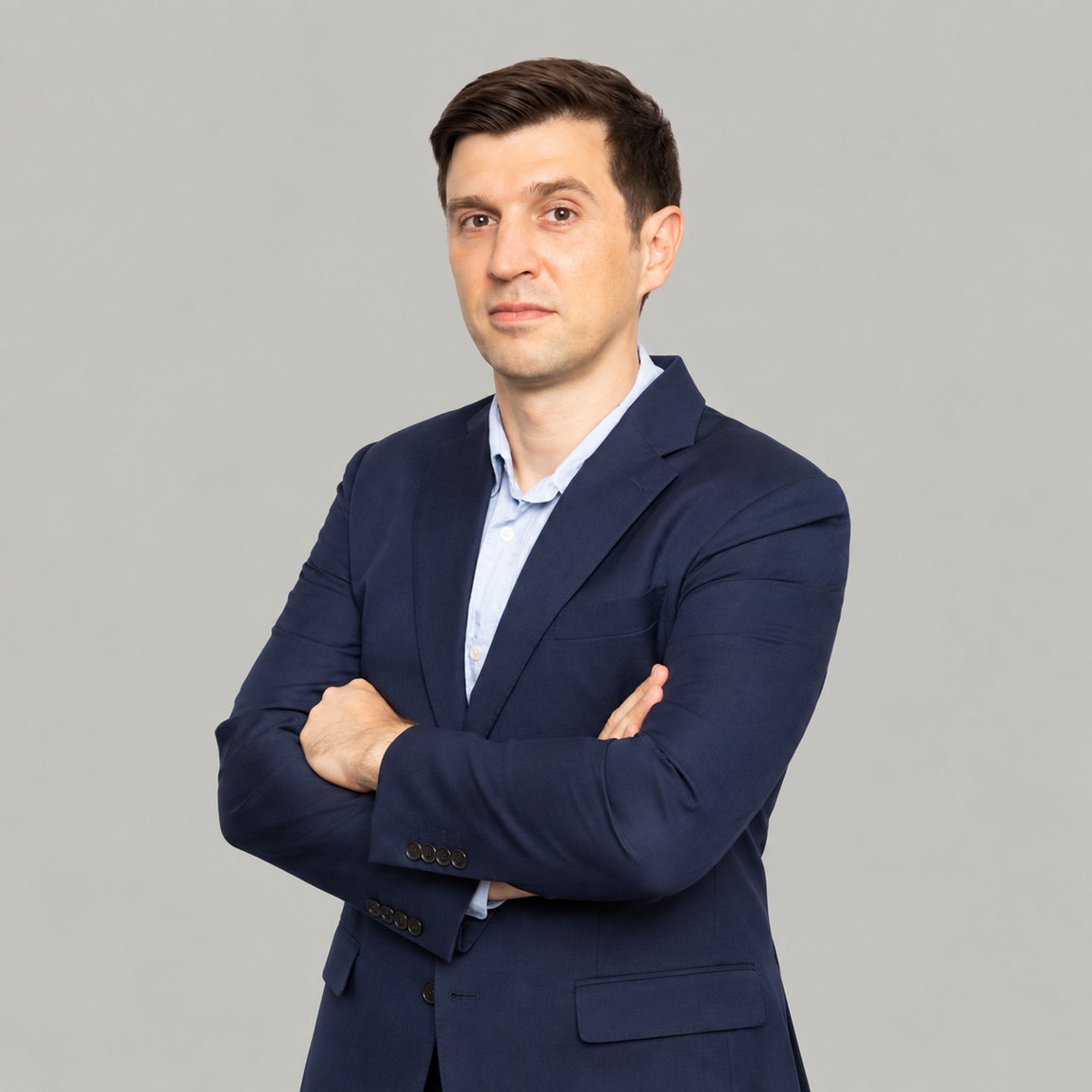
Profile: Eyck Freymann, author, "Defending Taiwan" (LinkedIn, Personal Site)
Here is the edited transcript of our conversation:
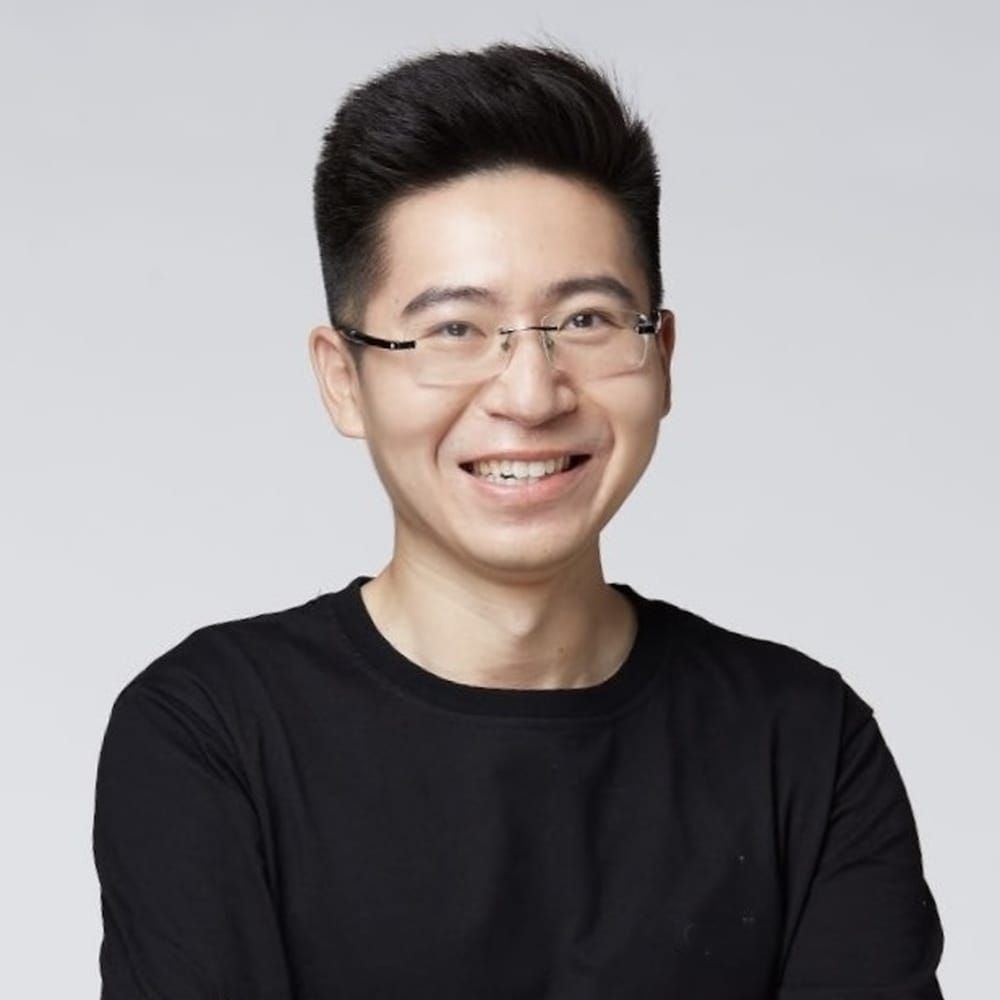
Bernard Leong: Welcome to Analyse Podcast, the premier podcast dedicated to dissecting the pulse of business, technology, and media globally. I am Bernard Leong, and the rivalry between the United States and China has become the defining strategic question of this century. Most debates default to Cold War analogies, containment blocs, and an inevitable clash between superpowers.
But a growing group of historians and strategists argues that the deeper danger lies in the Thucydides Trap. When a rising power challenges an established one, fear, miscalculation, and domestic politics can turn competition into conflict. Today, we examine whether Washington and Beijing are destined for confrontation, or whether diplomacy, deterrence, interdependence, or technological governance can bend the curve away from war.
With me today is Eyck Freymann, Hoover fellow at Stanford, and author of a new book which I really enjoyed reading, Defending Taiwan: A Strategy to Prevent War with China. We will discuss the great power rivalry, Taiwan, technology, ally coordination across Asia, and Xi Jinping's 2049 horizon. Eyck, welcome to the show.
Eyck Freymann: Thank you so much, Bernard, for having me on. Really looking forward to getting into it.
Bernard Leong: We share some common origin story, but I want to start from yours. How did you start your career?
Eyck Freymann: How did I start my career? I got interested in China as an undergraduate. In my freshman year I took a seminar about ancient Chinese history and was captivated by the civilization. I spent a summer backpacking around China, did a short home stay, and was enchanted by the language, which I still really struggle with, by the food, by the warmth of the people, by the depth of the history, and most importantly, by the politics, which seemed to be trending in a self-confident and assertive direction.
I came back and took classes on Chinese politics — this is at Harvard as an undergraduate — and I was struck by the fact that what I was hearing in those classes on campus was increasingly diverging from the China I would see when I went back over the summers. This was the beginning of Xi Jinping's first term.
The anti-corruption campaign was getting going. The media and political environment was tightening, and it became increasingly clear to me that the peaceful coexistence or convergence the United States and China had seemed to be on through the '80s, the '90s, and the aughts, was breaking down — because Xi Jinping had a very different idea, a much more rigid Leninist ideological idea of what he wanted China to be.
I was fascinated by that because I'm interested in how power works, and very interested in how propaganda works. But I also wanted to do international affairs without having to specialize in just one country, and it seemed to me that if China continued on this trajectory, they would touch everyone, and everyone would have to understand them.
So if I did China and the world, I could specialize without specializing, and that has been my great professional bet. One project after another, trying to help translate China for others — that has been the goal: to specialize without specializing.
Bernard Leong: Your path is pretty unusual. Harvard, Cambridge — fellow alumnus as well — Oxford in Chinese history, research assistant roles for Graham Allison at Harvard, whose famous book I read, Niall Ferguson at Stanford, and Shi Zhiqing at Tsinghua, then Greenmantle on the market side, and now Hoover on grand strategy. So when did Taiwan deterrence become the question that pulled all these threads together?
Eyck Freymann: Late. My first job out of college was as a research assistant to Graham Allison, where I helped research and draft chapters of the Thucydides Trap book.
Bernard Leong: Destined for War.
Eyck Freymann: With a couple of other RAs, I worked on the Athens and Sparta chapter and also the China chapters. I'm actually a defender of the book, which is widely criticized by people who haven't read it.
One of the difficulties about writing a popular book with a slogan as the tagline is that the slogan takes on a life of its own that often has very little to do with what the author meant. A famous example is Francis Fukuyama's The End of History. Fukuyama meant something very different from what people took it to mean.
Similarly, the Thucydides Trap idea is a warning, not a prophecy. In fact, the original title was Destined for War, question mark — and the editor knocked off the question mark. One of my early moments of education that sometimes editors are more interested in sensationalism than accuracy. But Graham reached a very insightful observation: when a rising power confronts a ruling power — and that is what we are seeing in the US-China relationship — both sides develop completely incompatible worldviews. The ruling power believes it is entitled to certain privileges, the rising power believes it is entitled to certain privileges, and one sees history trending in a very different direction than the other.
They can read the same historical facts and extrapolate onto them a very different future. It's the misalignment between those two understandings that can make conflicts very difficult to resolve and can turn small disputes into big ones. Now, the difficulty with the Thucydides Trap concept is that from the very beginning of Graham's use of the term, even before he published the book, Xi Jinping personally took an interest in the slogan.
Bernard Leong: That's right. He brought it up recently as well, during the visit to China.
Eyck Freymann: So why is the CCP propaganda apparatus so taken by this concept? Why does Graham visit China and meet with all the great and the powerful? The reason is that China has realized there is a way it can spin the Thucydides Trap as an example, drawn from Western political history, of ruling powers being too rigid and unwilling to move aside to create space for a rising power to grow.
In the Chinese analysis, that's the great lesson of Thucydides. That's not my lesson of Thucydides, by the way. One of the key themes in the book is how a rising power can develop wildly unrealistic ideas about the rights and privileges it deserves — ideas incompatible with the norms that other countries, not just the single ruling great power, are willing to accept.
Bernard Leong: I want to draw back to your first book, on One Belt One Road, because one of the interesting parts is that the Belt and Road Initiative cannot be understood simply as some form of centrally controlled master plan, but more as a decentralized political campaign — one that draws a lot on Chinese traditions of hierarchy, patronage, and symbolic recognition while operating through modern institutions and incentives. How did that interpretation of Beijing's statecraft shape how you now think about pressure, persuasion, or coercion in the Taiwan context?
Eyck Freymann: Thanks for asking about my first book. I came to this Taiwan issue through a circuitous path of thinking about how China uses economic power for political means. This is another innovation of the early Xi Jinping period that set China on a very different trajectory.
When Xi Jinping took power between late 2012 and early 2013, China had already been investing vast sums of money around the world for a decade or so — both as private enterprises diversifying, and because state-owned enterprises needed to acquire their own supplies of natural resources.
At this point, China was consuming close to half, and in some cases more than half, of the global supply of a whole range of commodities. If you're consuming at that scale, you need to find your tungsten, you need to find your manganese, and you need not only to figure out where it's in the ground, but to build all the supporting infrastructure — the power, the roads, the ports — to get it out and safely to China.
But this had been happening in a largely uncoordinated way. You had this misalignment where China was already the largest trading partner of dozens of countries and an enormous force in global commodity markets, yet it didn't have any soft power or political influence to match.
The Xi Jinping idea was that if you reorganize all of this activity that's basically already happening, and expand it in a more strategic way, you can cash in the chips of China's economic relationships for political influence too. That is what the Belt and Road was about. It was a co-optation of an existing development trajectory in pursuit of a much more ideological project.
At home, it had another function: it helped Xi Jinping consolidate power. Here was a man who had come to power with most of the people who supported him along the way not realizing that he wanted to be a strongman at the head of a personalistic dictatorship. So he had a lot of house-cleaning to do — going after political enemies with his anti-corruption campaign, but also bringing provincial governments, local governments, and state-owned enterprises under his control.
How better to do this than to recast all of this foreign investment that's already happening as a sort of patronage campaign, and say, "You're allowed to do it, you're encouraged to do it, but only on the terms the leader likes," cloaking yourself in the slogan that is the leader's slogan.
So the first few years of Belt and Road become this scramble to reorganize the patronage system of the CCP around Xi Jinping, and to do it in a way that casts him as a sort of new emperor. This was essential to how he got control over the system. It's also how he learned that economic coercion, in various forms, is sometimes China's most powerful way to get what it wants — more so than military pressure or other tools — and I think he applies those lessons to Taiwan.
Finally, it's how we learned a lot about how the man thinks about his own place in history, and this is probably the most important reason to take Xi Jinping seriously on Taiwan. He sees himself as an agent of a grand historical restoration of China returning to its rightful place atop the hierarchy of nations, and that narrative requires Taiwan to be brought into the fold — by force or by coercion if necessary.
He has now built the tools, and he has made clear the legacy project, and Taiwan, to me, clearly is what comes next.
Bernard Leong: You've done a lot of fieldwork and primary-source work in Chinese for years, and reviewers consistently single out your use of untranslated Chinese sources. What is the single most important thing about how Beijing thinks about Taiwan that gets lost when policymakers rely on translated material?
Eyck Freymann: This is a disappointing answer, but on this particular issue, there's not much you can say with open-source commentary. If you're trying to understand China's strategy for breaking a choke-point dependency in some particular technology — like robots that can zoom around on the seafloor — or you're trying to understand China's diplomatic strategy in Greenland, or some issue like that, it can be very helpful to draw on commentaries from scholars, officials, and think-tank people.
There will be a big debate. Many of those people expressing views will not have particular influence or insight into the policymaking system, but maybe some of them will. There are various methods we learn in the craft — and this is an art, not a science — for identifying who probably actually knows what's going on.
When it comes to Taiwan, the system is guessing, because the decision lies in the hands of a single man who is inscrutable even to his own close advisors. No one knows what he will do, any more than people know what Donald Trump will do on this particular issue, because of the control he has developed over the military and other things.
There are useful studies. My friend and colleague Jude Blanchette and Richard McGregor have a piece out a few days ago about how the debate in China is evolving — thinking about ideological re-education, what will have to happen to the people in Taiwan if and when they are absorbed. But I don't know how much we can read into that, simply because I don't know whether these people have insight into what Xi Jinping thinks.
Another key issue where the open sources are useless is understanding China's nuclear strategy. Clearly, something has changed in China's nuclear doctrine, because from the mid-1960s, when China first acquired nuclear weapons, through Xi Jinping's taking power, China was satisfied to have what they called a minimum nuclear deterrent of a few dozen to a couple of hundred warheads.
They believed: we don't have to take on the cost and difficulty of competing with the Americans and the Russians warhead for warhead. A few dozen to a couple of hundred is plenty to deter anyone from striking us. Well, under Xi Jinping, they have been undertaking the most breathtaking nuclear breakout since the Cold War.
They're now over 600 warheads. They're headed toward over 1,000 by 2030, possibly to 1,500 and beyond. None of the open-source commentaries can provide any coherent explanation for what they're trying to do. The reason, I think, is that no one knows what the doctrine is, because there is no doctrine.
The doctrine is that the big guy wants more nukes. When we think about the Taiwan issue, that is a profound insight we all have to grapple with. We're not deterring a country, or a party, or a military. We're deterring a single man who has his own idea of how power works. We can still learn things about how China's system has used economics for political benefit, has used nuclear threats for coercion. We can understand features of the system — but you need to organize a deterrent strategy around the man.
Bernard Leong: You've worked with very interesting people — Graham Allison, Niall Ferguson, and Shi Zhiqing — who exposed you to applied history, great-power transitions, and the insight of Chinese policy thinking. Three very different lenses. Which lesson from any one of them do you test your own arguments against, especially when you're writing something as consequential as a Taiwan crisis that may become the sparking point for this whole rivalry to unravel?
Eyck Freymann: Niall and Graham are both fans of an approach called applied history. Applied history describes a whole basket of techniques for using history to illuminate our understanding of contemporary challenges. History is not a crystal ball, because the past doesn't repeat itself, but the past sometimes rhymes with the future, and there are lessons and trends that, if you study and understand them, can help you act more effectively in uncertain times.
Niall and Graham have two different ways of thinking about applied history, and those are not the only two. One thing I've been lucky to have, as I've come up as a young scholar, is the ability to participate in a community of historians, political scientists, and practitioners that they bring together regularly to talk about these methods, and I have my own ideas, developed in conversation with them, about how it works. My book, Defending Taiwan, is not a history book, but it uses history in a couple of ways. First, to understand how we got here — because often, when you're trying to make sense of a complex foreign policy problem, if you don't have a sense of its genealogy, the history of the present, you will be flying blind.
A great example is the One China policy in the United States. Why can the United States not easily change its longstanding policy? You have to understand how often, in the recent past, we have insisted that it hasn't changed and won't change. Similarly, if you want to understand how to read Xi Jinping's statements and signals, you have to look at what he's doing and compare it against what his predecessors said and did — because some of it may not be that different, but other aspects are different and might therefore be concerning.
There's another way you can use history, which is as analogy: to ask, "Where have we seen this before, and what is similar and what is different?" There's no single incandescent analogy — as Graham would call it — that lights up this whole problem, because the Taiwan problem is the most complex, multifaceted foreign policy challenge the United States has ever faced. But if you decompose the situation into parts, and look at particular aspects of the scenario, often those aspects have useful historical parallels. You work those analogies one at a time, then try to recompose them into a picture of the whole.
Bernard Leong: I want to get into your book. I haven't seen a book that lays out the entire historical background of how this situation came to be, along with the potential scenarios. Most analysis of Taiwan starts with a timeline: will it happen by 2027, 2030, 2035? One thing I take from your book is that you reframe the question — 2027 is a capability milestone, not an invasion deadline. The real binding horizon is somewhere around 2049, the centenary of the People's Republic of China. So the operational question isn't "when will China invade," but "how will China coerce." Walk me through why you think Washington has been asking the wrong question for the last decade.
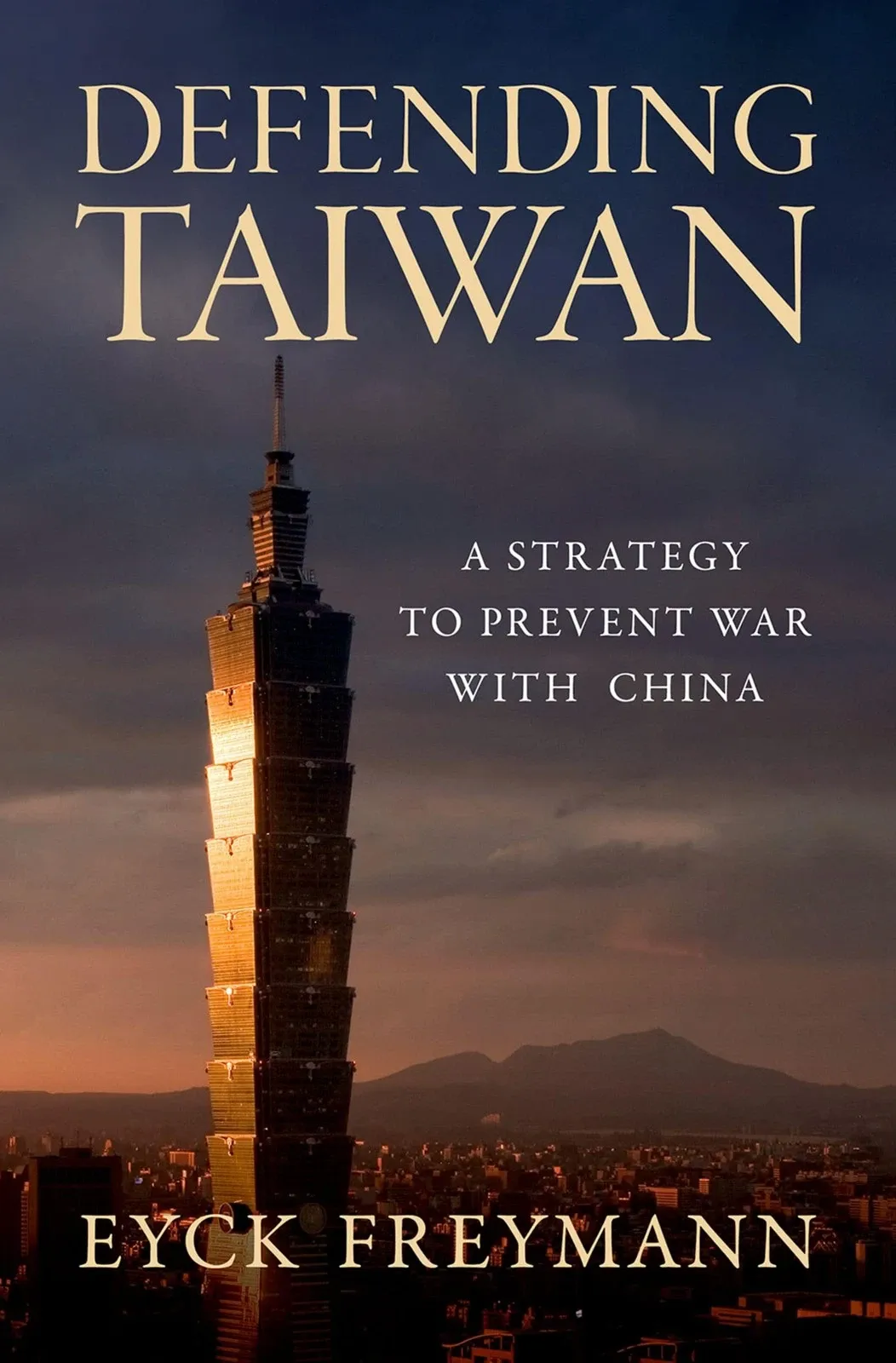
Eyck Freymann: I wouldn't say they've been asking the wrong question. The origins of this date go back a decade or more, because we have long known that 2027 — the 100th anniversary of the establishment of the PLA — is seen internally as a key capability-development goal. The PLA has been speaking to itself internally for over a decade about the milestones it hopes to achieve en route to 2049.
2049 is obviously the big one, but 2027 and 2035 are milestone years with significant dates in CCP history. The question is what the goals, or key performance indicators, are for the PLA planners thinking about those deadlines, and what political pressure is being brought to bear on the institution to shape their choices about what they buy, how they exercise, and how they organize.
In 2021, Admiral Davidson, the US Indo-Pacific Commander, testified to Congress that the US intelligence community had reason to believe Xi Jinping saw 2027 as a capability goal. Various US officials subsequently explained what that meant, some speaking in a more disciplined way than others. The clearest explication, I think, was from the CIA director, Bill Burns, who explained on Face the Nation that Xi Jinping has not decided to use force by 2027 or any other date, but he sees 2027 as an internal readiness deadline.
One way to interpret that is that Xi Jinping was quite sure, as of 2021 or 2022, that at that point he was not able to take and hold Taiwan by force. Moreover, the fact that he needed a deadline meant he was concerned that without external pressure, the PLA wouldn't be ready by 2027 either. One of the points I make in the book is that when the United States decided to declassify that assessment, it shone a great big spotlight on the PLA as it got closer to 2027.
So now this is not just an internal deadline. It's a deadline that everyone in the world assumes, because everyone who follows this now knows about the Davidson window. By 2027, the PLA will say to Xi Jinping, "We've done it, sir, we're ready." The question is what you can do to create sources of uncertainty in the big guy's head so he won't actually believe his generals when they say they're ready to go.
This is a key point. China has never fought a naval war of the kind it would have to fight over Taiwan. The military leadership is not combat-tested. How do you seek new sources of uncertainty that can make a leader — who can order his military to do certain preparations and can allocate vast resources — believe that his system actually isn't combat-ready?
From what I understand, the United States has made significant steps over the last five years that it probably would not have made otherwise, because this deadline was on the table. Therefore, I would not be surprised if we pushed that deadline back.
Bernard Leong: If I triangulate from my own reading — I've read Xi Jinping's books on governance, including the Chinese versions — there are always three things he's focused on. One is internal: the anti-corruption campaign. The second is the expansion of China's influence across the world, the Belt and Road. The third is Taiwan. There's a very clear line that says this problem should not be extended from generation to generation. So is 2049 bound by that resolution — that the problem doesn't get passed on to the next person in the line of succession?
Eyck Freymann: Probably, but the CCP is very good at using language games to avoid responsibility and move the goalposts. We can give many examples in recent history where they have failed to meet targets and then redefined the targets to declare victory anyway. They have left very vague what it means for Taiwan to be, quote-unquote, reunified. If Taiwan were to sign some meaningless boilerplate political statement, some MOU agreeing in principle to the idea of one China — even if Taiwan then tells itself it has its own respective interpretation, with a wink — that might be good enough, in a pinch, for Xi Jinping to declare victory.
Of course, his ambitions will change. His hunger, his appetite, will grow with the eating. If he thinks he has no choice but to fight, or if he thinks that by fighting, or by threatening to fight, he could induce a humiliating American collapse, then he may do that. The key argument of the book is that this situation is more likely to be settled by a crisis than by a war — because if the United States continues to send mixed signals to Xi Jinping, they invite him to push and push in this gray zone short of war until the United States faces a choice to escalate or to capitulate.
But if he thinks he is not equipped to fight the US militarily, if he thinks the economic and political consequences would be too risky, too unpredictable, then he will find a way to punt. There is a reason he has not promised unequivocally that he will be the one who takes Taiwan: he has a very ambitious, sweeping legacy he's trying to protect, and I don't think he's going to let the Taiwan issue be the thing that takes that legacy down.
Bernard Leong: This whole thing started off on quite a good path. When Xi Jinping took power, he met with the then-president of Taiwan, Ma Ying-jeou, in my hometown, Singapore. There are still different political points of view within Taiwan on China. So what's the most counterintuitive lesson you've learned about how Beijing thinks about Taiwan from reading Chinese-language sources — something that really contradicts the consensus view within the Washington strategic community?
Eyck Freymann: Let me think. There are a few of these. There is a strategic patience Beijing has applied to this issue for decades, because there's a sense of weakness relative to the United States. Even though the US is acting erratically, even though many people think its relative power is declining, it has formidable assets to bring to bear in a Taiwan contingency.
But it's also because the CCP really believes this is an internal matter that can be resolved with the diplomatic and political techniques the CCP uses on Chinese people. The return to cross-strait dialogue under the new KMT chair, Cheng Li-wun, is very encouraging for Beijing, because they are playing a long game for hearts and minds in Taiwan. This is not just a military problem from their point of view.
Bernard Leong: I want to get into the book's second part, which is the scenario planning — if I don't talk about that, I won't get to the essence of the book. You frame the threat manual as two dominant scenarios. One is a kinetic amphibious invasion, where the casus belli is clear-cut. The other is a customs quarantine, where ambiguity is the weapon. Take me inside the first 72 hours of a quarantine scenario. What is the Chinese Coast Guard doing? What happens to insurance markets for merchant ships transiting the strait? What happens when the Taiwan Stock Exchange opens the next morning? And what is the realistic manual of choices in the White House Situation Room? I hope this will only ever be a West Wing episode and not a real-world situation.
Eyck Freymann: The first thing to observe is that, as I said, this is not just a military problem. The question of Taiwan deterrence, and of scenario planning, involves every instrument of national power — the diplomatic, the political, the technological, the industrial, the economic, the financial, the strategic, which includes nuclear, cyber, and space, all bound together. Under Xi Jinping, the CCP is developing a range of options for moving against Taiwan in crisis or war, and these options can be taken in combination or in sequence. Each has many different flavors. So we're really talking about a rainbow of scenarios. One of the things that's intellectually challenging about this problem is that you have to reduce the number of scenarios to a small enough number that you can wrap your head around them.
But everyone imagines them slightly differently, so it's easy to talk past each other, because people have different ideas of what is politically possible. My view is that the only way to approach deterrence responsibly is to be truly systematic — because, as I say, we don't really understand how Xi Jinping thinks about this issue. His political and official statements are ambiguous. I'm not saying the gray-zone scenarios are more likely, although I suspect they are. You have to prepare for all of them. But if he starts pushing in a gray-zone crisis, this may be the big one.
In other words, he may plan to escalate to war, or he may just plan to take us to the brink. We have to be able to deal with both at once. If he takes us to the brink, there are two ways he can do this. The first is to mobilize his forces for what may or may not be an invasion and see what happens — which would reduce our early-warning time if he then decides to move, and could potentially break morale on Taiwan, break morale in the United States, or freak out the financial markets.
The other thing he can do is use some kind of coercion against the flow of people and goods in and out of Taiwan. That sounds like a blockade, but the quarantine is not a blockade. There are basically two ways he can pressure the people and goods coming and going. He can do it in a way that meaningfully disrupts the supplies in and out of Taiwan, including the chips, or he can do it in a way that isn't actually designed to force Taiwan's immediate surrender. The first is a blockade. Taiwan imports almost all of its energy and food. If he goes after that, he's going after the civilian population. That would be trying to force Taiwan's immediate surrender, and he might do that — but I think it's a bad opening move, because it's an act of war against civilians. It's a gross violation of international law. Under the American Taiwan Relations Act, it's pretty clear-cut: that's tantamount to an invasion.
So if the United States doesn't respond decisively to that, we are essentially abandoning Taiwan in the most public way possible, and all of these nasty consequences would follow for other US alliances and partnerships globally. Here's the key point. If the supply routes in and out of Taiwan are disrupted for any reason, that's an automatic financial-market shock, because TSMC is a $2 trillion company, and right now seven companies representing over 40% of the S&P 500 are all TSMC customers, and their valuations are inflated wildly because of expectations of future AI profits.
If you disrupt the flows out of TSMC, the Nasdaq re-rates down, and potentially you have financial contagion — how many retail investors, banks, and asset managers are super-long tech and get caught with their pants down? So whoever disrupts the supply chains is causing that financial shock plus a supply-chain shock, which would affect production of autos, electronics, and all kinds of other things — and that's not even assuming there are US-China sanctions. That's just the Taiwan supply chain. If China's opening move causes that shock, I think they make things easier for the United States, because the US, as we all know, is politically polarized and dysfunctional. Many people in the United States don't understand why Taiwan matters. If you want to explain very quickly to the American people why Taiwan matters, break the supply chains in and out of Taiwan, and then everyone will understand.
Their retirement savings are down. They won't be able to get an iPhone for 10 years. It's easy to make the argument: China has done this terrible thing, we have to go fix it. The quarantine scenario is one where China doesn't offer the Americans that opportunity. China is not trying to force Taiwan's imminent capitulation. They just want to establish the principle that they get to control who and what comes and goes. They will say to United Airlines, "The next flight that takes off from San Francisco to Taipei — we want you to tell us who's on it before you take off. Terribly sorry, Eyck is on the flight. Would you make a pit stop at Shanghai?"
If they start doing that to the private companies that carry people and goods in and out, it's hard to know exactly what constitutes a proportionate response for the United States. But if China is able to establish that principle and face no pushback, they then have a new tool to coerce Taiwan's submission. That is the kind of scenario I worry about, because if the burden is on the United States to take the actions that cause the shock — are America's political leaders really ready for that?
Bernard Leong: I should thank you for helping me understand the blockade and the quarantine scenario, because I hadn't thought about it that way despite reading so many sources on geopolitical matters in my spare time. One interesting thing in the first part of the book is strategic ambiguity, which has traditionally been US doctrine since 1979 — keeping Beijing from guessing and keeping Taipei restrained. You propose something called structured ambiguity instead. To a skeptic, that sounds like strategic ambiguity with sharper signaling. What is materially different in the policy? What would Washington actually say or do under structured ambiguity that it does not say or do today? Your book is the only one I've read that actually laid out what the original strategic ambiguity was, and the six clauses, if I recall correctly. Take me through that reasoning.
Eyck Freymann: Strategic ambiguity is actually not a term the US government formally uses. Formally, the US government has a One China policy guided by the Three Communiqués, the Six Assurances, and the Taiwan Relations Act, dot, dot, dot. There are a few paragraphs.
Bernard Leong: And you write all the paragraphs down, laid out in the book. Agreed.
Eyck Freymann: It's almost like religion — it's like reciting catechism. Generations of diplomats have learned that this has profound stabilizing power when the United States reiterates its commitment to this position. But if you read between the lines of the policy, you get something we call strategic ambiguity. Let's clarify: US policy is ambiguous on multiple points, including, for example, what Taiwan's legal status actually is.
That's not what people mean when they talk about strategic ambiguity. Strategic ambiguity, when you study it in a political science seminar in graduate school, is: what would the United States do in a high-end contingency if China used force or economic coercion? It's really referring to the 1979 Taiwan Relations Act, which says the United States would regard any attempt to change the status quo by force — including blockades or embargoes — as a grave threat to peace and stability in the region. That strongly implies the US would get involved, but what does "get involved" mean? That's the question of strategic ambiguity.
If they surprise the United States with a Pearl Harbor-type strike on US bases and then move against Taiwan, or if they move against Taiwan and threaten the Pearl Harbor strike — what do we do? The argument I'm making in the book is that this isn't enough. If you present your policy as "start shooting and then you'll find out what we do," you're inviting Xi Jinping to change the status quo through small steps, through salami-slicing, to discover how much he can actually get away with. If you say he's not going to find out what we do until the big one starts, you're inviting him to keep pushing and pushing until he's at your red line, where there is a great risk of miscalculation.
The idea of structured ambiguity is: we're still going to be ambiguous about what we would do in the high-end scenarios, but that's not an invitation for you to push us into crisis, Mr. Xi. Rather, what we will do — in the spirit of our policy, which is all about maintaining peace and stability — is this: if you try to change the status quo through small steps, we will change the status quo through small steps as well, in a manner that is proportionate, that shows our resolve. Do not test us. But it also shows our restraint.
In other words, the spirit of the policy is maintaining an overall balanced equilibrium of peace and stability. To put this in the context of the US-China relationship: the only part of the One China policy that is actually agreed on with Beijing is the three joint communiqués, agreed between the '70s and the early '80s, and these are ambiguous. They're actually translated differently between English and Chinese. But in them, we each make commitments to each other, and one of Beijing's commitments is that they will approach this issue in a peaceful way.
My view is that using coercion — if you put a gun to someone's head on the street and say, "Give me all of your stuff, give me your watch and your wallet" — that's not peaceful. It may not be bloody, but it's violent. Beijing is making a mockery of this word "peaceful" through this incremental intensification of coercive force. That's not a reason for the United States to abandon its prior commitments, but it should point out to Beijing that if Beijing is trying to wiggle out of its prior commitments one little step at a time, the United States should take proportionate responses. That is what structured ambiguity means.
By the way, I think we're already doing this. But explaining it using a term will help the academic community, the people who do doctrine in the military, wrestle with the question of what actually constitutes proportionate responses to China's gray-zone pressure.
Bernard Leong: What is the one thing you know about Taiwan deterrence that very few people on the policy side or in the business community actually understand?
Eyck Freymann: It's all economic. If you understand that the thing holding global equities up is the AI boom, which is ultimately just a Taiwan story, and you recognize that whoever breaks the supply chains is the bad guy who impoverishes everyone and throws the world into a recession or worse — then you understand that what this is really about is a game to shape a favorable situation while daring the other side to break the supply chains. I don't think China will make it easy for the United States by being the bad guy.
Let me put it this way: the United States is a big place. I'm not sure everyone who works on this problem — some people do, some don't — understands that it may not be politically acceptable to any American president, particularly this one, but really any American president, to press the big red button that says, "We are breaking all the supply chains in and out of Taiwan and China." We saw on Liberation Day the kind of thing that happens. If that is not a political option in the United States, then very different approaches become necessary. I think this is likely to be decided by a crisis in which the United States and China go close to the edge. Both have to think very carefully about what happens if there's a crisis and it's their fault. It is in that context that the future of Taiwan will be decided. This is not just a military problem.
Bernard Leong: Think about not just the US and China, but everyone else — Japan, Australia, the UK, Canada, who form an alliance with the US, and then the relatively neutral states: South Korea, the Southeast Asian states with deep economic exposure to China, Taiwan, and the US at the same time — Singapore, Indonesia, Vietnam, Malaysia. They're conspicuously absent from your architecture. From where I sit, this is the binding regional question: what is the right ask from the Western coalition to any Southeast Asian capital that has determined neutrality as the price of growth, and what is the wrong ask?
Eyck Freymann: The wrong ask is to say "pre-commit to what you would do and choose sides," because if the big one happens, the neutrals are going to do what is in their interest, and the United States will not have the luxury of putting a gun to any country's head and telling them to choose — least of all in Southeast Asia. The neutrals will have agency, and the lesson of history is that when great powers go to economic war, the most profitable thing to be is a neutral who can arbitrage and trade with both sides. Every country in the region needs to make its own choices based on its own sovereign interests.
The United States should recognize that the fact that many countries would be fully or partially neutral is a benefit to be harnessed, not an obstacle to be fought. The question the United States should be asking itself, and ultimately discussing with its regional partners, is: if US-China relations do fall apart, what is the minimum bar of cooperation we would ask all neutral countries to clear, so that we can continue to have a productive relationship with you — recognizing that we are not going to force you to decouple from China, but that we may want cooperation with you on specific issues?
I hope that within that, there is a core coalition of US allies that shares the US perception of risk and interests. They include Japan, Australia, and hopefully some others, and the United States should build that core coalition out into an economic and security architecture. But we cannot simply have a club with a very high wall, because if we do, many countries, including Singapore, will be forced to remain on the outside — and I don't think that would be in anyone's interest other than China's.
Bernard Leong: I want to come back to TSMC — a $2 trillion market-cap company, with the seven most powerful companies representing 40% of the entire S&P 500. There's an apparent paradox in the silicon shield argument. Taiwan produces almost 99% of the cutting-edge silicon for training frontier AI, and chip dependency is now the strategic constraint on China. But if TSMC's Phoenix expansion succeeds and the CHIPS Act delivers, the West reduces that dependence, and by our own logic erodes the material cost of losing Taiwan. So does successful chip onshoring paradoxically weaken Taiwan's strategic value to a Western coalition over the next decade? How do you keep that calculation aligned with Taipei?
Eyck Freymann: I do not think it weakens deterrence. I think it strengthens deterrence. I think the silicon shield argument is outdated, because now Taiwan's most advanced chips can't be exported to the PRC. As the United States economy becomes increasingly dependent on one big AI bet, the US equity market and sustained US growth depend on continued access to Taiwan's chips. The strategic calculus is shifting, as anyone can see. The views within the Trump administration vary, but if you actually believe we are 12 to 18 months away from superintelligence — getting to AGI, to the country of geniuses in the data center, whatever — and you need TSMC chips to get there, then you can think the arguments about Taiwan's democracy and a free and open Indo-Pacific are fuzzy and woke, but you still need Taiwan for the chips.
I think Beijing recognizes that, despite the public performance of détente and good feelings, the US commitment to Taiwan is actually structurally hardening, partly as a result of this AI story, because of the economic shock the United States would face if it lost that supply. So I think TSMC is more like a silicon magnet that is keeping the United States committed to Taiwan than a shield protecting Taiwan against a mainland attack.
Second point: the CHIPS Act. Even under the most optimistic scenarios, TSMC says they will make something like 25% to 30% of their global chip supply in Arizona by the end of the decade. I think that is very optimistic, and it depends on many factors, including Taiwan's elected leadership remaining friendly to TSMC in Arizona. If you assume demand for these advanced GPUs will continue to outstrip supply — and that has been the case so far — it may continue to be the case that compute is the bottleneck. We will need as many chips as we can get, for the lowest possible price, and the marginal chip at the lowest price is always going to be made in Taiwan.
Reducing US dependency a little bit makes the US less vulnerable to coercion if China tries to restrict the US ability to access these chips. That's really what the quarantine scenario is about. It makes no sense, given the risk that these supplies could be disrupted, for the US and its allies to have no fallback supply. But it is not a long-term substitute for Hsinchu.
Bernard Leong: I'm curious. You've argued that President Xi's near-term play isn't going to be kinetic — it's going to be political. The objective, as you reason in the book, is to use gray-zone pressure to erode Taiwanese confidence in US support, or to shift the January 2028 presidential election in Taiwan toward the Kuomintang, which is more pro-China. Looking back at the last 12 months of diplomacy, including the recent US-China summit where the US president visited China, what specific moves do you think Beijing has already read as a license to escalate in the gray zone — or are there none?
Eyck Freymann: As we get closer to 2027, I get more confident that we have until early 2028, because 2027 is a party congress year. Xi Jinping has a lot of personnel work to do. Remember, he's just fired all of his senior military commanders. He needs to find replacements. You can't just hire people you don't know to those roles. He also has to shake up the Central Committee. Many people are aging off. He needs to continue to disrupt factions he thinks could be threatening to his rule. Personnel work takes a lot of time — ask anyone who's had to manage a large organization — and he does not want to be handling a Taiwan crisis at the same time.
Witness how he handled the Nancy Pelosi visit heading into his last party congress — a very clear signal to Washington: "Do not test me during this sensitive time in my calendar." Now, in 2028, the situation may change. Taiwan has a presidential election. The Philippines has a presidential election. So does the United States. This will be a time of turmoil and transition in our own domestic politics. If he is inclined to push, that would be a better time, when he's fresh with a new mandate. That means the United States does have time to do whatever preparations it is doing — breaking its dependence on critical minerals, accelerating its lead in AI, whatever it's doing quietly in defense preparations — to buy time. China, of course, is using that time as well.
I don't think any particular date is set in stone, but I see the January 2028 Taiwan election as a risk point, partly because we don't know what Xi Jinping will conclude if the DPP wins a fourth consecutive term. No party has ever won four consecutive terms since Taiwan's transition to democracy. If Xi Jinping reads the results of that election as the people of Taiwan doubling down on separatism, that may harden his heart, or persuade him he's running out of time. On the other hand, depending on how the United States handles the election, it could give him confidence that Taiwan's democratic institutions are breaking down and that he has space to negotiate with a potential new KMT leader.
It's very hard to see how this election will go, because Taiwan has November 2026 municipal elections in between. But one thing is for sure: Xi Jinping is very focused on the Taiwan election, and the United States needs to be extremely careful in how it handles its public communications going into it. I think 2028 is a very disturbing year, because I don't know where President Trump's head will be as he looks toward his legacy and his retirement. On the one hand, maybe that will make him more risk-tolerant. On the other hand, maybe he'll want the deal of the century. As the summit diplomacy continues, I think we're okay through 2027.
Bernard Leong: They're going to meet three more times this year, so we'll know a lot more moving forward. Two quick questions, and you give me your thoughts. My penultimate question: what's the one question you wish more people would ask you about Defending Taiwan, but don't?
Eyck Freymann: We don't pay nearly enough attention to domestic politics in Taiwan. And domestic politics in Taiwan don't happen in a vacuum — they're constantly responsive to signals from the United States. There are very few good sources of English-language analysis, and the think-tank community in Taiwan is polarized, where almost every think tank is either blue or green, KMT or DPP. Especially as we go through election seasons and the two parties caricature each other's views, it's very hard, as an American, to understand what is actually happening. So the question I ask is: what kinds of US signals would actually cause a nonlinear or discontinuous change in Taiwan's morale and willingness to resist?
So far, despite the Trump administration taking a softer line toward Beijing, it seems the DPP's support is holding up reasonably well in opinion polls. It doesn't seem the Taiwan public believes they're being abandoned by the United States. It doesn't seem they believe they're being forced to the negotiating table. But it's possible the surface of the water looks calm while something is happening underneath. When a tsunami comes, it's because the terrain at the sea floor changes. I think we should be on the lookout for sudden changes in Taiwan public opinion that take the United States by surprise.
History has bequeathed the United States a democratic ally with a very vibrant and dynamic democracy. That means the United States must be willing to work with whoever Taiwan elects, but also recognize that those people live in a very volatile political context. I wish I had more time to spend on Taiwan talking to people and familiarizing myself, but I certainly think members of Congress and American commentators who work on these issues need to spend more time engaging with Taiwanese perspectives.
Bernard Leong: I hope it will be a peaceful resolution. My traditional closing question: what does success mean for your book? What would you want a policymaker in Washington and Beijing, a CEO, or a sovereign wealth fund allocator — and the Taiwanese as well — to each take away from Defending Taiwan?
Eyck Freymann: For Beijing, I hope they will say: the United States actually does have a strategy to use every element of its national power to preserve peace and stability without provoking us, and we should not assume the United States is incapable of an effective response. In Taiwan, I think the lesson is: the United States trusts the people of Taiwan to choose the best future for themselves, and ultimately Taiwan's fate is up to the people of Taiwan to choose. That is the heart of what the American One China policy is about and must be about. The people of Taiwan must choose, and the United States will respect their choices. That is a profound insight that doesn't get said often enough.
In the United States, the main observation is: this is not just a military issue. In a strictly military balance, we're actually doing pretty well. But if we think about this only in terms of war, we will be unprepared for crisis. We need to deter the crisis, not the war, and that means thinking very rigorously through the ways the economic and political factors would connect in a crisis.
Bernard Leong: And totally avoid the Thucydides Trap — a very nice way to put it.
Eyck Freymann: If I can persuade three sides of those respective messages, we can avoid the Thucydides Trap for a little bit longer.
Bernard Leong: Eyck, many thanks for coming on the show. In closing, two quick questions. Any recommendations that have inspired you recently?
Eyck Freymann: Recommendations? My favorite movie, which I'll say with a wink, is Dr. Strangelove — a great deterrence movie, tongue-in-cheek. It doesn't end so happily, but anyone interested in this issue, with a dark sense of humor, should check out Dr. Strangelove if they haven't already.
For a more serious read: Steve Tsang and Olivia Cheung at SOAS in London have an excellent new book coming out, which I was lucky to read in proof form, about the foreign-policy thought of Xi. Their book The Political Thought of Xi Jinping is a classic of the genre — the best account anyone has yet done of reading Xi Jinping Thought on fill-in-the-blank and stitching everything together into a coherent description of his worldview. They have a new book coming out about his foreign-policy vision which is superbly done, and I think it strengthens the case I've tried to make in this podcast: that he is gearing up for a crisis to humiliate the United States over Taiwan, and we need to be prepared for the crisis, not the war.
Bernard Leong: Last but not least, how can my audience find you and your new book?
Eyck Freymann: I have a very unusual and hard-to-spell name, so I'm easy to find on Google, on LinkedIn, or occasionally on X. My book is available on Amazon. There will be an audiobook coming out within the next few months, and it will be available internationally on July 15th. Please reach out if you're interested — we'd love to engage.
Bernard Leong: And you can find this podcast anywhere — subscribe to us on YouTube, Spotify, and LinkedIn. Eyck, once again, thank you for coming on the show, and let's continue talking.
Eyck Freymann: Thanks, Bernard. Much appreciated.

Podcast Information: Bernard Leong (@bernardleong, Linkedin) hosts and produces the show. Proper credits for the intro and end music: "Energetic Sports Drive" and the episode is mixed & edited in both video and audio format by G. Thomas Craig (@gthomascraig, LinkedIn).