
China AI: From Challenger to Export Industry Globally with Jon Russell

Fresh out of the studio, Jon Russell from Asia Tech Review and executive director at Ellerton & Co., returns to trace how Chinese AI crossed from technological challenger into a commercial industry and a geopolitical export model. He unpacks the first public earnings from Z.ai and MiniMax, where revenue growth above 300% still cannot explain the valuations, and why cutthroat domestic competition makes international expansion existential for Chinese labs. Bernard and Jon examine the hidden on-premises market, the sovereignty stacks forming in Europe and Asia, why the copying narrative around distillation collapses under scrutiny, and China's remaining bottleneck in lithography. Jon closes on what he calls the dome: an AI ecosystem now self-sufficient from technology through to capital.
"The really impressive thing isn't just that China's building its own tech stack. It's that—it's so integrated. Companies are going public, they're raising money. It's entirely self-sufficient from the technology to the financing side too, right? So I think that's the really crazy bit for me. It's not like they have to build these companies and at some point they have to go public in America, right? They can do this all now in China and Hong Kong. But that's the ultimate thing, right? Capital is what these companies need, and if they can also get that from China too, then that completes the system. So it's almost like a dome has now got on top, right? Everything's in there." - Jon Russell
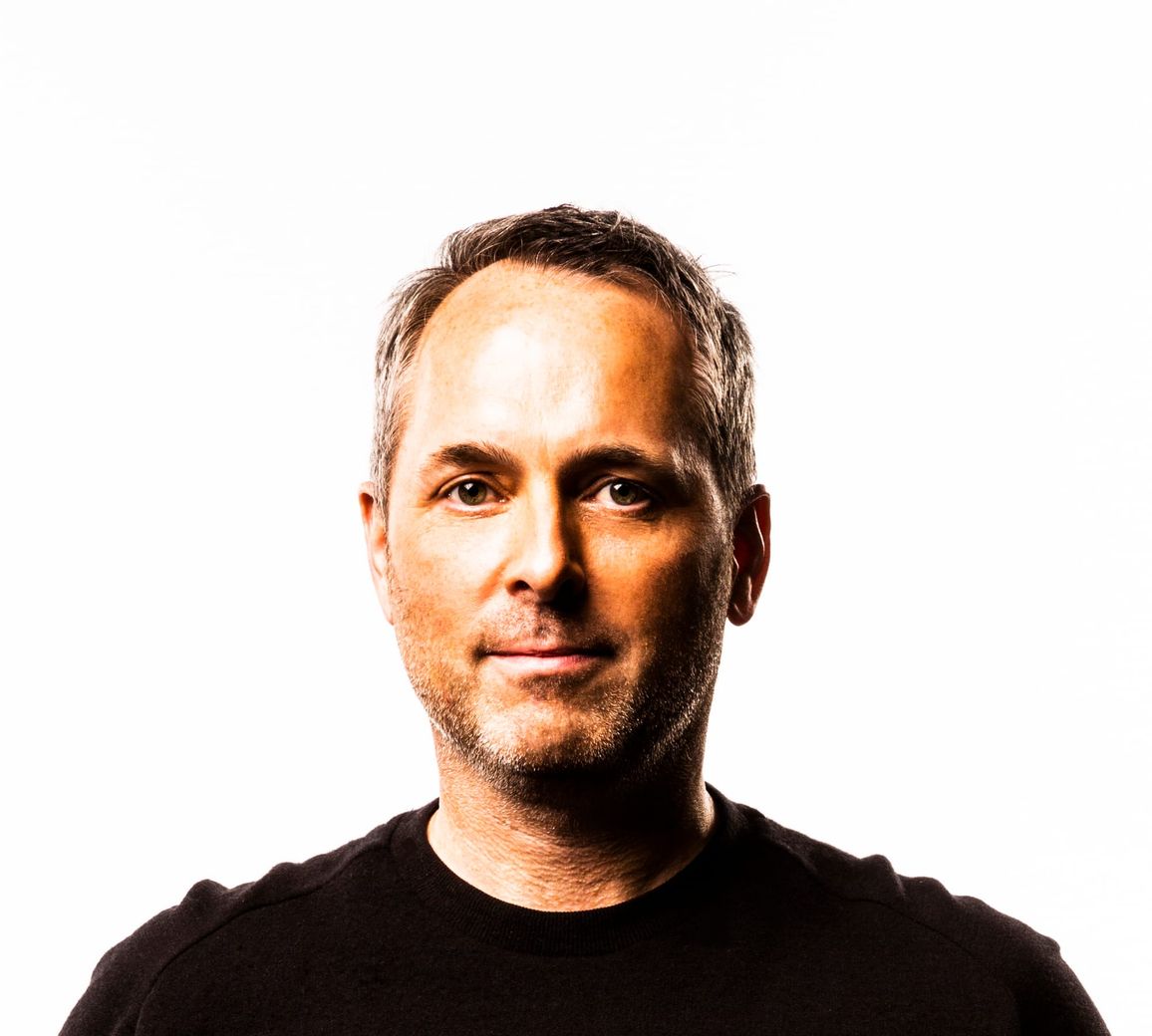
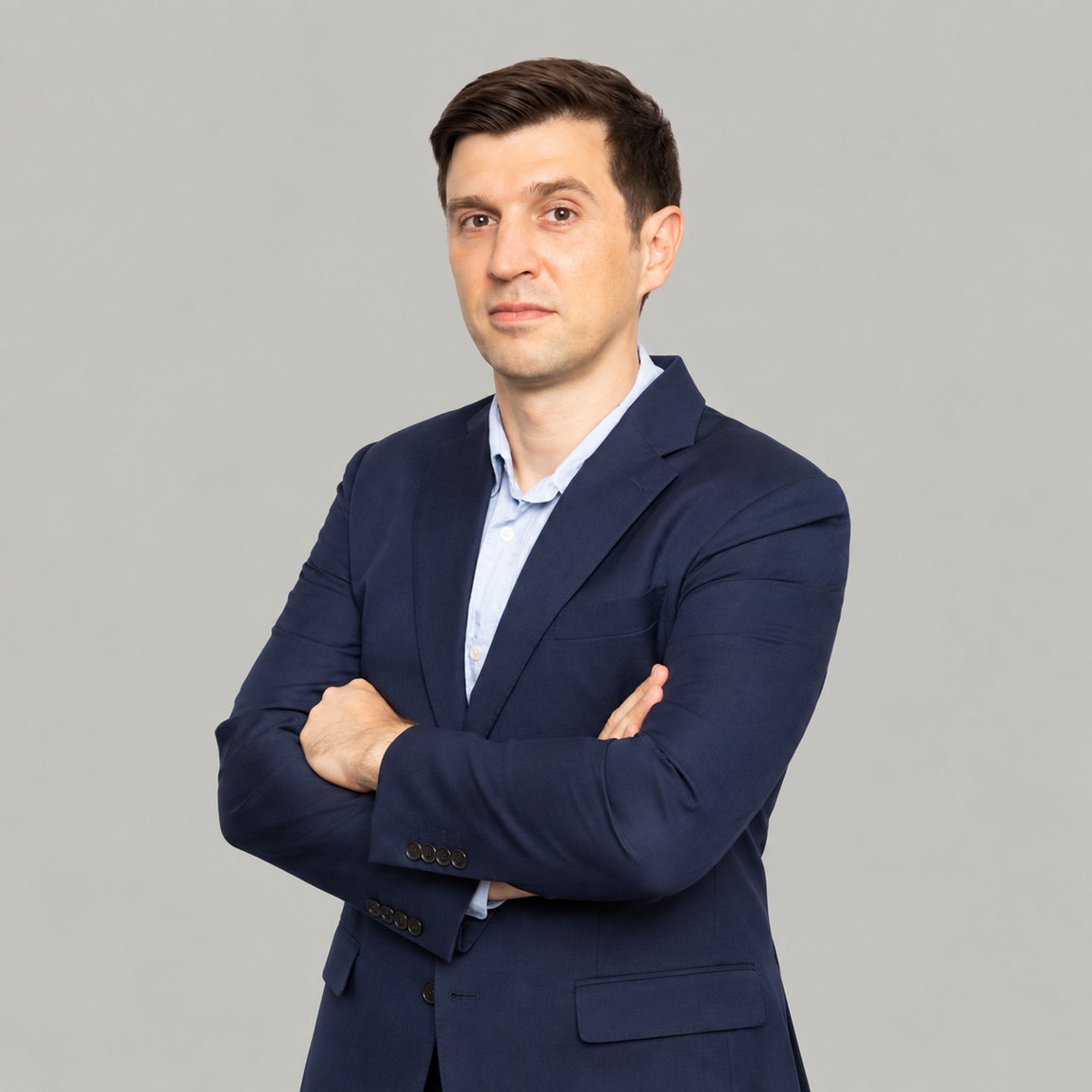
Profile: Jon Russell from Asia Tech Review and executive director at Ellerton & Co (LinkedIn, Newsletter)
Here is the edited transcript of our conversation:
Bernard Leong: Welcome to Analyse Podcast, the premier podcast dedicated to dissecting the pulse of business, technology, and media globally. I'm Bernard Leong, and today we examine a shift Jon Russell has been tracing across Asia Tech Review.
Chinese AI is moving from technological challenger to a commercial industry and a geopolitical export model. The key questions are whether its leading companies can turn technical credibility into durable economics, whether China can control more of the AI stack, and what the expansion means for Southeast Asia's agency over data and infrastructure.
With me is an old friend, Jon Russell, writer of Asia Tech Review, and now also executive director at Ellerton & Co., who has spent a decade reporting on technology across Asia. We'll connect IPO economics, open-weight distribution, and data sovereignty into one big regional story, including China.
Jon, welcome back.
Jon Russell: Thanks so much. Lovely to be here. Actually it's more than ten years in total, which probably ages me — ages all of us — pretty badly. But it's been a hell of a journey in the last ten or fifteen years. Lots of things have changed.
Bernard Leong: You were at The Next Web, TechCrunch, The Ken. Then after that you went into the dark side — I shouldn't say that — being a VC.
Jon Russell: Which dark side? There are many dark sides.
Bernard Leong: Now you're back into the game again. So what have you been up to? Tell me.
Jon Russell: Personally, I've done a bunch of things. I think I'm the least interesting part of this. But I joined Ellerton & Co. recently, a Singapore comms and marketing company that's grown pretty quickly over the last ten years or so — more than thirty staff now. We help tech companies, VCs, any companies in that adjacency, do their comms better.
These days that goes beyond working with the press, though obviously that's a big part of it. Modern-day comms is about going direct. As a founder yourself who also has a podcast, you understand very clearly the benefit of being out there.
If you look at other parts of the world, the US being a really key one, most tech CEOs now have their own platform where they do their own outreach. They're not 100% reliant on journalists. As an ex-journalist, that's important to me. But there are other ways that complement it too. That's what we're trying to do — bring this ideology to Asia-Pacific.
Bernard Leong: You can also see some of the Asia-Pacific CEOs nowadays having their own podcast, of course trying to dictate the narrative.
I don't like to call myself a podcaster. I always call myself a media outlet owner, because that makes it easier for me to negotiate who I want on the show.
Jon Russell: Very fair. Especially if you — I know we're going to talk about Chinese AI companies, but what I've noticed is that some of those CEOs are a bit more prominent. They're taking the stage on their own, which is a definite shift from how this was done previously. The big Chinese tech firms didn't really talk that often. They mostly spoke during earnings periods. They had Americans and other Westerners who would do that kind of thing.
That part of the world is definitely changing, and obviously a lot of them have been in Silicon Valley previously, or they've done a PhD elsewhere. Culturally they're coming from a different place. Most CEOs and companies should think about how they can do their own comms. That's a focus of mine at the moment, as well as Asia Tech Review, which we do more often now — three to five days a week, depending on what's going on.
Bernard Leong: I read your newsletters most of the time, so I hope at some point you'll do a paywall soon. Hopefully I can get some inside news as well.
I also want to point out there's another challenge of coverage, due to local language. There's been this thought in my mind: if I really want to seriously cover China AI, I cannot use the English language. I probably have to go back to my actual mother tongue, which is Chinese. I've been contemplating whether I should do the Analyse Podcast in Mandarin so that I can talk to all the Chinese CEOs.
Jon Russell: There you go. I'd listen to that. It would have to be translated, but as a bilingual person you have that.
Bernard Leong: YouTube now has this translation function where you can just press and get the English version of it. The only worrying part is the translation. It's a little like using HeyGen — the AI tool we talk about. If I can post in the transcript, it can use my voice to say exactly what I want to say.
Jon Russell: Crazy.
Bernard Leong: So much about AI. Amazing stuff.
I want to get into the main topic, because there's a lot of conversation in your recent newsletters. You have a pretty good view now of where China AI is. I observe it very closely too — I usually read the WeChat newsletters on Chinese AI in Mandarin.
I wanted to start with this: you talk about the contest having shifted a lot from model capability to more durable economics. Has China AI actually crossed from the challenger phase into being a real industry?
Jon Russell: It's a crazy time to be in tech. The valuations that private companies have are just insane, beyond what anybody's ever seen for private companies, let alone public companies. You've got Amazon, Apple, and NVIDIA who've grown to multiple trillions — but that's over long periods of time, with a mature business model operating across various different areas. Suddenly these startups that aren't anything like that old are being valued at crazy prices.
We don't yet know. There are some leaks we hear about here and there — about revenue, about runway, things like this — but we haven't seen any actual filings for any companies. So we don't really know the full picture.
When I was still a journalist and filings came out, it was always so fascinating, because these are really long documents — 180, 200 pages plus. Buried in there somewhere are always interesting data points, things companies probably don't want to talk about but have no choice, because SEC rules make them do it. These days with AI you can comb through those documents so easily. When Anthropic and OpenAI do go public, we're going to learn so much about how their businesses actually operate that we don't have access to today.
But in the meantime, there are these two Chinese companies that went public in January, and they've both just released their first earnings reports. They're not listed in the US, so the rules are a little different — they don't have to do quarterly earnings. They both released six-month earnings around the same time. This is the first time we've ever got to look at any public AI companies. There's an awful lot of data to go through, and honestly there's probably more that I didn't even see.
The revenue growth is crazy. It's really high — for Z.ai it's 300% plus. And the way the growth has changed: it's gone from being on-premises AI, where they go to enterprise customers, install servers, and build that very tight data system for on-premises AI. That's completely gone. In fact, the revenue they made from that has gone down in the last six months, because they're clearly prioritising getting a product out there that anybody anywhere in the world can access.
We've never seen that from Chinese companies. We've seen Alibaba and Tencent, and more recently Shein and TikTok, producing products that are international. But we've never seen companies do this from day one — to change their business model so ridiculously, to actually cut back on what was their biggest earner to do this instead. We've never seen that before.
It's amazing to have access to that data. But still, to me the numbers don't really make sense. The valuations we're seeing, especially for Z.ai, are so much higher than the revenue they're bringing in. We don't yet know whether there's some special formula for AI companies in terms of valuation versus revenue or profitability. Who's to say? But if we're using conventional ratios, these companies look seriously overpriced.
The fact that Moonshot, apparently the next company to go public —
Bernard Leong: There's news that they're not doing it now, holding it back, postponing a bit, because they're all waiting for the Anthropic IPO from the Chinese side.
Jon Russell: That would make sense. Because like I was saying, we don't know. It doesn't really make sense. If their valuation is $50 billion as a private company and their annual revenue run rate is like $300 million — and these numbers are always calculated over a short period, so it's really hard to say if that's going to be the actual revenue a company gets over a year — but $300 million for a $50 or $60 billion valuation seems rich. That's just as a private business.
Obviously when you go public, investors are looking for a good return. If you look at what the two public companies in Hong Kong have done so far: MiniMax did go up, but it's gone back down again, so it's pretty flat. Z.ai has done what, 300%, 400%?
Bernard Leong: That's right. It's with the GLM fast models.
The on-premises market is actually pretty large. To be more sympathetic — being an AI practitioner myself at the moment — my main business seems to be coming more from the on-premises side than from the cloud side. The cloud is making much less than on-premises, because Fortune 500 companies are on-premises. If you really think about the economics of that, they still have a lot left over. IBM now has what we call OpenShift servers that run it.
I'm not surprised the on-premises market is driving a lot. Think about governments, think about defence. When we say the visible internet is one petabyte, the entire hidden data source is about 24 to 26 petabytes.
Jon Russell: It makes sense. But the theory is that if you don't have a cloud business out there with consumers, on-premises is going to be really hard to sell, because nobody knows who you are. There are so many other companies out there. So the cloud part of it isn't just about the product — it's also about people knowing who you are.
Bernard Leong: But the cloud part is the marketing. The on-premises is where the real market really is. Cohere, one of the model companies, is focusing a lot more on on-premises. I suspect Mistral is going to do the same, because Europeans want European data sovereignty. They want AI independence. This is a very different era, where everyone may be going global at once, but they're balkanised into the different AIs they can have within their region of control.
Jon Russell: That makes a lot of sense. Enterprise customers, like you say, tend to pay more and tend to switch less, because the cost and the pain of switching is much higher.
I agree with you — how do Chinese companies fit into a world where European companies want their whole tech stack to be a European stack, right from compute to storage to models? I don't really know. NVIDIA is doing a lot of work pushing this sovereign AI stack. But outside the US — they're not a US company, and there are lots of rules the US government has in terms of how they can potentially access the data.
It's a super interesting topic. Unfortunately it needs more companies outside of China and the US to be big enough that they could be used by enterprise companies. I'm not sure we've really reached that point, apart from, as you say, Mistral in Europe.
Bernard Leong: I'll be pretty upfront here. Even Google Gemini has an on-premises version, and they have somebody dedicated in this part of the world serving that on-premises model. This is a very, very big industry, but it's hidden from the public viewpoint, because most of the marketing is still happening on the cloud side.
A lot of people are underestimating that the actual AI revenues are coming from somewhere else. But the ones you're seeing cannot justify the valuations people are talking about.
Jon Russell: Going back to the original point about the Chinese AI companies — it's so fascinating. Everything in the AI world is changing so rapidly, and that's going to apply to the financial side of these companies too.
Looking at these businesses when they went public at the end of last year or the start of this year, their businesses look so different. The way we're going to be looking at the financial data is also going to change, because as you say, when those two big US companies go public — Anthropic and OpenAI — that's going to be the blueprint through which we study every AI company out there, at least at the start.
Nobody really knows what's going to happen. But it certainly feels like the valuations they have — maybe they haven't grown into them yet. That's quite normal for tech companies, because it's always the upside you're trying to gauge: can they go into this or not? But in an industry where demand is still growing, perception is a bit mixed, and there's a hell of a lot of competition out there. Who's to say what is a good deal and what isn't? What's for sure is that if you bought those two stocks when they went public in January, that was probably a good thing to do.
Bernard Leong: You cannot predict the stock market. This is not investment advice, but I always tell everybody: let's just do the Warren Buffett way, just do the S&P 500.
I want to get a point of view. When you look at the China models — DeepSeek, Moonshot, MiniMax, Z.ai, Alibaba, and ByteDance — they all have different agendas, different games in terms of how they think about large language models, or maybe even image and video transformer models now. What is the cleanest way to segment them from your point of view?
Jon Russell: I think it's still really difficult. There are some similarities in how some of them operate, or at least in the products they put out.
In general, for me — as someone who, as you alluded to earlier, has spent more than ten, maybe even fifteen years, depending on how old you want to put me, looking at Asia tech — this is the first time there have been so many companies from this region, basically from China, who are interesting to people who aren't in this region. Before, you had Tencent with gaming, Alibaba tried some stuff with e-commerce. This has never really —
Bernard Leong: They're still the largest cloud provider in China as well. If you think from that perspective, they've become their own champions, the equivalents, and the market size is bigger. It's not surprising that would happen. It's just the speed. When we look at it today — that fifteen years, how fast they've come of age.
Jon Russell: They dominate the Chinese market. But now, for the first time, you have people outside of China who actually care about this new model being released by Moonshot. DeepSeek's new pricing is a big deal in America. I can't honestly remember any time when they were so relevant outside of Asia. It's never been the case before.
Before, Alibaba would try something in the US, they'd buy some companies. They had some okay deals, some pretty bad ones. Wish.com was one of them, I think. There were e-commerce companies they started. They spent billions of dollars trying to get a foothold in markets that are very, very far from them.
Then AI brought this opportunity for any company in the world to produce a product that people would use. That's the phenomenon we've never really seen.
Bernard Leong: But they also have variations. For example, ByteDance has never given up an open-source model. They totally said, "We're going to go closed source like everyone else," and now they're at the top of the video models. Google is ranked number two now on that.
Then you look at Alibaba's Qwen models. It's actually the most powerful Chinese model in the open-source market. Every on-premises deployment has at least one of the three to five models it picks being Qwen. Then you have MiniMax, Moonshot, Z.ai. They'll say, "Hey, we can do better agentic workflows." And DeepSeek is also one of the contenders.
What belief about Chinese AI companies do you think most of our Western counterparts sitting in the Bay Area hold that probably isn't an accurate picture of what's really going on in the China AI space? I stop short of asking about right or wrong, because there's no right or wrong in this question.
Jon Russell: I was at an event recently chatting to some China-based journalists, and they told me the Chinese market is so tough right now. Whether it's EVs, robotics, AI models — the competition is so cutthroat, which means consumers have so many options, enterprises have so many options, governments have so many options. The pricing you can go to market with is going to be constrained by the number of people doing the same thing as you.
So international growth has never been more important, because you can charge a higher premium. There's a bigger audience you can reach.
Maybe it's not understood just how important international growth is for the Chinese companies. Or maybe it's not understood for the correct reasons. People maybe think the US market is some great symbolic place that proves you've made it in tech if you can be big there. That probably is true. But the bigger reason is that if you're a Chinese company relying on the Chinese market only, it's a very risky thing to do.
Bernard Leong: But Manus did this, and eventually their acquisition had to be made by the Chinese government. You have to make the choice from day one: do you want to stay in China and fight it out there, or do you take your entire team from China, move it somewhere else, and then try to get your way to Silicon Valley to get those valuations? We saw it already with Manus.
Jon Russell: You probably do both. If you think about it — Alibaba is obviously a very Chinese company in terms of the scope and size of the company.
Bernard Leong: But they have not done very well in the US, for sure. They've never touched the US. Qwen models do, though.
Jon Russell: But Qwen — that I agree with, like you said. That's interesting also, because the perception is that Qwen is doing really, really well, and it is. But you and I know from following the company that this is troubling for them. They're asking, "How come this model is doing really, really well, but the net revenue we're making from it is so tiny?"
That's why they've restructured their business. The guy that created it has now gone and started his own company. They're building all these groups where they're trying to inject more of that startup DNA into their products, and also figure out: we built this AI model that's very popular, and it's doing things others can't do — how does that ultimately benefit our revenues? That's made an internal problem for Ali, I'd say.
Bernard Leong: There are two questions here. There's the question of whether you can build a model to compete within the Chinese market — I think the answer is that it's still a controlled market in there. Then there's the global market, where you just use the top two, which is now a duopoly: OpenAI and Anthropic. Every model they release, the Chinese model is going to lowball to hit one-tenth of that cost.
The economics is interesting to me because, depending on who you talk to — and obviously I have a lot of friends in the investment space — I get a chance to understand the unit economics per token that OpenAI and Anthropic really have. If it's a dollar, how much profit are they taking off the table? The bad news now is that the Chinese are lowballing them at one-tenth of what their margins really are.
So the question for me is: what's the right test for the Chinese models' unit economics? Because as you rightly pointed out, Z.ai and MiniMax show explosive revenue growth. This is not like the dotcom bubble where there's no revenue. There are tons of revenues. But it reminds me a lot more of the railway bubble.
Jon Russell: The growth is huge, but the actual revenue numbers are still not huge, because they're growing from such a small amount. That's the challenge.
Bernard Leong: But they see the hockey stick. Just as OpenAI — even the earlier metrics that OpenAI used were: we got to 100 million users in how many days, versus everyone else in the market. That's because the internet is fully distributed now. It's a great distribution engine if you have the right product.
The thing that really makes me wonder is whether the right test now is growth, gross margin, or the cost of staying near the frontier. What I'm saying is: as long as every time OpenAI and Anthropic put out a model, my competency is just two to three months behind, or maybe even one month behind — I think the Bay Area people are totally underestimating the Chinese talent sitting inside there, being paid one-fifth of the salaries they're earning.
Which should be the right test? Do you have a point of view on that?
Jon Russell: I don't. If I knew the answer to this question, I'd be buying stocks and investing privately.
Bernard Leong: You don't have to buy the stock. You can always buy the peripherals like NVIDIA.
Jon Russell: The challenge is also that what we don't know is how these models are being trained. If you ask the US companies, they'll say these guys are a copy-paste.
Bernard Leong: But that is also not true. Distillation is a huge thing, but that is also not true — because I teach the engineering course on how to build large language models, and I look at the Chinese architectures myself too. DeepSeek for sure has a very, very clear architecture that deviates from the original transformer models. They've taken a European idea to scale with mixture of experts, where somebody on the European side said, "This can never be taken to scale." They took it to scale. They showed that it works.
Then they themselves publish so many papers. If you just go to the DeepSeek GitHub repository, you can learn everything about training an LLM without even going to any of the Hugging Face websites.
What I'm saying is that there is some gap, and people don't seem to know where that gap really is. Maybe that is what I was trying to ask you.
Jon Russell: It's so interesting, because if you read the media, or opinions, or any of the governments that talk about this stuff, it's a cut-and-dried case that they're copying. Despite what you said about the architecture, despite there being actual public proof — yes, if you ask people about it.
Maybe this is the answer to your previous question. Maybe this is the one myth that people in America don't get: that actually it's not just copying.
Bernard Leong: The same thing they said about distillation, which is so lame. I can put it the other way for you: the OpenAI and the Anthropic guys are distilling books by buying old books from Amazon. That's the irony of it.
Even Nathan Lambert, who is now an independent AI researcher — I think he was formerly from one of the companies — made the point to me that there is something called good and bad distillation. What the Chinese have shown you is what good distillation really looks like, or what great distillation looks like. Which is a sarcastic remark to the US models, meaning you throw so many NVIDIA chips at it that you don't really know what the more efficient way of doing this is. Or am I saying that maybe our algorithmic advances are not as good as what the Chinese are really capable of?
Jon Russell: I do remember earlier this year, Anthropic came out saying that all these Chinese labs were distilling their newest models — maybe it was Opus 4.6, I can't remember. I wrote something about it, and it's one of the newsletters where I've had the most people answering me. Everyone just wrote back saying, "Ha ha ha," because they said, "Anthropic has cribbed data from everybody for free." At least these guys paid for it in some way.
You're absolutely right that there is an irony to it. But the allegations do kind of stick, and obviously you've had the US government saying things too. As you also said, the Chinese models tend to be trailing the US models by two or three months. Those things brought together do present an idea that they are copying.
Obviously I'm not someone who can prove if they are or they aren't. But I'm able to read what's out there. More technical people like yourself are able to give a clearer answer as to whether that is or isn't true.
It's interesting, because if that were to be the case, it's not a great basis for building a business. You'd hope that it isn't the case, and that these AI labs are actually able to build their own things and add innovation the same way DeepSeek has. Then as an industry we move forward, hopefully in a way that makes the technology accessible.
That's one of the big fears at the moment: that either due to government regulation or intervention, or just cost, the actual benefits of the tech — which are clearly very, very broad, probably even more broad than we currently know — are going to be either priced out or locked out for the countries and the companies that could actually benefit the most. That would be a not-great situation if it comes to pass.
Bernard Leong: One question most people have against the Chinese open models is this: it creates an adoption path for technology without durable rents. There's some part of the argument I agree with, but some part I disagree with. It seems to be taken to some form of a non-sequitur extreme. Where is your head with that argument?
Jon Russell: One thing that's interesting is that this is clearly becoming — it's gone from being just about tech to being about politics also. It reminds me of how Chinese companies went around doing infrastructure projects.
Bernard Leong: One Belt One Road, basically.
Jon Russell: Exactly. I do think this is the next iteration of that. Over the summer, maybe three or four months previously, China had that really huge AI summit, and they launched a group to provide AI infrastructure to what is primarily emerging-market countries, but anybody could join. That's pretty interesting. I don't know what your thoughts are on this as somebody who's in the industry right now.
Bernard Leong: I feel there's a truth to that. The better example is actually happening in Africa, not so much in Southeast Asia.
I've seen a lot of reports on DeepSeek and Huawei — actually it's Huawei going to Africa, offering to set up all the data centre infrastructure, and then offering DeepSeek as the model to allow Africans to access intelligence. It feels to me very similar to the export of building highways, trains, high-speed rails into all parts of it. But it comes with a price at some point. What is that price? We do not know. We're only seeing some of the effects now.
In Southeast Asia we don't see it. We see what I call a mixture, because the US companies are also playing in the same playground. I wouldn't say Anthropic is here so much. Anthropic is much more dominant in Japan, Korea, and Australia and New Zealand. They have a finance office in Singapore, but they're not ready to think that Southeast Asia is the market to go into yet.
So I'd be more honest to say it's actually OpenAI that has a benchmark now. I see a couple of very interesting companies within the region have started adopting ChatGPT Enterprise. It used to be that most CIOs would buy the Microsoft suite plus Copilot. But it's a little like the iPhone situation, where they were using BlackBerry with Microsoft Copilot, and then they start to see their friends outside of their space use — the CEO started to say, "Hey, why can Claude do this, and why can ChatGPT do this?" It's almost like the iPhone thing showing right in front of their faces.
I'm starting to see a very, very big shift to ChatGPT Enterprise. It's fickle. A bit fickle.
For myself, I run two companies. I run one fully on the ChatGPT ecosystem, one fully on the Claude ecosystem. They allow me to — I pay $100 to each one of them, but I have a sense of what's going on.
When it comes to doing the actual engineering for our customers, we'll first run it through Claude to make sure the task, meaning the whole entire workflow, is actually served. But when we decide the cost might be too high, we'll switch out one of them to try one of the models. The popular two models we seem to switch out, based on our internal research, are only Qwen and DeepSeek — and that's one-tenth of the cost taken away.
There lies that thing about durability, because I can always make changes. I can switch out any model I want now. OpenRouter — they got acquired by Stripe, the former crypto guy. When you apply some crypto economics but don't apply the blockchain part, they got the price. They're doing 5% on top for any switch. Essentially they found the economics in that layer. But now everybody's going to do it. It's not hard to build a router, by the way. My team can do it — I did it in less than a weekend. I was like, wow, that's great, because now I know how to route my models. That's not to say what OpenRouter achieved is low.
Jon Russell: Distribution is the thing, right?
Bernard Leong: Distribution is really the real piece. When people tell me whether it's this technology versus that tech, it doesn't matter. What really matters to me is what my customers need, how I bring the economics down for them. If I can get to a price where they feel comfortable, they can pay me the price of actually doing the implementation.
Jon Russell: I'm quite curious — why do you think Anthropic is not present at the moment in Singapore and Southeast Asia?
Bernard Leong: You have to ask Dario and his team.
Jon Russell: Unfortunately I don't have access.
Bernard Leong: I don't have access either. I happened to speak to one of their key investors, and I was told that it is not a priority.
Jon Russell: It's interesting they've gone after East Asia, because I guess enterprise there is obviously going to be a lot bigger.
Bernard Leong: I think they hired a lot of people from the tech companies. The people they hire from the tech companies usually bring them a set of viewpoints. It's a bit like Amazon: when they moved, they started off in Singapore and then tried to branch out all the way, then moved up to the East Asia side. It's the other way around if you look at how AWS started.
But that's because they had an opinion. They have a point of view on how to do it. I think Anthropic has a point of view, and East Asia has most of the global enterprises that are very important. Think of Samsung, SK Hynix, TSMC, Foxconn. Why would I go to — well, I would say our sovereign wealth funds, who are also Anthropic's investors, are quite big. Maybe the largest one we know is Singapore Airlines, but they can always go to Anthropic's developer dashboard and sign on as a company. So I don't really think there's a need to serve them unless there's significant usage.
Jon Russell: It's interesting though, because OpenAI — I don't think it's strictly in Singapore just for the customer base. It looks like, from the partnerships with the Singaporean government, a lot of it is testing things out, or innovation, or just: okay, they're doing interesting things here, we should be a part of it, and maybe there's something we get back from it. It seems to be somewhat experimental, maybe.
Bernard Leong: There were rumours of a local Anthropic model running at one point in time. I have a few different sources for the same information. They were running a local —
Jon Russell: I should be asking you the questions clearly.
Bernard Leong: No, no. You mustn't say — I'm still an operator. That's the beauty of being an operator and a founder of a podcast, where I have control of the questioning.
But the point is: they did experiment with a model where it is locally bound. I suspect Anthropic also wanted to know if they put their models out in a location where they feel it can be trusted, obviously. That's a very interesting thing to know. But it was one of their older models. It was not even Opus 4.
Jon Russell: Probably the reality is also that OpenAI is doing a lot of the early stuff in Southeast Asia. I can imagine that if Anthropic did come into the region even early next year, I don't think they'd be losing too much, because their competitor is doing a lot of the groundwork for them, and I'm sure they'd be able to pick up business.
Bernard Leong: Except that there may be a situation like the AWS and Google situation.
Jon Russell: Right. But what I mean is, let's say OpenAI is selling to companies that are buying enterprise AI for the first time. It's helping build demand in the market. It's not a bad thing to let somebody else do that heavy lifting first.
Bernard Leong: But here lies the surprise for you. If you go to the same enterprise that adopts OpenAI's enterprise licences, the same group of people are also using Claude Code and Claude.
Jon Russell: Only for the software engineering team. So it's not — I see what you mean.
Bernard Leong: It's not ubiquitous. There's no one model to rule them all. There's this prevailing thing going on more now: the software engineering teams, the product teams, even design teams are using Claude. So they are Claude-based. Then there are the decision makers, and the rest of them are using ChatGPT Enterprise.
We think of enterprises as being very monolithic — maybe only with the banks. But a lot of them will be very pragmatic about what they pick.
Jon Russell: That's a good point. Because it just takes one outage, or an issue with a model or something like that, if you're wholly reliant on it.
Bernard Leong: I'm very confident about what I'm saying because I teach people from all the different organisations, from engineers all the way to the CEOs. I know what tools they're actually using, and I'm very surprised by some of the choices they make.
I'm more surprised when some people say, "Oh, they will never change from Microsoft Copilot," and then suddenly this year they're like, "Oh, we're switching over to ChatGPT Enterprise." I'm like, what just happened?
It's very fickle. It's the iPhone thing. You see what the iPhone can do as a personal user, and then you walk back to your CIO and say, "I do not give a shit about what BlackBerry has that iPhone doesn't. Find a way to support it." It's a very simple argument. That's all it takes.
We saw those years. We saw Web 2.0, mobile, and then Uber and Grab. We've seen these things before. It's just a matter of time.
Jon Russell: I like the idea that one of them goes home and their kids are doing something on Claude or whatever, and that's the moment. It could be as simple as that, couldn't it?
Bernard Leong: It's as simple as that. When I teach CEOs nowadays, you know what the first question they ask me is? They don't ask questions like, "Bernard, which AI models should my company use?" The first question is: what should I do with my nine-year-old? That is the number one question.
If you think CEOs are really worried about AI, the biggest worry about AI for them is their kids — not whether their company's going to adopt ChatGPT or Claude tomorrow.
Jon Russell: That makes sense.
Bernard Leong: Coming back to the whole China conversation. I just want to get your sense of this. If the AI stack now has chips, energy, compute, model, cloud, on-premises, and distribution — where do you think China's real bottleneck is now?
Jon Russell: Wow. You're asking me the easy questions. I have to caveat this by saying I'm not as technical. But I do spend a lot of time watching.
Bernard Leong: But you're a first-principles thinker.
Jon Russell: It's obvious that the more technical bits of this stack are going to take a lot more time to get solved. Certainly AI models from China run pretty good. They run as good, depending on what you're doing. From my experience, there's not much difference between using DeepSeek or Claude or whatever, for the tasks I do.
In terms of chips, they've now built systems where DeepSeek and others can run on Huawei chips. That seems to be, if not fully solved, on the way.
Bernard Leong: It is the biggest surprise I got this year. It was not the Chinese government and Huawei asking DeepSeek to use their chips. DeepSeek actually went to them, and Huawei didn't even know it — they were asking, "Who is this company called DeepSeek?" I got it from the Asia Bureau Chief at The Information. That was the most interesting part of the story.
The truth is always stranger than fiction. When people dream up, "Oh, the Chinese government did X, Y, Z" — actually that was not exactly what happened. It was totally the opposite. Not everything is — China is not a monolithic organisation.
Jon Russell: I can believe that they would look at every option on the table. It'd be crazy if you didn't.
Bernard Leong: Come on. Apple was also looking at Intel chips before they made their move. They were doing it for five years. They were running a separate system on there. I find it very weird when people say, "Oh, they're adopting DeepSeek because the Chinese government is —" No, it's a purely commercial decision.
Jon Russell: That's one thing I learned when I left media. When you're a journalist, there are lots of these things that sound kind of sensational. This is not to be negative on journalists, because I love the feeling of writing a story where there's something that's not in the public domain at that point. It's really fun, because you're telling people something for the first time.
But actually there's a whole lot of things happening behind closed doors that you don't know about, or I don't know about, until somebody writes a story. This is one of those things. Talking to journalists can be fun, but this is normal stuff. This happens. Companies talk to VCs all the time. Companies talk to other companies about potential deals. This stuff is happening all the time, it's just often not in the public domain. That's why people don't know.
For China tech, my understanding is that the really, really technical stuff — all the lithography, the ASML stuff — is the bit that is going to be hardest. I know there's some controversy about bringing their machines into mainland China, which apparently has taken place, allegedly. We don't really know. That's the stuff at a component level that's going to take a lot more time to complete the full stack, where everything is made in China.
Essentially the rest of it appears to already be there. Maybe we've been using DeepSeek on Chinese chips without really knowing where it comes from, when we're on AI products. Who's to say?
But clearly the really impressive thing isn't just that China's building its own tech stack. It's that it's so integrated. Companies are going public, they're raising money. It's entirely self-sufficient, from the technology to the financing side too. That's the really crazy bit for me. It's not that they have to build these companies and at some point go public in America. They can do this all now in China and Hong Kong.
That's the ultimate thing, because ultimately capital is what these companies need, and if they can also get that from China, then that completes the system. To me that blows my mind when you see some of these huge IPOs — whether it's Unitree Robotics, or CXMT, or all these AI companies too. They're raising crazy amounts of money independently. It's almost like a dome has now gone on top. Everything's in there.
Bernard Leong: One of the things I'm getting a sense of from reading your articles is that it suggests China's bigger prize may be becoming the default AI infrastructure for the developing world — the Global South — and not beating OpenAI in the US. What would be the arguments that this thesis is not correct, from your observation?
Jon Russell: Like I said, the AI industry changes on almost a daily basis, so making any predictions is always very —
Bernard Leong: I'm not asking for a prediction. I'm asking you what would make this thesis incorrect. That's my caveat.
Jon Russell: It seems to be correct, because honestly, Chinese companies care more about this kind of stuff. They have a pedigree for doing it, as we talked about — building not just digital infrastructure but also physical, with roads and highways and so on. I don't think US companies and US business are attuned in that kind of way.
The idea for this stuff is that you help build other countries up, and at some point they come to you and they trade with you. You make that money back in the long term. That's the optimistic approach — that trade is going to be good for you if you can bring everyone else up. I don't think US companies think in that kind of way, rightly or wrongly.
I don't know, because with Belt and Road, do we know if it's actually — ROI-wise, has that paid off yet? Who's to say?
Bernard Leong: I think it paid off in a different way. It allows a lot of developing countries to have modern infrastructure that would take them ages to build. If you ask me from a very neutral standpoint, I see what Belt and Road has done for a lot of countries. If you go to Central Asia now, there's a high-speed rail going from Kazakhstan to the Stans. You see the modern roads, you see the infrastructure.
Jon Russell: No, I don't disagree. I agree with you. The US government doesn't think like that. You see how they operate in a very short-term way, whether it's trade tariffs or whatever. That level of thinking isn't baked in, in my opinion.
Bernard Leong: People will remember that these roads were not built by them — the Global South, whatever we say it is. Because infrastructure does take a lot of time. If you look at just from 2014 to today, you now see a lot of high-speed railways going all the way almost to Europe already.
You can say there might be some hidden conditions, hidden loans. But Pakistan has a beautiful port now that can rival some of the mega-ports of the world. Then you have to ask the question: what are the other things that may be wrong? We do not know. I am pretty humble — I do not know. Maybe there's something hidden. Lots of speculation.
But I see what the Chinese do as nothing wrong. In fact, they did a service to everyone. I would have wished that they brought the entire high-speed railway down to Singapore, because I would clearly like to go to Thailand in less than two hours.
By building the roads, you actually build communication. Yes, this sounds like playing the Civilization computer game, but it's true. You have to build roads, you have to build highways, you have to build high-speed rails in order to facilitate commerce and trade. It doesn't matter where you are.
The US now has bad infrastructure, and then they fly to China and see first-class infrastructure for one billion people, and they ask themselves, "Why can't we even build a freaking high-speed rail in California?" That's a very important question they should be asking themselves.
Jon Russell: It's true. I took my parents to see Angkor Wat maybe two years previously, and the new airport they built there is insane. It almost feels too big. It's so grand. That is one of those examples where, when you go and see it, it does blow your mind a bit.
Going back to the question, it's quite possible that this is going to happen — that AI infrastructure is going to go outside of China. Even now, if you look at the cost, there's no way that companies in certain parts of the world can afford Anthropic or OpenAI. They're always going to need other options.
They don't need it, either, depending on what you're building. If you're trying to build viruses that are going to infect computers, then perhaps. But if you're just automating a bunch of things and being more efficient — you know this — you don't need the newest thing. There's going to be a whole lot of adoption that is not going to need the latest and greatest stuff. And for that, Chinese models seem a better fit.
Bernard Leong: Which is also a very good place to close. Jon, I think we should do this more often. You can message me and say, "Bernard, let's talk about this."
In closing, any recommendations that inspire you recently?
Jon Russell: There's so much going on, I don't know where to start. It's an interesting time to be in tech. There's a lot of things we haven't talked about — but great chat. Thank you for having me back.
Bernard Leong: Recently Smitty and Daniel caught up with me, so we decided every quarter we do something. Maybe you should come down at one point, or maybe there's something that brings you to Singapore, and then we can do that entire studio fit again.
Where can my audience find you? Please give everyone the URL of your newsletter.
Jon Russell: Asia Tech Review, thank you very much. That's principally where I am. I am on X, but I don't post so much these days. LinkedIn probably. But follow me on my newsletter at Asia Tech Review.
Bernard Leong: I'm a subscriber, by the way. Many thanks for coming on the show.
Jon Russell: Thanks so much, Bernard. Cheers.


Podcast Information: Bernard Leong (@bernardleong, Linkedin) hosts and produces the show. Proper credits for the intro and end music: "Energetic Sports Drive" and the episode is mixed & edited in both video and audio format by G. Thomas Craig (@gthomascraig, LinkedIn).