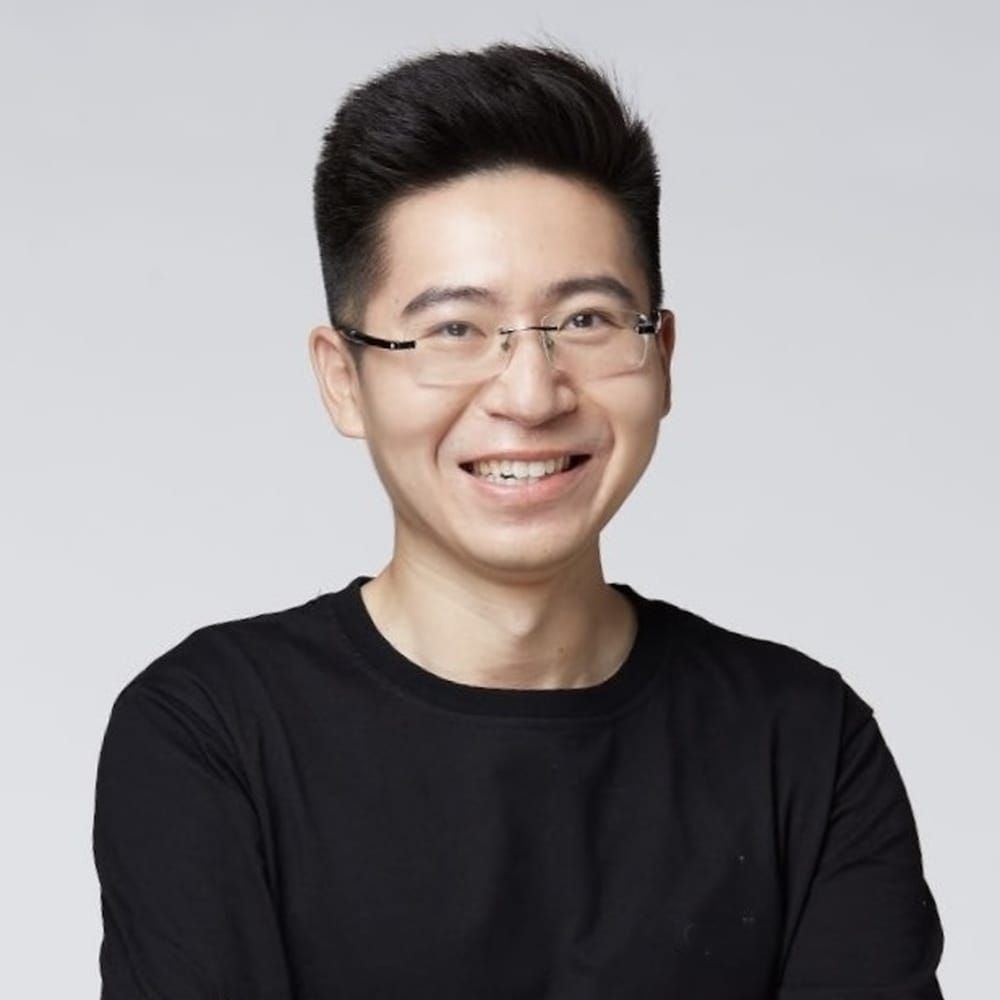

From Copier to Innovator: The Tech Titans of China with Rebecca Fannin

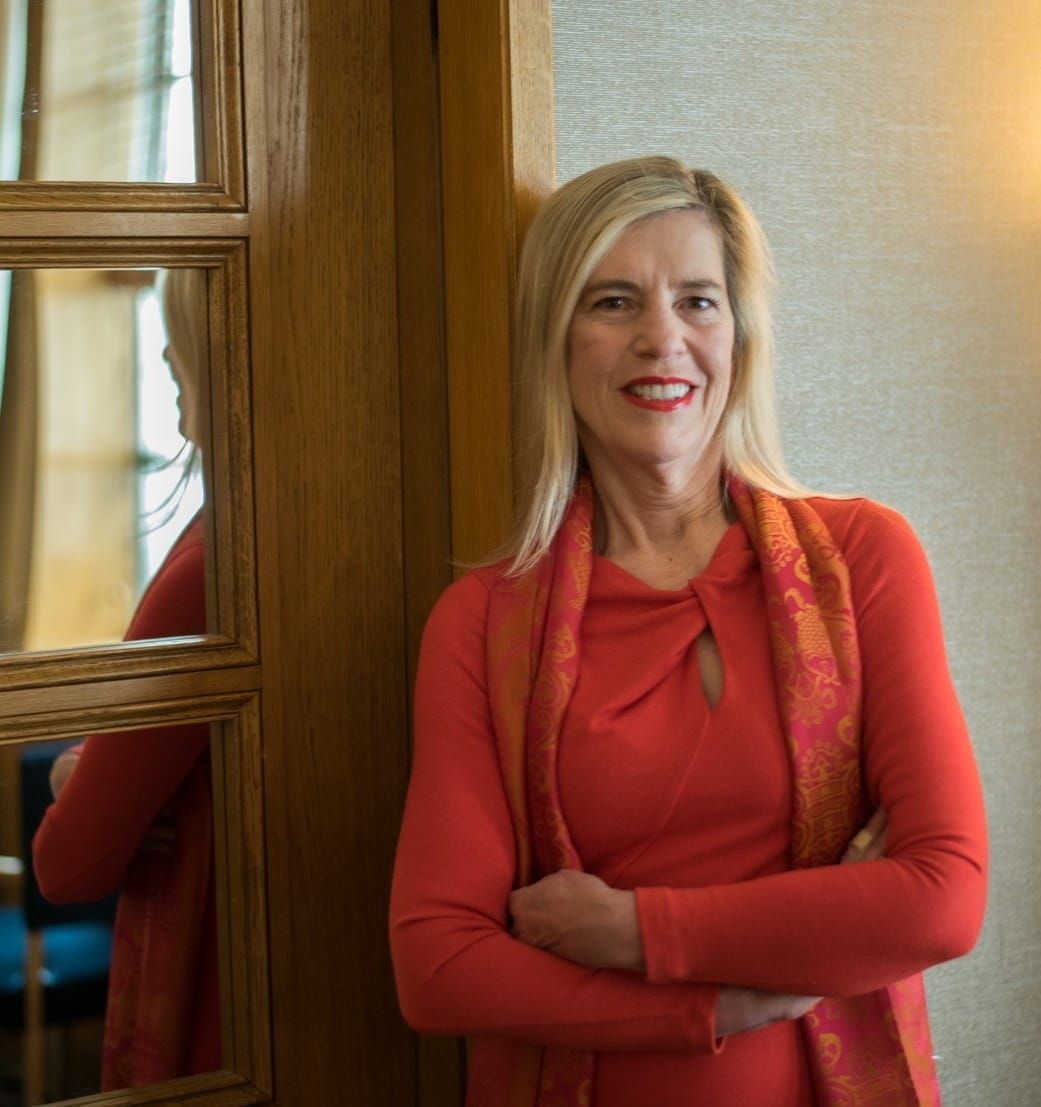
Fresh out of the studio, Bernard Leong reconnects with Rebecca Fannin, founder of Silicon Dragon Ventures and author of Tech Titans of China, six years on from their first conversation about the original landmark book. Rebecca traces China's transformation from copier to innovator, the decoupling of US-China venture capital and the reroute of capital flows toward the Middle East and Southeast Asia, and an AI race where China commercialises while the US theorises. The conversation moves through Chinese EV dominance, humanoid robotics, and semiconductor self-sufficiency, before opening out to a multipolar tech order with India and Saudi Arabia rising. She closes with a hopeful note on reopening US-China collaboration.
"Many of these AI advancements, where the U.S. is more on the innovative theoretical side of creating new models... China's really ahead on commercializing them, and that's their advantage. I think saying that China and the U.S. are equivalent in AI is probably an overstatement. I think the AI center of innovation continues to be in Silicon Valley. This could change—the gap is closing. I do think the U.S. is still ahead, but I think China is catching up." - Rebecca Fannin
Profile: Rebecca Fannin, Author of "The New Tech Titans of China" and Silicon Dragon Ventures (LinkedIn, Personal Site)
Here is the edited transcript of our conversation:
Bernard Leong: Welcome to Analyse Podcast, the premier podcast dedicated to dissecting the pulse of business, technology, and media globally. I'm Bernard Leong, and today we are examining how China's tech giants — from Baidu, Alibaba, and Tencent to the next-generation players in AI, electric vehicles, drones, and robotics — are reshaping the global competitive landscape under intensifying geopolitical pressure.
With me today is Rebecca Fannin, internationally recognised expert on Chinese tech innovation, venture capital, and US-China geopolitics. She's the founder of Silicon Dragon Ventures, a journalist, public speaker, and author of five books. Her latest, The Tech Titans of China: Innovation Under Pressure in the World's Most Ambitious Economy, is the updated, expanded second edition of the landmark book. Over the last six years, there have been sweeping changes. The book features detailed profiles of the Chinese tech companies making waves, the sectors that matter most in China's grab for superpower status, and forward-looking insights into the next decade, including breakthroughs in AI, blockchain, and quantum computing.
Rebecca's a returning guest on Analyse Podcast and it's great to have you back. Rebecca, welcome to the show.
Rebecca Fannin: Thanks for having me back again. It's been a while — about six years, I think.
Bernard Leong: Since our last conversation, what have you been up to?
Rebecca Fannin: Six years ago, my book Tech Titans of China was published, right before COVID — a few months before COVID. So during COVID, I explored a whole other region of the world, which was the Rust Belt, and wrote a book called Silicon Heartland about the response to China's gains. It's about how the US needs to move from the old Rust Belt kind of factories to new tech. I travelled all over the Midwest region, the Rust Belt of the United States, and that book came out in 2023. Since then, I've been running an investor group in New York City, running my Silicon Dragon events, and also working on this new edition of Tech Titans of China, just published. It's been a very busy time.
Bernard Leong: What motivated you to write this updated second edition? When we interviewed you the last time, based on the first edition of the book in 2019, what has changed dramatically?
Rebecca Fannin: Quite a few changes, which is one of the reasons I wrote the book. We saw tech innovation go to hard tech from the dotcom era. We saw venture capital split from Silicon Valley, from Sand Hill Road. We saw "China for China" strategies. This was a big change. There used to be a lot more US-China collaboration, and now it's become far more competitive.
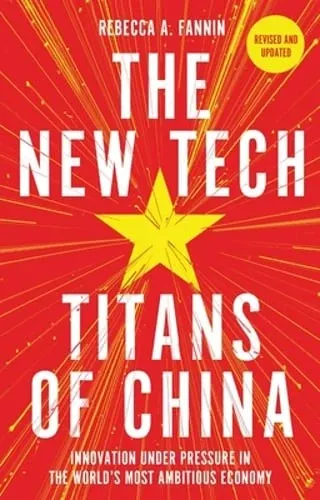
Bernard Leong: We should get to the main subject of the day, which is the book. The book is structured into three parts. The first part examines how China's new economy keeps gaining despite considerable setbacks. You open with China's bid to get ahead intact. What does that bid look like today versus when you first wrote about it, and what are the setbacks that have paradoxically strengthened it?
Rebecca Fannin: One of the challenges in the past was that China was primarily known as a copier of innovation, and now it's gained respect as an innovator in its own right. We do see a lot of the startups coming out with new ideas in China. We've also seen the Baidu, Alibaba, Tencent — the big three that I wrote a lot about in the first edition. They're still very active and they've moved into new areas, such as AI in a big way. The biggest big-picture change is that China is now regarded as an innovator. It used to be regarded as a copier. That's a big switch in global perception of China.
Bernard Leong: You profile the BAT — Baidu, Alibaba, Tencent. Sometimes I think Baidu should be changed to ByteDance, but we can discuss that privately. Each of them has stayed in power, yet each has faced regulatory crackdowns domestically. How have they adapted, and which of the three do you feel is best positioned for the next decade?
Rebecca Fannin: It's amazing that these three are still so much in power, plus ByteDance, as you say — double B, Baidu and ByteDance. These three are still the tech titans of China. We've seen some newcomers like Xiaomi, which I also write about in the book, but these three are very dominant. They did face major regulatory crackdowns a few years ago because they were becoming so powerful, so monopolistic, that they were regulated to sell off some businesses, to backtrack on some ideas. Alibaba was going to take its fintech unit public — well, that didn't happen. We saw a lot of pressure from the Chinese government on these big three. Their market value sank. It's still in recovery, I think, from that period, but now they're going strong again. This is a good sign for the future of China's tech titans.
Bernard Leong: I felt that Alibaba was the most affected because they were almost splitting up all the different parts of their business. But they kept Alibaba Cloud, and the financial arm — Ant Financial — couldn't go public as a result of government intervention. Beyond the BAT, you also wrote in the original edition about TMD — at that point, Toutiao under ByteDance, Meituan, and DiDi. How far has the competitive landscape among this second generation of champions shifted, especially with ByteDance's global expansion through TikTok and Temu, which is part of Pinduoduo, and its explosive rise in e-commerce?
Rebecca Fannin: Each one of them has a very different story, but going global is one unifying theme for ByteDance and DiDi. Meituan has tiptoed into international markets like Hong Kong, but it's pretty much stayed focused on the China market, where digital delivery is a big thing. Meituan owns that. ByteDance, of course, with TikTok — a major story there. How it moved into the US, and now has US ownership restructured. DiDi, a whole other story. DiDi went public in the United States but was delisted, due partly to government pressure. Now I'm hearing that maybe DiDi will come back and try to go public again. A very big leap into global markets, and in the US market very successful. But that can be somewhat tricky because of tariffs, as we've seen — the tariffs that were placed on goods coming from China, particularly in the area of lower-value shipments. Temu's business has been hit because of that. That is one of the issues of going global or going outside of China — there can be unexpected developments.
Bernard Leong: I think Temu faced the problem where what's called the de minimis route is now being taken away — packages below a certain dollar value are now being charged tax when they enter the US market. So they're also trying to put warehouses inside the US. The chapters have actually covered a lot about next-generation mobile apps that have leapfrogged the PC era entirely. These days, even living in Southeast Asia, I see a lot of mainland Chinese coming here, and Southeast Asia is starting to adapt to Chinese tech — for example, scanning QR codes.
Rebecca Fannin: Oh yes.
Bernard Leong: What can the rest of Asia learn from how China has executed the mobile-first leap?
Rebecca Fannin: Just the speed of it and the extent of it. Mobile-first in China, no cash accepted anymore. Everything is QR codes. This idea has spread throughout Asia, and it's an efficient idea. Many of these companies from China adapted to the mobile era very quickly. It's interesting how ideas that originate in China often do carry over into other parts of Asia. The whole idea of mobile-first, mobile apps, digital everything, is an idea that travelled very fast and very extensively.
Bernard Leong: I was referring to something like Grab in Southeast Asia, or Ola in India. They took a lot of inspiration from WeChat and tried to put together the same set of apps and run it like what we call the super app concept.
Rebecca Fannin: That's true. Those are good examples.
Bernard Leong: One of the big changes is also how the competitive landscape has changed. You have tracked cross-border venture capital flows for years, and there is a lot happening — like Sequoia split up between China, India and Southeast Asia, and the US. GGV Capital has also been split into two arms, one for the US and one for outside the US. How severe is the decoupling now? Is it really a revolving door that has shut, or has it been moved to other corridors — say, Middle East and Southeast Asia?
Rebecca Fannin: The split between US and China — the cross-border US-China venture capital flows that were so strong — definitely have decoupled now. Most of the firms have split their China operations into separate units, separate teams, and separate funds. They have stopped investing in China. Limited partners have also taken another look at their funding of American venture capital funds into China. This is a story that's been happening over the past couple of years. We did see a lot of movement to other corridors in Asia and the Middle East, for fundraising — definitely the Middle East — instead of so much of the Western funding sources. Southeast Asia became more of a headquarters area for several venture firms that were in China and had their base in Beijing and Shanghai. They expanded to Singapore, Indonesia, and other markets. That has been a trend that's ongoing. This decoupling of the US and China — it seems people would like it to end. I talked to many on both sides who say they want to have the cooperation and collaboration that was ongoing for so many years, that led to many of these new ideas. But now China is pretty much going on its own. China is also expanding into new corridors itself with technologies, into the global south. The whole idea has become much more pan-Asian, I would say.
Bernard Leong: Part of your book focused a lot on the Silicon Dragons of venture capital getting swept up in all these cross-currents. One of the things you described is that it's not such a golden era now for cross-Pacific venture capital. For investors and founders in our audience, what does that mean practically? Has the money simply dried up, or has it been rerouted? For example, for Chinese tech companies, is local venture capital now the only source of capital, rather than taking money from overseas investors?
Rebecca Fannin: It depends on the sector. In the sensitive sectors — which can be AI, quantum computing, and semiconductors — that money has pretty much dried up because there are so many regulations over it that it's very difficult to get a deal through. For startups — even startups that raised China money that are in Silicon Valley or in the Western world — it can be difficult for them to get new financing because of the China connection. There's just a lot of fear around China. Startups do need to be careful about the source of their funding. Getting funding in China is very challenging now because so much of the funding is coming from the government, where it used to be more from the private sector, including the Sand Hill Road investors. It's a difficult time for startups in China, I think.
Bernard Leong: When the other part was the China tech crackdown between 2020 to 2023, it hit a lot of companies — Grab, DiDi, Ant Tech, which we just talked about. From your point of view, was that more a strategic recalibration by Beijing, or did the government go further than intended? How would entrepreneurs in China view the regulatory environment today?
Rebecca Fannin: We did see a reset on this regulatory environment from Beijing, where there was a door opening to entrepreneurship again. Many of the leading entrepreneurs were invited to a summit where their innovations were encouraged. When you put a dampener on this kind of entrepreneurship, you're going to see innovation suffer overall. The government did realise that maybe they had cracked down too much on these tech titans that were innovating so much, and the startup world in China that was innovating so much. We did see a backtrack on that. You also asked about how the entrepreneurs in China view the regulatory environment today. Generally, if you talk to entrepreneurs, they're so busy building their business that they're not thinking so much about the regulatory environment. On the other hand, they are getting into areas that are advocated by the government for its national ambitions. AI is a big area, and electric vehicles, new energy is a big area. The entrepreneurs today are looking at areas that are promising in China, that they know are going to move along with the economic growth and the regulatory swings in China as well.
Bernard Leong: I had Patrick McGee, the author of Apple in China, on my podcast recently, and he wrote about Apple's deep entanglement with China's manufacturing ecosystem. His argument is that the dependency is almost impossible to unwind — specifically because it's impossible to transfer everything from China to India. It's still more expensive to bring an iPhone in India compared to China. On the other side of the equation, how are Chinese tech companies themselves viewing the decoupling pressure? Are they preparing for a world where Western markets become less accessible to them, where they will push to go to the rest of the world?
Rebecca Fannin: The dependency is difficult to unwind. Moving a supply chain to another market has to be done step by step. Apple is moving some of the supply chain, and other companies are too. But this is a very challenging thing to do, because China is the world's supply chain capital. It has everything. You can make things cheaply and quickly in China — just about anything that you want. That's difficult for another market in Asia to replicate. This decoupling of supply is definitely a trend, and Western markets could benefit from it. But to replicate what China has in the supply chain, which is why Apple is so dependent on China's manufacturing ecosystem, is very challenging.
Bernard Leong: I would also say the same for Tesla. I'm more excited reading the third part of your book — China's gains in the other sectors that matter most. Everybody wants to talk about artificial intelligence. We've got Ernie, we have Chinese AI models like Kimi, Qwen, Minimax. All the Chinese models are making headlines. The way I look at it, I remember in January 2025, nine of ten AI models were from the US and one Chinese. By almost mid-June, it was nine Chinese open-source and one US model left — that was Llama 3 at that point in time.
Rebecca Fannin: It was very fast. You're right.
Bernard Leong: It was very, very fast. Having observed all this going on, where does China genuinely now stand in the AI race? Where is the hype outrunning the reality?
Rebecca Fannin: China and the US are very close competitors in the AI race, if you want to call it a race. China is ahead in commercialising many of these AI advancements, where the US is more on the innovative, theoretical side of creating new models. China's really ahead on commercialising them, and that's their advantage. Saying that China and the US are equivalent in AI is probably an overstatement. The AI center of innovation continues to be in Silicon Valley. This could change as the gap is closing. The US is still ahead, but China is catching up. This is an area to watch — another really interesting, intriguing area to watch.
Bernard Leong: Do you find that Silicon Valley companies these days are behaving more like Chinese companies?
Rebecca Fannin: Like Chinese companies?
Bernard Leong: I've heard from my friends in the Bay Area these days that most of the AI companies demand 996. There's a Ramp report on a lot of expenses being done on Saturdays at the office. If you look at how the big model companies — the frontier AI labs — are starting to go into their partner's businesses: Cursor has been superseded by Claude Code, and Perplexity was being slaughtered by OpenAI's Deep Research. It's almost what the Chinese used to do, right? You start from one vertical and then you start going after everyone within your supply chain. Don't you find that behaviour is becoming more prominent in US companies?
Rebecca Fannin: It's more competitive because there's so much opportunity in AI. It's a fairly new field — it's an old and new field at the same time. It's a new field, yes.
Bernard Leong: Don't you find that, specifically in the AI race, this new breed of Silicon Valley companies is aware of what the Chinese is doing and how the Chinese behave within their ecosystem, and now they're copying the entire thing over to the US in the Bay Area?
Rebecca Fannin: I wouldn't say they're copying the entire thing over to the Bay Area, but Silicon Valley is much more aware of China today and paying close attention to it. It's not just Silicon Valley — the whole Western world is paying attention to what China is doing. We're looking at this and saying, this is pretty remarkable.
Bernard Leong: We can have the debates at some point in time. Talking about Chinese electric vehicle makers — they're speeding past global competitors. If you look at Singapore, BYD has already reached 21% market share within the span of three years. I'm already driving a BYD these days, surpassing Tesla in unit sales in several markets. Chinese EVs are flooding into Southeast Asia and Europe. Is this where the sector has definitively gone to China, or is there still a competitive window for Western — by which I mean European cars, or even other ASEAN manufacturers like Japan and Korea?
Rebecca Fannin: This is a market that China is winning. Chinese EVs — BYD and many others that are going global — really have hurt the European makers as well. This is definitely a sector that China has won. Tesla was surpassed by BYD in China — BYD is number one in China as well. Tesla has turned more attention to other markets, such as robotics and space. The EV race — China is the leading producer of EVs, and it's also going global and capturing other markets. In China, 50% of the new cars that are sold are electric vehicles. China is an electric vehicle market.
Bernard Leong: Xiaomi managed to produce a car compared to Apple, which took years and years and couldn't.
Rebecca Fannin: Absolutely. I point that out in the book. It's an interesting point. Xiaomi was able to do that partly because of its background in digital, in internet of things. They had the infrastructure to be able to move from mobile phones into cars, into smart cars.
Bernard Leong: Even today, if you go anywhere in Southeast Asia, you see a lot of Xiaomi and Huawei shops popping up, which you don't see in Western countries.
Rebecca Fannin: There's a reason that right now the US is preventing Chinese EVs from entering the market.
Bernard Leong: The book's final chapter is about drones and robots. China is now dominating civilian drones through DJI, and there are a lot of robotics companies in China that we don't know of. The only one I know pretty well is Unitree. The other one is UBTech. Unitree is going IPO this year. What surprised you most in reporting about robotics? How should policy makers outside China think about it?
Rebecca Fannin: This is another area that China is beginning to dominate. Perhaps that's not a surprise, but the advancements of some of these robotic companies — how agile they are, how fast they've advanced, doing all kinds of tasks. Everyone saw the Unitree robots during Chinese New Year doing all kinds of acrobatics. I saw many of these Chinese robotics makers at the Consumer Electronics Show in Las Vegas, where they were very prominent. They were showing off. Many of the people who came to see us were surprised by that. But I wasn't particularly surprised, because I've covered China tech for so long that I know how good they are at coming up with these kinds of new technologies and getting commercialised. The humanoid robot business is a huge one. It's very captivating because people enjoy looking at them, and realising that these robots can handle a lot of consumer and industrial tasks. Policy makers are a little bit nervous about what happens if these humanoid robots go offline, go crazy, whatever. There was one in a restaurant recently that they couldn't get to stop operating. There are some regulations that may be needed in this sector to control it a little bit better. But anyhow, this is an area that China is dominating.
Bernard Leong: That comes to chip self-sufficiency, which is the most critical piece — whether you're doing robots, phones, or anything else. It's a strategic bet that China is making. How far along do you think China's semiconductor independence is going? With the current export controls, is it going to be more accelerated, or will it slow down? There is always an oscillation between whether they should sell this chip or that chip to China from the US.
Rebecca Fannin: China's working hard to develop its own semiconductor industry. It does have its leaders, but they're not nearly as advanced as Taiwan and other markets. The semiconductor market is very global. There are many players from various locations who are dominant in a particular component of semiconductor making. But the chip making itself — Taiwan and Nvidia are ahead by far. There's been a lot of restrictions on the exports of those chips, Nvidia chips, to China. The issue is: should we go ahead and export them, or should we stop that? How will this make China more self-reliant and develop its semiconductor market faster? Or should we just go ahead and let some of the lower-end chips go out to China? The semiconductor market is one of these battlefields, and it seems to change every month — what's a restriction.
Bernard Leong: It's very hard to tell, because the last thing they did was reach seven nanometres, going down to five nanometres. But nobody really knows how good the production yield is in terms of those chips that SMIC has produced. Reflecting on covering so much about China — from your perspective, what's the one thing you know about the Chinese tech giants that very few do?
Rebecca Fannin: From a Western perspective, it's becoming much more known that China can be an innovator and these tech giants can dominate certain sectors. That's becoming known. Even just five years ago, that was not a universally held notion — that China tech giants could innovate, could dominate. Now this story has gotten out. It's become a mainstream issue. It's become a political issue. This is the one thing that we have become much more aware of today.
Bernard Leong: Where will the next important stories emerge? There is AI, there is blockchain, there is quantum computing, probably as forward-looking themes. If I were to ask you to pick a bet on the sector that will define the next five years on China's tech trajectory, where will you place that bet?
Rebecca Fannin: People talk a lot about quantum computing as a futuristic technology. That's one of the areas China is accelerating and pushing. I would say quantum computing — of course, the other areas too. I would bet on all of them. But of the three, looking into the future, longer-term, perhaps quantum computing holds the most promise. But this is still early days for quantum computing.
Bernard Leong: From your vantage point covering both Silicon Valley and China — is framing this as US versus China in tech too binary? Do you think there might be emerging challengers in the Middle East, India, Southeast Asia, or Europe that could actually reshape the entire global tech order?
Rebecca Fannin: I've always covered technology from a global perspective. I've covered India as well, with another book called Startup Asia. I covered the trends that were emerging from China and going throughout Asia. Many of the same kinds of technology ideas moved into India and Southeast Asia. They were basically copied, then they got venture capital and they also became tech titans of Asia. Going forward, there's a lot more power from India today — talking about this tech triangle of India, China, and the US. India's market is growing fast. It has favourable demographics. It has many tech titan companies, a strong talent base. Many of these Indian companies are going public. This is getting traction and getting attention in the Western world — to watch India. Southeast Asia: we've seen the spread of supply chains into Southeast Asia, and we've seen companies moving headquarters to Southeast Asia, for instance Singapore. All these areas are shaping the global tech order. There are other pockets of innovation globally — Israel has long been one. There are other issues today around Israel, but watch what's happening with Saudi Arabia, and how Saudi Arabia is moving much more into tech innovation to become less dependent on an oil economy. The global tech order is shifting. It's not just Silicon Valley and China. It's much more of global pockets, and India definitely on the rise.
Bernard Leong: What is the one question you wish more people would ask you about your book, The New Tech Titans of China, that they don't?
Rebecca Fannin: Let's see. People always ask me, how did you become interested in this?
Bernard Leong: Maybe I should ask you why. Why are you so interested in covering China and all over the world?
Rebecca Fannin: As a journalist covering tech innovation from Silicon Valley, at some leading magazines including Red Herring magazine, and a magazine in Hong Kong, I saw the rise. I followed the story with a nose for news — always a journalistic perspective. It was the biggest story happening over the past two decades of global tech development — China's rise. I had to cover it. I was very early on, though. I had a huge advantage in being early on going to China and interviewing these entrepreneurs and their investors. That gave me a lot of access and a lot of depth on what's happening in the market today.
Bernard Leong: What does success mean for your book on The New Tech Titans of China and its impact to readers who are thinking about China's technology landscape moving forward?
Rebecca Fannin: One of the big shifts is the impact of geopolitics on this story. Right now, that impact has been really strong. The West, or the US, is pushing back against China. If we could get to a place where we had the collaboration previously, which was very strong — China and US working together on innovations and cross-border deals. The cross-border deals also died. It wasn't just the venture capital, it was the mergers and acquisitions also died, and the idea of going public to the US was not nearly as strong. Going forward, the success could be that we see a reopening of avenues of collaboration between China and the US.
Bernard Leong: I would totally hope so. Rebecca, many thanks for coming on the show and talking about the book again — for the second edition and all the changes that you have included in the new one. In closing, I have two quick questions. Any recommendations that have inspired you recently?
Rebecca Fannin: I follow a lot of other authors. Patrick McGee — I read his book and had him speak at an event in New York City. That was inspiring. I just heard Sebastian Mallaby on his new book recently. That was inspiring. I'm going to be going to the Harvard campus. I spoke last weekend at the Harvard Business School and moderated a panel of venture capitalists — that was inspiring. This Saturday, I'm going back to Harvard, this time to Harvard College, where they're having a China forum. I'm inspired about that — looking forward to it. This is a time when many of the major Ivy League schools are having China forums. At Columbia, I'm involved with the one that's coming up in a week from now at Columbia Business School. That's a positive sign. For a while, some of these events were not happening, but now they're happening again. These are mainly student-run, but they are very classy student-run forums with great speakers. I enjoy going. I'm going again this Saturday and the next Saturday. That's inspiring me.
Bernard Leong: How do my audience find you?
Rebecca Fannin: My website is silicondragonventures.com. LinkedIn is a great place as well, where I post regularly. Twitter, of course, or X. I'm very social — I'm into social media. I have a newsletter, which is sent out to subscribers and is also on my website. If you're in New York or Silicon Valley, I'm doing regular events with speakers. One other thing, which I almost forgot to mention, is my online show — Ask a VC Anything. We've been doing that since COVID — since April 2020 was the first show. We bring on venture capitalists from globally. It's a Q&A show. I interview the VC and then we have an audience Q&A. That's online — another place to find me. The platform that encompasses all of these things is my website, silicondragonventures.com. Of course, I'm on Amazon with five books. There are a lot of places you could find me.
Bernard Leong: You can definitely find our podcast everywhere. Subscribe to us on YouTube and the LinkedIn newsletter, and of course, send me any feedback as you do so. Rebecca, many thanks for coming on the show, and look forward to speaking to you soon.
Rebecca Fannin: Great. Thanks a lot. I appreciate it.


Podcast Information: Bernard Leong (@bernardleong, Linkedin) hosts and produces the show. Proper credits for the intro and end music: "Energetic Sports Drive" and the episode is mixed & edited in both video and audio format by G. Thomas Craig (@gthomascraig, LinkedIn).