
From Token2049 to SuperAI: Architecting Global Tech Convergence with Peter Noszek


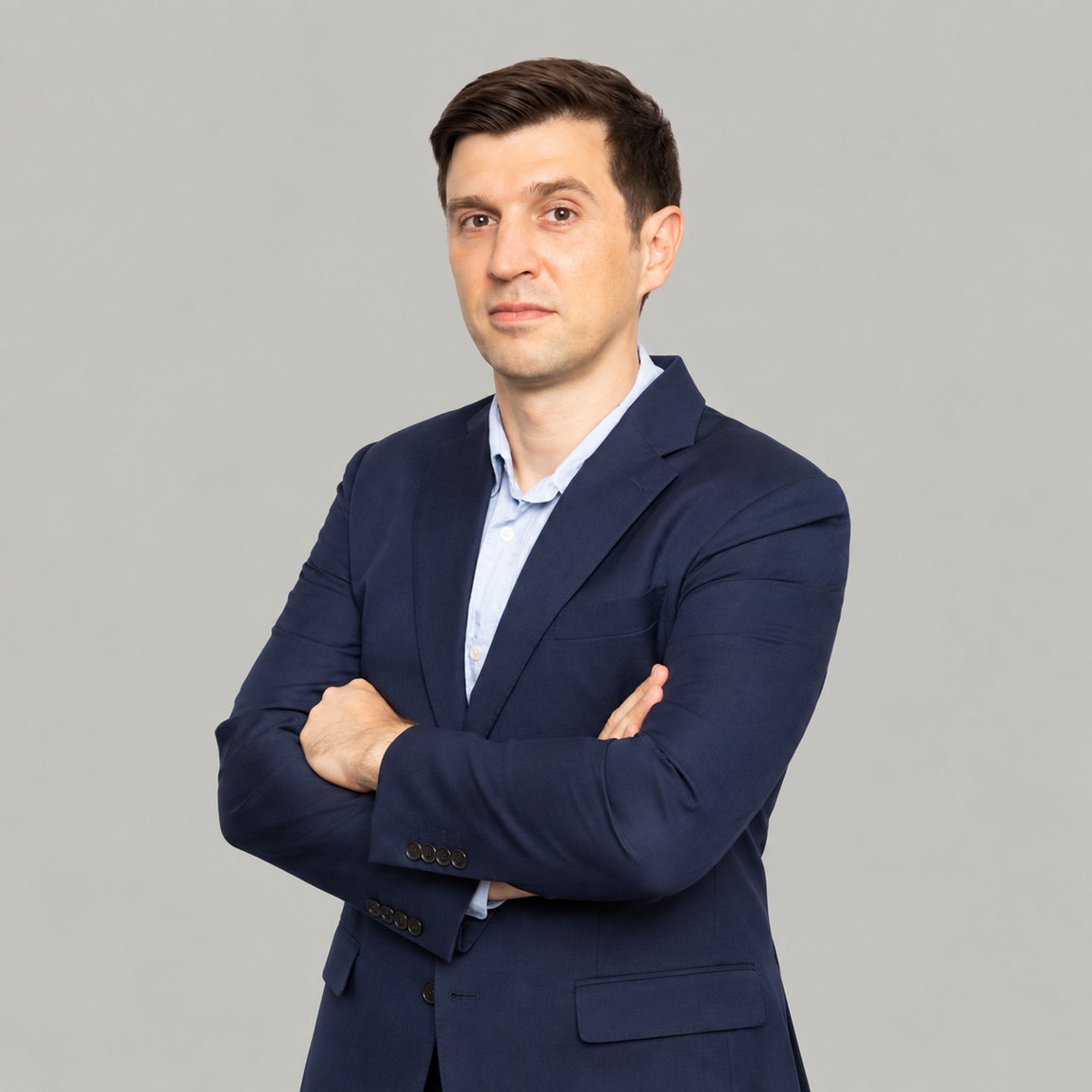
Fresh out of the studio, Peter Noszek, co-founder of SuperAI and TOKEN2049 join us on a conversation that maps the widening gap between Silicon Valley's creative intensity and Asia's underutilised compute infrastructure — including 900 megawatts of GPU capacity in Johor, Malaysia sitting at low utilisation because the routing layer between US demand and Asian supply simply doesn't exist yet. Peter introduces Pax Silica, his thesis that Singapore can serve as the neutral ground where fragmented AI communities from East and West converge through curated rooms, cultural bridging, and unreasonable hospitality. They explore why the Bay Area still doesn't understand Asia, the 12-to-18-month window before GPU backlogs clear, Singapore's unique "one to a hundred" positioning for enterprise distribution, and why AI agents — from Coinbase x402 transactions to Meta's agent-to-agent one-on-ones — are already reshaping how coordination happens at scale.
"I'm of like a hundred percent conviction that the majority of times when something is not aligned, it's a case of miscommunication. An inability of information to flow properly between people. And in this highly digitalized, highly fragmented and siloed world that we operate in, those things are usually not present. So bringing people into the same room and bringing them into an environment where they feel natural—as long as that room is curated in the right way—that's really going to open up these sort of icebreakers that then lead to creativity, to ideation, and to realizing that we're actually all trying to do the same thing and we're all just trying to make this entire pie grow bigger." - Peter Noszek
Profile: Peter Noszek, Co-Founder, SuperAI and Token2049 Conferences (LinkedIn, X, Instagram and Newsletter: Pax Silica)
Here is the edited transcript of our conversation:
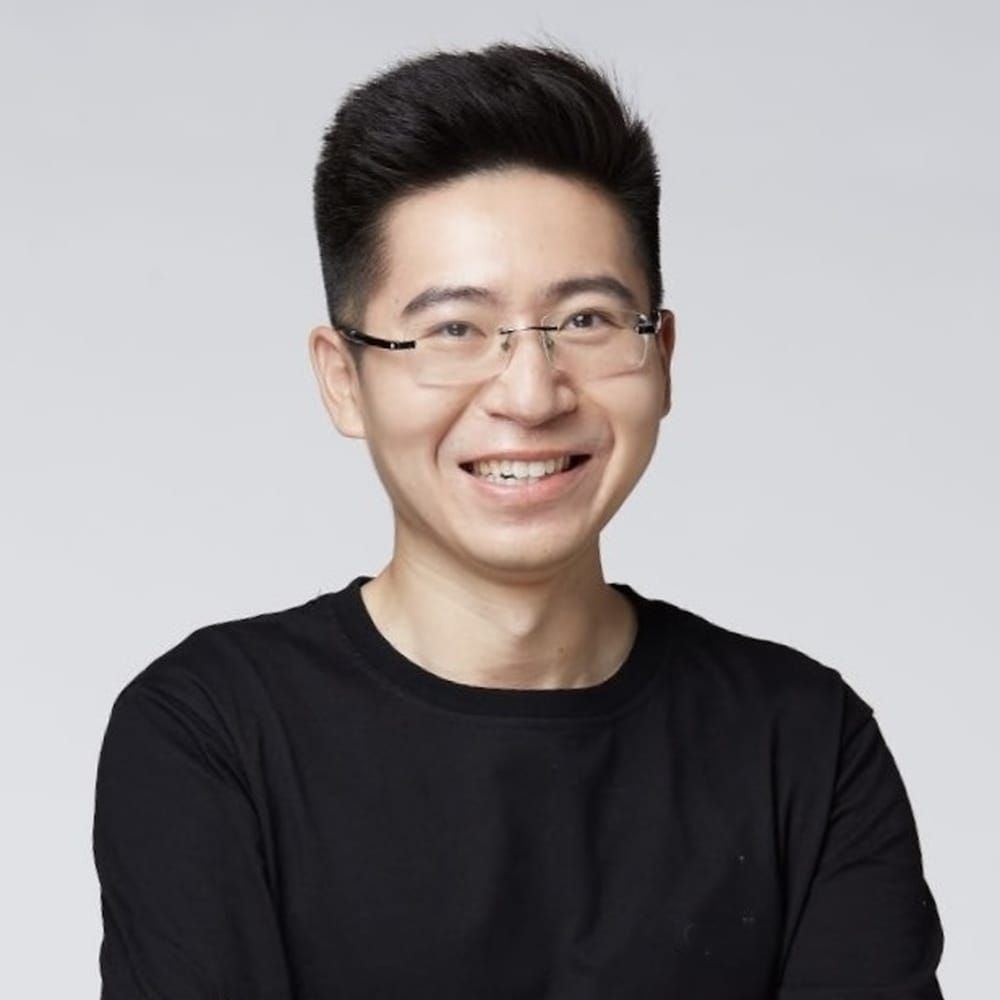
Bernard Leong: Welcome to the Analyse Podcast, the premier podcast dedicated to dissecting the pulse of business, technology and media globally. I'm Bernard Leong, and if there is one category of infrastructure that will determine who wins the next decade of AI, it is not the models. It is the rooms where the world's most consequential conversations happen.
From TOKEN2049, the defining gathering of the blockchain generation, to SuperAI, Asia's largest frontier technology conference, my guest today has spent the better part of fifteen years building exactly those rooms — not as a passive curator, but as an architect of convergence, designing the systems, workflows and conditions for founders, investors and policy makers to find each other across geopolitical fault lines.
Today, as sovereign compute reshapes where AI gets built and the Bay Area confronts a world it may have underestimated, there is no better guide. With me today is Peter Noszek, co-founder of SuperAI and TOKEN2049, to discuss AI's infrastructure moment, the concept of Pax Silica, and what it means to build the neutral ground where the world's AI powers converge.
Peter, welcome to the show.
Peter Noszek: Thanks for having me, Bernard. I love the intro — that framing around building rooms. That's exactly what's probably often overlooked, but super important.
Bernard Leong: So we begin with your origin story. You have spent over fifteen years in the Asia Pacific building some of the region's most consequential technology gatherings. What brought you here originally, and what keeps you here now?
Peter Noszek: This comes from my family, and primarily through my dad, who worked — or still works — his whole career at a multinational company, Nestlé. He was sent around the world to various countries. We passed through Asia a few times, passed through Singapore actually, back when I was much smaller, and ended up in the Philippines, in Manila, when I was in high school.
That exposure just changed my entire perspective on how I saw the world, and it magnetised me. So when I went back to the UK for university, I knew I'd be back in the Philippines, back in Asia, and building my career from there.
Bernard Leong: Interesting. I have attended TOKEN2049, and I've also been a crypto industry investor and advised some of the firms there. It has established you as an architect of the crypto conference world. How did that experience shape the way you built SuperAI, and what did you deliberately do differently the second time for SuperAI?
Peter Noszek: That's a good question. If we look at the crypto world, it has developed and grown in a different way to how the broader technology sector has grown. What we saw for SuperAI last year in particular was that, for the first time really, we had a major in-person event bring together a full range of participants from across multiple silos.
That's really how frontier tech is built. There are different labs, different institutions, different enterprise hyperscalers, startups — and they're spread across geographies. Communities also operate in a very node-based fashion. That's something that we for sure want to bridge. We want to bridge that with SuperAI.
If we look at TOKEN2049, that never really happened, and that's because crypto was from the beginning digital-first. It's an online meeting space. People lived almost entirely online lives, especially during COVID. The real breakout year for TOKEN2049 was 2022 in Singapore, just after the pandemic. At that point, a lot of value creation had happened online, and TOKEN2049 was this opportunity for people to come together in person — maybe some co-founders or teams. I actually contributed to a DAO and had never met my team members until I met them at TOKEN2049. This was a very real thing.
So TOKEN2049 provided a physical space and a Schelling point for a digital realm. Whereas SuperAI is all about coordinating siloed communities and siloed nodes that are building at the frontier.
Bernard Leong: Interesting. Our understanding is TOKEN2049 is in both Dubai and Singapore, and SuperAI is predominantly in Singapore. Looking across your career as a builder of global convergence platforms, what's the one counterintuitive lesson about the events and community-building business that most people from the outside would find surprising?
Peter Noszek: I'm not sure how counterintuitive this is, but I would say — bigger is not necessarily better. There's a tendency — I was just at Nvidia GTC the other week in San Jose, in the South Bay. That's a huge event in terms of number of participants and companies, and the technology on display is fantastic and fascinating, and it's a great networking opportunity. But it's huge in terms of the number of attendees, and when you reach a certain level, what you start missing is a quality filter. What you also miss is the ability to shape the attendee experience in the same way.
So that's a lesson in how I think about events, which is about curation, and it's about unreasonable levels of hospitality. The level of attention to detail required for someone to feel truly comfortable is quite meticulous, and it's very hard to do that — perhaps unscalable when you're thinking about this at a massive level.
The outcome of that is matchmaking. No matter if you deploy technology, if you deploy AI curation and matching, at the end of the day what any algorithm learns from is the underlying dataset. That dataset needs to be high quality. It needs to be high signal. So what really matters is bringing together a curated set of high-signal builders, investors and operators, and doing that in a way that doesn't go beyond a certain level of scale.
Bernard Leong: One question I want to get to is of course the main subject of this — to talk about some of the things you've been observing in Silicon Valley. I know you have been spending the last couple of weeks in San Francisco meeting AI founders and investors. As a person working in AI myself, almost every day, every week, there's something new. Based on your current observation, what is the headline from the meetings most people in the Bay Area have not absorbed from your point of view?
Peter Noszek: Interesting. The Bay Area kind of feels like a hive mind in a way. It's difficult to understand the intensity or the velocity of operation here until you step in. I know you, for example, are very tuned into the Bay Area, and you even operate your personal schedule and your timing to adjust to that — which you kind of have to do.
But once you get in, it also has a strong tendency toward focused execution. This actually makes the Bay Area very different from somewhere like Singapore. The Bay Area feels quite fragmented. You have many different communities operating toward their own focused agendas, and they often don't even communicate amongst each other. Whereas in Singapore it feels a lot more unified. It feels like there's a single approach. There's a national AI strategy. There is a lot of coordination between various government bodies and event organisers and community leaders and enterprises.
What that creates is an interesting dichotomy where the Bay Area is able to seed and bring about a lot of creative innovation, but this might not necessarily be done in the most coordinated way, with the best communication. What that results in is the slow diffusion of technology outside. There are so many opportunities for Bay Area startups to collaborate with what's going on in Asia, and that would speed up the way builders in Asia deploy new technologies — whether it's to do with new model development or the energy requirement that goes into running compute. That gap is the result of maybe this fragmentation within the ecosystem here.
Bernard Leong: One question now where Asia is really getting very interesting is of course the Chinese large language models or the frontier models — for example, DeepSeek, MiniMax, Moonshot. They also rival most of what is being built in the Bay Area, where you are. How does this change the competitive calculus from your point of view, because you are bringing people together? Is this a race, a fork, or maybe eventually just a convergence between different parts of the world competing in the same landscape?
Peter Noszek: It would be both. There's both a fork component and a convergence. When it comes to the models and the approaches, there is a fork — different approaches and different ways of solving for a similar outcome. But the convergence comes more on the distribution side: you have various models all trying to meet and build for the same platforms when it comes to distribution, whether it's hyperscalers or more the application layer.
One interesting thing that also comes to mind is how, at least with OpenClaw there is this sense here in the US — when will we have our American open model? When will that come? That's certainly something that is felt here.
Bernard Leong: What you have also seen is that currently there's a lot of enormous capital flowing into AI compute infrastructure within Asia. Probably in the last couple of years, billions of dollars have gone into deploying Southeast Asia, Japan, Korea. But capital deployed is always not the same as the workloads or value created. What is the gap now between investment and real-world AI output in this region today? I'm also mindful that some of the AI companies have already started to set up their Asia headquarters — I know the APAC head of Mistral, and I know OpenAI's Oliver Jay is running OpenAI for Asia Pacific. From your perspective, how do you look at that?
Peter Noszek: This is something that is for sure going to be important at SuperAI in June, where we bring together the key players in this space. We'll have Cerebras with us — they're moving into Singapore together with AWS [Amazon Web Services]. We will have a number of compute platforms like the San Francisco Compute Company. They're all interested in what's going on in Asia, but as you said, there's a gap. It's probably a coordination layer.
If, for example, we look at Malaysia — there is a lot of GPU capacity available there. Specifically in Johor, there is 900 megawatts of compute available. But the utilisation is low. What's missing, at least from what I'm sensing here — I hosted a dinner on Monday, for example, where we had compute providers and platforms and renters from here in the Valley connecting with the infrastructure layer over there in Asia, with Khazanah present. They just didn't know each other. So what's missing at the moment is that routing layer, perhaps. It's all converging now, so that's something I'm very optimistic about.
It's about having shared spaces, as you said in the beginning — having a room where people can come together, where people can develop trust. When they can meet somewhere and say, okay, I understand what's going on here, I can step outside of my focus area and learn more about a region that is new to me.
Bernard Leong: This is where I want to get right into the point. You talk about the conversation on the infrastructure shift. It has moved a lot to GPUs, to energy availability. I am interested specifically in the Malaysia Johor region — the 900 megawatts of installed GPU capacity, but the utilisation is still not there. I have two questions on that. First, what has changed, and what would be the strategic implications given this big infrastructure shift you're observing? And why has no one built a clean single-contract layer that actually connects that capacity to demand, from your point of view?
Peter Noszek: That's a great question. It's hard to — I defer to those deeply embedded in these conversations, or in the industry, to answer that. That's also why I love doing what I do, because I get to be a fly on the wall, to listen to people who are far smarter than me and connect them to solve these challenges.
There are a few important considerations. One aspect I'm genuinely feeling is that San Francisco and the Bay Area don't really understand Southeast Asia yet. Many builders here have never been to Southeast Asia. There are a lot of Chinese-heritage builders, a lot of Indian-heritage builders and investors, but they haven't been to Southeast Asia. When there is that visibility gap, and the time zone difference, that makes it a challenge in and of itself.
The second piece is the narrative around — for example, I think it was Elon on a podcast with Dwarkesh Patel and Patrick Collison where he was talking about sending data centres to space.
In order to harness the sun's power. That's a really compelling narrative, and it's so important to be so ambitious. But what it misses is there's still a lot of power, of energy, of resource available, and you don't have to go to outer space for it. You just take a brief flight — well, a 15-hour flight — to Southeast Asia. That in itself is a huge opportunity. To your question of why has this not yet emerged, it's likely a question of the silos, or likely an outcome of the silos in which the space has developed.
Bernard Leong: It's interesting, because I spoke to JP Park from Digital Edge. They build, operate and manage data centres worldwide, specifically in Asia. If we don't do Johor and we do the Philippines, they have been able to build data centres that are below 1.2 PUE, which is the global standard. That means the data centres are more efficient and use less water. This tells me a lot — even the data centres built here, the people who bring those data centres — Jay was one of the engineers who built the Open Compute Project at Meta previously. They're also trying to innovate with data centres in this part of the world. One question I probably have is, how do you think you can — by putting all these people in the room — help them get a better perception of what Asia is like?
Peter Noszek: The key is to tee up conversations and to create environments where the ice breaks, and to do this in a way that enables conversation to flow. Again, referring back to the Pax Silica dinner I hosted a couple of days ago, what was very successful there was probably threefold.
One was the room composition — having the right balance of individuals. That should be broad representation across the different verticals where AI has impact. Number two should be bringing together different approaches and methodologies from East and West. Number three should be opening conversation in a way that is not overly prompted, so it emerges naturally. What that might mean in this case — and what I'm looking to drive with Pax Silica — is to leverage Singapore's unique position as neutral ground where these conversations can take place and emerge.
How does one do that? It might be — let's do this through food. Let's look at the unique food and the unique flavours and the unique history that food in Singapore has. Let's talk about it. Let's think about it. Let's enjoy it and experience it. That leads to, okay, that's familiar for me, this is where I'm coming from, it ties into what I might have built or what I might be interested in. Same thing with music. We had music curated by a Hong Kong-based DJ, and the music itself creates a certain atmosphere, certain kinds of conversation. The same thing goes for art. The same thing goes for culture. There are so many different prompts or stimuli one can bring into any given situation where the right people are sat in the room, and that opens things up.
I'm of a hundred percent conviction that the majority of times when something is not aligned, it's a case of miscommunication. It's an inability of information to flow properly between people. In this highly digitalised, highly fragmented and siloed world we operate in, those things are usually not present. So bringing people into the same room, into an environment where they feel natural — as long as that room is curated in the right way — that's really going to open up the icebreakers that then lead to creativity, to ideation, and to realising that we're actually all trying to do the same thing, and we're all just trying to make this entire AI pie bigger.
Bernard Leong: One interesting question I do have, thinking about the infrastructure — given what is going on in the world, the window for exploiting Asia's underutilised compute is probably between 12 to 18 months. What closes that particular window, and who is best positioned to move before it does?
Peter Noszek: Right now, what we're looking at is — demand for GPUs is backed up. That means there is nothing available essentially on the market. Orders are backlogged through to 2027. That demand will be met in 2027, which will roll onto 2028.
In parallel, we have a lot of progress when it comes to compressing how much compute we actually need, how efficiently the space operates, and also just general demand for power. What we're seeing is this shift from the backlog of GPUs being cleared to — what's next? Is it going to be demand for power? How is the entire landscape going to change? That should happen over the next 12 to 18 months, and now is the opportunity for Southeast Asia to max out on what is currently underutilised, and to really catch up. Once that happens, that will bring with it everything on top — more being built on the application layer, more understanding, more utilisation and adoption of AI within society, and just generally more mindshare within all the countries in Southeast Asia.
Bernard Leong: Given that we have just seen the Gulf — we are actually having this discussion immediately after the ceasefire — the Gulf has cheap energy, basically around 5 cents per kilowatt-hour, but still carries a lot of geopolitical uncertainty. Europe costs three to five times more, but it's bottlenecked. How would you think in terms of AI infrastructure strategies, mapping that geography right now? The other place people don't talk a lot about is China, where they also have a pretty good energy supply, given they've been spending a lot of effort leapfrogging into renewable energies, plus their oil and energy resource being able to keep them on the top of the line. Where's the thinking now?
Peter Noszek: It will be interesting to see more and more deployment on top of what's available in the Philippines, also in Malaysia. What we're going to see, at least coming into June, is more interest coming from America into Southeast Asia. We'll see how that goes, but at least what I'm seeing is there'll be a lot of interesting conversations, a lot of deals coming through SuperAI in particular.
Bernard Leong: One interesting question I have — you have written about insurers and banks in Southeast Asia integrating AI co-pilots to automate underwriting, credit scoring and customer advisory. From your perspective, because you see all the builders going through the different conferences, and you're in the Bay Area looking at where the frontiers are — what are the genuine production deployments now, or is it still pilot theatre from the regions you travel? Or is it really starting to shift from your perspective?
Peter Noszek: That's something that really separates Singapore and Southeast Asia more broadly from the Bay Area. There's a feeling often that within the Bay, everyone is just selling to each other. There's a lot of early adoption when it comes to SaaS — from Uber, from Airbnb, from these tech companies. That's a relatively small addressable market. What's not really happening here is moving to the enterprise level, which is the go-to-market stage.
Silicon Valley has this fantastic position to go from zero to one. What is unique in Asia, and in particular in Singapore, is that position to go from one to a hundred — how can these frontier technology companies get in the room with enterprises so they move forward with much broader distribution?
A few startups immediately come to mind that are following exactly this roadmap. We have Aaru coming to SuperAI in June. Aaru is a New York-based startup. They are already valued at a billion dollars. They've had some great pilots in the States, but the reason Singapore appeals to them, and why they're opening an office in Singapore, is because they can use that as a launchpad into the large corporations within Southeast Asia. So San Miguel Corporation in the Philippines, for example. Ernst & Young, based out of Singapore. All these different enterprise players that have a huge addressable market in terms of population in particular. That's certainly a trend we're going to see more and more of.
Bernard Leong: One thing that also happens now is we have autonomous AI agents that transact directly using digital currencies and smart contracts. At what point do you think an AI agent stops being a tool and starts being closer to a co-founder — a participant with agency in the economic system rather than an instrument of one? I'm not going to ask whether you need AI agents to do your work — your business is very involved with people, so I don't think that's going to happen anytime soon.
Peter Noszek: I remember I was having a — it was a year and a half ago in Dubai — I was chatting with Emad Mostaque, who founded Intelligent Internet and before that Stability AI. He said that by SuperAI 2026, you and the team will be running it essentially purely with AI agents. It'll be a majority automated operation.
In certain ways that's true, because at the end of the day, coordination requires a lot of specific tasks to be executed and agents at scale. Logistics in particular. An event is all about logistics, so agents are actually super well equipped to do that.
I was speaking with a friend at Meta who said his manager has moved from in-person one-on-ones to just having one-on-ones between their own employee agents. That is maybe an early sign of what is to come when it comes to coordination, when it comes to repeatable tasks. It totally makes sense.
There's going to be an interesting talk as well at SuperAI by Balaji Srinivasan, where he talks about personal, private and programmable. What we're seeing — I'm certainly seeing this in San Francisco. I was trying to get a Mac mini three, four weeks ago and I couldn't get one in SF. The only one available was at the Apple in Palo Alto, which is an hour's drive away, so I had to get one there. The entire San Jose was also sold out. It's clear that this concept of building a personal operating system — if Silicon Valley is the beacon — has already taken off. What that means is, if everyone has their second brain, what you can then put on top of that is increasing agency.
I actually saw a couple of days ago — Coinbase and Shopify partnered on rolling out x402, which is their payment system that enables AI agents to make transactions. That relates very closely to Balaji's thesis, which is: we will all have our own personal operating system. On top of that operating system will be layered agents, sub-agents. These agents will be able to transact. This will be done in ways that are private and protected. I don't think that's far-fetched.
What I want to see, and what I believe will happen, is that this will happen in the interest and for the benefit of human interaction. My agent — I can attest to this — since I've been in the Bay Area, my calendar has been absolutely stacked, and there is no way I could manage my calendar in this way were it not for AI agents, giving me those productivity gains, scheduling time for me, finding the best match, and so on. At this stage, I can definitely see that.
Bernard Leong: I can buy what you're saying, because even where I'm living now in Singapore, it's already two to three weeks delay.
Peter Noszek: That's crazy. In Asia it's even more so. Here in the Bay Area, people still for the most part use Claude Code. As their personal OS. Whereas in Singapore, OpenClaw — and in China, OpenClaw also — is much more widespread and more broadly adopted. So you can see the Mac mini thesis.
Bernard Leong: No, I think it depends. Even for a lot of my team — we've been using so many different tools, but now we are gradually all converging, since last June, to Claude Code, because it's pretty much where we think things are going, and specifically for enterprise deployments. It's getting towards the point where it's pretty interesting.
I do want to ask you — I know you do a Pulse 2025 survey for SuperAI. One thing you showed is that 65% of respondents believe AI agents will be the most impactful development over the year. How will this shift this year's 2026 programming, the curation and the design?
Peter Noszek: The survey you refer to came in last year ahead of SuperAI 2025. For 2026, it's on the way in the next couple of days, if not a little bit longer. That was pretty prescient — 65% of people identified 2025 as being the year of the agent. That's exactly when a lot of these breakthroughs in Claude Code came about. I think that's really how it's played out. Going back to the Aaru example I mentioned, they're using a swarm of agents to simulate human behaviour. They model, for example, what are the effects of GLP-1s on human health and outcomes. They're trying to map out population change. Agents have been deployed in so many ways, whether on a personal level or an enterprise level.
When it comes to 2026 and how we're shaping the agenda, agents have definitely taken the forefront. We do this across six main tracks. We look at frontier models. We look at AI infrastructure. We look at AI's impact in finance. We look at AI's impact in biotech and health tech — that's a very interesting space. We have a number of really innovative companies coming. For example, using AI to encode mRNA, so that when that mRNA is injected locally, it can reverse damage such as hearing damage. Then we're also going to look at AI's impact across humanity and society. Especially now, when we look at AGI timelines, it feels more and more like we're getting closer and closer to AGI. With that comes the flip side of — how are we going to plan for the future of work? How are we going to address this at a safety level?
We're going to have a really interesting panel on — in air quotes — "nutritional labelling" for AI agents. What's in your AI? We're doing this with the Google Chief Data Protection Officer and a number of other enterprises that are part of the ML Commons Alliance, on making sure that we develop AI responsibly. We'll have Max Tegmark with us, who is looking at prioritising AI for the human good. It's really important to have this kind of balanced discussion.
In 2025, we were looking at — we're going to see exponential improvements for AI agents and their spread. Now they very much are here. So the next question is, how do we take this to production? How do different enterprises adopt this at scale? How do we use different kinds of safe guardrails as well as safe execution environments where data isn't going to be compromised, data isn't going to be leaked? How do we do this with humans fundamentally at the centre, because that's really what this technology should be doing. It should be empowering social progress and mobility.
Bernard Leong: For government leaders and enterprise executives in your audience when navigating the AI era, what's the one thing you know that very few do, that you can tell them their advisors are not telling them?
Peter Noszek: Good question. Let me think. For government leaders — I haven't been in that position. When it comes to government, it's very important, I imagine, for government representatives to be sensible and sensitive as to how they communicate. I'm sure there's a lot more they know than maybe they openly communicate. There will be some really interesting voices on stage with us who have very strong views on being vocal about this — Max Tegmark of course being one of them. Alvin Wang Graylin, who leads US-China AI policy at Stanford HAI, is another. They have the government connections, and they will have very strong views on bringing attention to what's happening.
Fundamentally, for me, what's most important is that government, that enterprise, that startups operate in a way that they don't play a zero-sum game — because this is a fundamental paradigm shift. I don't like to think in terms of competition. The net benefit of this technological change can be so positive, as long as we all optimise for that outcome. That's what I would definitely encourage everyone involved in the space to think about — collaboration rather than competition.
Bernard Leong: What is the one question that you wish more government leaders and enterprise executives across Asia would ask you about this AI moment — whether it's OpenClaw, crypto, SuperAI, TOKEN2049 — but almost nobody is asking you that question?
Peter Noszek: Maybe it's to do with — how can we build bridges? That's what we need to do. Nobody is asking this question, but it's something I get a lot of positive response from when I come here, when I meet startup founders, when I meet community leaders. When I meet government — even the Economic Development Board of Singapore — they're all building bridges between America and Southeast Asia, or between China and Southeast Asia. Everybody is doing this, but they often don't use that terminology. So when I say I'm building bridges, they say, "Oh yeah, I'm also building bridges. Let's do this together."
That's a terminology that can be very useful, because the more people do this, it's going to increase the flow of information in both directions. I would love to see more founders coming out to San Francisco from Singapore and understanding what this hive mind feels like over here. But I would also love to see more Bay Area investors and entrepreneurs understanding what an Indonesian artist's beautiful piece of art looks like, what the best specialty coffee in Thailand tastes like, what artisan chocolate from the Philippines tastes like. That kind of cultural bridging will also help to open minds about what we're really building for.
Bernard Leong: My traditional closing question: What will the AI global landscape look like in the next five years, and where do you think SuperAI will sit within it? Is there a version of this where the conference is going to be co-designed and operated by AI agents, or is this something else?
Peter Noszek: Absolutely. This is going to keep accelerating in this direction. The acceleration will only get faster. What I expect to see, and what I love to see, is the open model — the open source movement. I've seen a lot of that here in the Valley, and also in the OpenClaw community in Singapore, which is that communities come together, they build in the open, they build publicly, they share knowledge. This is done in a collaborative way. It's not done in a protective way. What that does is you open up your entire source code, you open up your work for others to replicate from, and that creates a reflexive upward cycle. That is only going to speed up the deployment and adoption of technology.
The implications of something like this for an event are that increasing parts of the logistics will be run in an automated way — and more importantly, on an open dataset. Because if you have open data, then you can train these agents to be smarter, to be more accurate, to be more helpful.
What I'd love to see, for example, is a year-round community where, Bernard, you're looking to do a trip to SF and you want to meet certain kinds of people you feel will help you learn, but you have no idea who they are, and you don't necessarily have any idea on how to connect with them, and you're in a rush because you're busy shipping stuff. In that case, I'd love for you to be able to gain access to an open dataset where you prompt some kind of interface and you say, hey, this is my goal. All of that data is secured, it's private, it's protected. No confidential data is shared, but the interface recommends — I'm going to set up a group chat for you with person A, B and C. This is the best match for you that'll get you started in SF and really embedded into where you want to get to.
I can certainly see that happening. These are the kinds of digital bridges that will exist year round. Then there will also be physical in-person bridges as convergence points in between them. I'm very optimistic on how this will bring about greater collaboration, and we together will navigate these challenges around guardrails, around safety, around competition, and around the concentration of benefits to a very small number of individuals and companies.
Bernard Leong: Peter, many thanks for coming on the show. In closing, I just have two quick questions. First, any recommendations that have inspired you recently? Podcasts, movies, maybe live coding or something — something that really changed your perspective lately.
Peter Noszek: Even before the podcast, I would say travel. Travel is the number one recommendation I have for anyone. I know it's difficult now — although oil prices just took a big dip, fortunately, so hopefully that has a positive impact on airline tickets as well. But travel, for sure, for perspective. I a hundred percent recommend.
When it comes to consuming information, there's a number of books I've enjoyed that I've read lately. One of them is The Alchemist (by Paul Coelho), which I read when I was younger, and it's worth a reread. It's really important to have this perspective on being deeply attuned to your intuition. Because once you are, you feel comfortable, and that helps you connect with others. Connecting is what we humanly uniquely can do that agents can't do.
In terms of industry content, I would say for sure Benedict Evans. There's a reason we bring Benedict to SuperAI every year. This is where he showcases his mega 120-slide deck on here's the state of everything in the industry in AI. You should definitely subscribe, if you're not already, to his —
Bernard Leong: I'm also a subscriber to Benedict Evans' newsletter, and he has been on the show many times.
Peter Noszek: Oh, perfect. Exactly. If you are coming to SuperAI, then catch his presentation, because he'll release his Q1 and Q2 — so his H2 deck, H1 deck. That's going to be really cool.
Bernard Leong: I should thank you for your last SuperAI, because we had lunch on one of those days where he was in town. My final question then — how can my audience find you and follow your journey and learn more about the SuperAI conference?
Peter Noszek: Definitely check out superai.com for more information on the conference. We have upcoming speaker announcements pretty much every week on the website. Also check out the social channels there. For me personally, I'm on Twitter, I'm on LinkedIn, I'm on Instagram at Peter Noszek — that's my name. On Field Notes — this is something Bernard has a sneak peek of — I'll be launching my Substack very soon, and I'll be dropping some field notes there. All sorts of quirky things I've seen while I've been here, whether it's founders pitching on demo day by bringing live chickens, or the interesting conversations I've had. We'll be sharing a lot more, so stay tuned on that.
Bernard Leong: Definitely — you can find all of us anywhere. The podcast is distributed across all platforms. So Peter, many thanks for coming on the show, and look forward to seeing you at the SuperAI Conference this year.
Peter Noszek: Amazing. Thanks so much, Bernard.
Podcast Information: Bernard Leong (@bernardleong, Linkedin) hosts and produces the show. Proper credits for the intro and end music: "Energetic Sports Drive" and the episode is mixed & edited in both video and audio format by G. Thomas Craig (@gthomascraig, LinkedIn). Here are the links to watch or listen to our podcast.