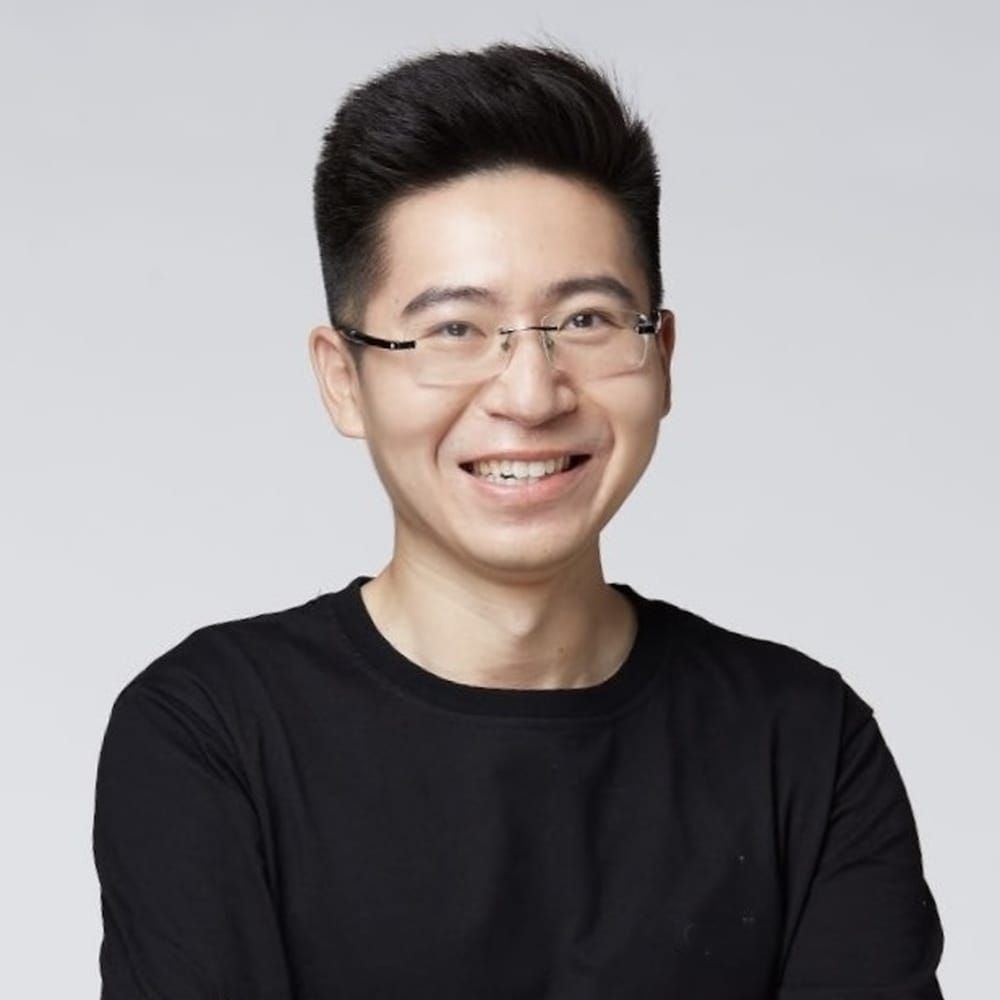

Inside Singapore's AI Bet for 2030 with Kiren Kumar

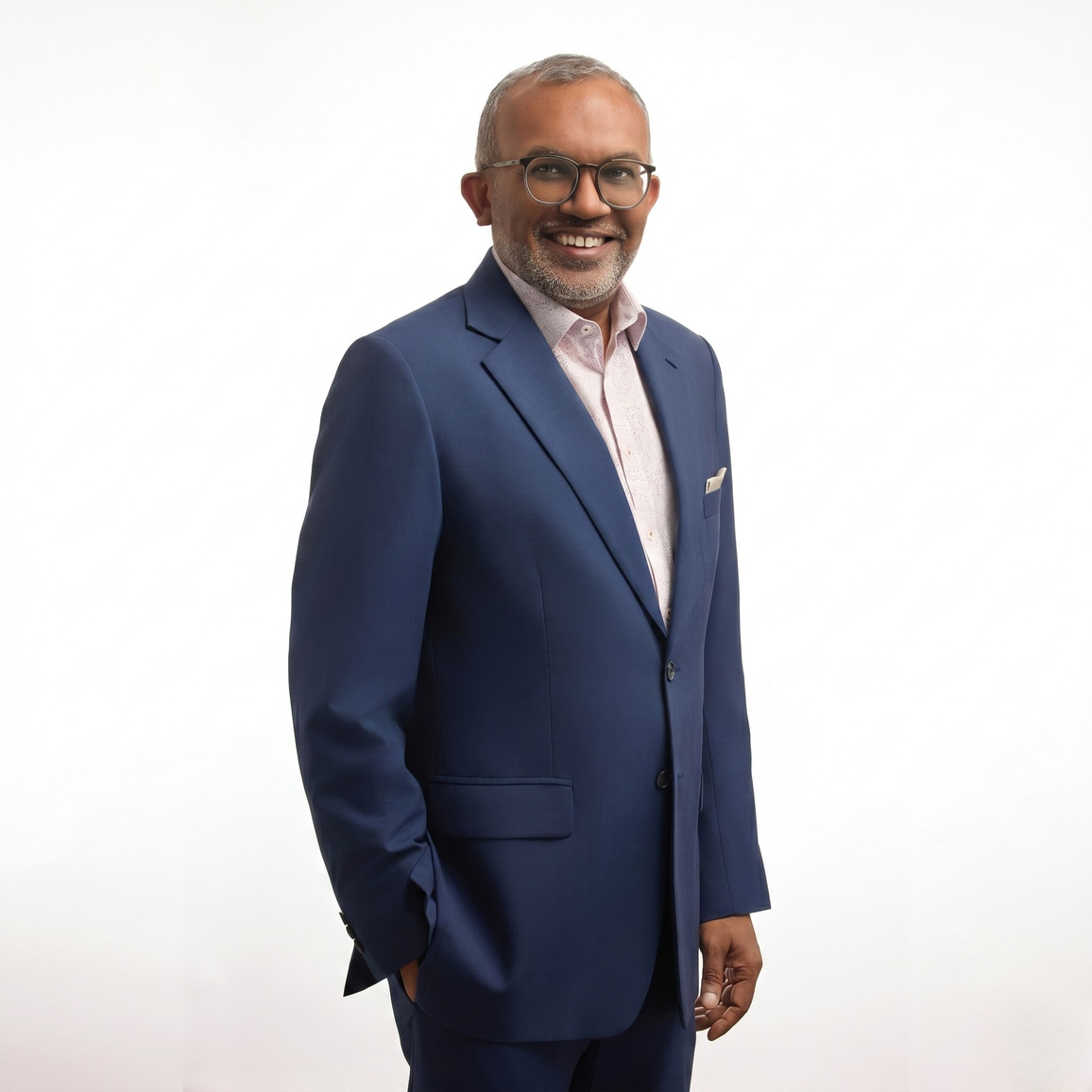
Fresh out of the studio, Bernard Leong sits down with Kiren Kumar, Deputy Chief Executive of the Infocomm Media Development Authority (IMDA) Singapore, for a conversation on how Singapore is building trusted AI at national scale. Kiren traces IMDA's arc from the 2018 Model AI Governance Framework to the Agentic AI framework launched at Davos this year, the four AI missions — advanced manufacturing, finance, connectivity, and healthcare — anchoring the next strategic bound, and the programs moving enterprises from pilots to production. He argues the real blocker is leadership rather than policy, that trust is Singapore's enduring competitive moat, and that the country must shift from 10% productivity gains to 10X transformation. The conversation closes with a preview of ATx Summit 2026 and what great looks like for Singapore's AI economy by the early 2030s.
"What would be amazing to see in Singapore is, number one, we have our large companies truly transforming themselves and becoming way bigger than they are today in the global competitive landscape—in manufacturing, in finance, in healthcare, and in connectivity. That's one. The second one is we are known globally as an economy where everybody in our workforce is AI-ready. Yeah, is AI fluent. The third thing I'm hoping to see is we have amazing AI native startups being born in our ecosystem, which are global in the niche areas that they can play in. We may not have the next OpenAI, but I'm hoping that we have a lot of new AI native technology companies that are developing products and services and solutions enabled by AI, powered by AI, transforming industries and creating a lot of growth." - Kiren Kumar
Profile: Kiren Kumar, Deputy Chief Executive Officer at Infocomm Media Development Authority (IMDA) of Singapore (LinkedIn)
Here is the edited transcript of our conversation:
Bernard Leong: Welcome to Analyse Podcast, the premier podcast dedicated to dissecting the pulse of business, technology, and media globally. I'm Bernard Leong, and if there is one country whose approach to trusted AI deployment is being studied closely by governments and enterprises all around the world right now, it is my home country, Singapore.
The conversation has moved past whether enterprises will adopt AI to whether the systems being deployed can be trusted, governed, and scaled across borders. The Infocomm Media Development Authority, or IMDA, has been at the centre of that challenge for nearly a decade — building the Model AI Governance Framework, AI Verify, and the world's first model AI governance framework for agentic AI, which was launched at Davos in January 2026.
Today, as AI moves from pilots into the operating systems of economies, with the ATx Summit 2026 about to convene four thousand global leaders in Singapore within the next week, the question of how Asia leads on trusted, deployable AI has never been sharper. With me today, Kiren Kumar, Deputy Chief Executive of IMDA, to discuss how Singapore is approaching trusted AI development, what it takes to move from AI exploration to real-world implementation, and how trust, governance, and interoperability are shaping AI growth across Asia. Kiren, welcome to the show.
Kiren Kumar: Thank you, Bernard, for having me. Great seeing you again.
Bernard Leong: I always like to start by asking about my guest's origin story. Tell me where you grew up, what shaped you in those formative years, and how your career journey unfolded. You joined Economic Development Board (EDB) in 2001 with overseas postings in New York for the Americas, and then in Stockholm as the centre director for the Nordics and Russia, before becoming the Deputy Chief Executive of IMDA today.
Kiren Kumar: Thank you so much for having me here. If I reflect on my journey, I was born and raised in Singapore, but I studied for my undergrad and my master's in the US. The year was 2001, during the dotcom fever in the Bay Area. I was at Stanford, and when I graduated, that was the time when the entire markets went down.
Because I spent so much time in the US, and I am a technologist at heart and also by training, I was enamoured by what technology can do to society, to the economy, to the lives of people. We have seen how the digital economy has transformed globally over many decades now. When I graduated, I came back to EDB, and since then I spent about 20 years there, and the last six years at IMDA.
If I summarise my career looking backwards, when I was there in the Bay Area, I had a vision. I had a mission. How do we make Singapore the tech hub of Asia? Therefore, if I look back at my career, everything I have done — from policies to infrastructure to industry development — has been all around the technology sector and growing Singapore as the tech hub we see today. Quite an exciting time. This is another turning point, another inflection point, that we are seeing with AI. The opportunities are tremendous, and I have never seen anything like it before.
Bernard Leong: Given you have seen the dotcom boom and bust, then Web 2.0, mobile — what pulled you into thinking about Singapore's economic agency track in the first place? Was there a moment or person or experience that actually pointed you in that direction?
Kiren Kumar: If I look back at my career, I have always been involved in the tech sector, and technology is a very profound enabler of growth for countries, for industries, and for individuals. While we were building the Singapore technology hub, we were working with the leaders of the world — from the Googles to the Alibabas — to attract them to invest in Singapore and grow our technology sector.
We have also grown a very credible startup ecosystem in Singapore that we are quite proud of in Asia. The technology sector today is a big part of our digital economy. Fun fact: about five years ago, our digital economy was about 12%. Today it is 19% of our GDP, which means one out of every five dollars in our GDP is coming from the digital economy. But the profound aspect is that it is a horizontal enabler driving growth in every sector, every company. Of the 19%, about 12% comes from the non-tech sector, and the rest comes from the technology sector. The beautiful thing here is that the entire economy in Singapore is moving forward with digital enablement, with technology, with new business models, with new innovations. We are very happy with that.
The second point: because we have built a credible technology sector, that has been a big enabler to drive the entire digital economy's growth. We have about 220,000 technology workforce in Singapore today building products and services for everyone — from startups to big tech companies to even large technology teams in DBS or a manufacturer. 60% of that workforce actually works in the non-technology sector, and 40% works in our technology sector. We are quite happy with the diversity we have built in our economy. I am excited about what AI brings for us to take our digital economy into the next lap.
Bernard Leong: Looking back across the 25 years, across your experience with EDB and IMDA, across continents, and across the different technology cycles, what career lessons would you share with my audience?
Kiren Kumar: I'll share one story. About 20 years ago, when I was a young officer at EDB, I was told to go to Stockholm. I was based there for three years, covering the Nordic markets — everything from Russia to Iceland and everything in between. In those days, the Googles of the world were Nokia and Ericsson. Those were my accounts, and I was working very hard to get them to invest in Singapore and build capabilities here to drive their global business.
Where are they today? Nokia and Ericsson used to be at the top, and then Apple came, Google came, and many others came. One learning lesson for me was that technology moves really fast, and it is even moving faster today. Companies that are leading yesterday may not lead in the future. But what is important for an economy to build is capability in our people. Companies will come and go, but the capabilities only grow. We are hoping that becomes the secret sauce of how we build our digital economy — working with leading companies from around the world to put investments in Singapore, building differentiated capabilities to drive growth. That model continues, but the clock speed has become a lot faster.
Bernard Leong: If you were to give a 25-year-old Kiren about to start at EDB today one piece of advice, given the age of AI has changed so much of where we are going — what would it be?
Kiren Kumar: If I were to rewind the clock and redo my entire career, the advice I would give myself is that the first job anyone coming out of school should have — this is my own personal view — is to work in a startup or start a company. That really teaches you how to use technology, build a business model, drive product and growth. In that journey, you actually learn a lot. After that, if you become a successful entrepreneur, or go and work for a big tech company, or work for the government, your worldview, your mental model, will be very global, very technology-grounded. You can drive a lot of innovations regardless of where you go in your career after that. If I were to do it all over again, I would build a startup.
Bernard Leong: So, we get to the main subject of the day. I want to talk about AI deployment across enterprises, governance, and maybe the upcoming ATx Summit as well. But before we begin, I have to help the audience all over the world. Can you give a comprehensive overview of the Infocomm Media Development Authority, or IMDA, Singapore — what are its core functions and mandate?
Kiren Kumar: The Infocomm Media Development Authority of Singapore — we like to call ourselves the architects of Singapore's digital future. We drive the economy and society for the digital future of Singapore. We have four key roles that we undertake to hit that mission.
First, we are a regulator of the telecommunication sector, the infrastructure in Singapore, and personal data protection. That regulatory function is a big role we play.
The second big role is industry development. How do we grow the tech sector together with our partners in government and the industry?
The third is how we drive digitalisation across the entire economy — from SMEs to large companies to mid-stack companies — and drive workforce development across the ecosystem for tech.
The last is how we build an international coalition around the world for technology investments, governance, and industry development.
We play multiple roles. We have many different mandates in one organisation. But the summary is that we are architects of Singapore's digital future, which is why we are driving a big part of Singapore's National AI Strategy. The second version was launched in 2023, and we are working on four key aspects of that strategy.
First, how do we have robust connectivity infrastructure — everything from data centres to submarine cables to satellites and telco infrastructure — to drive and enable the next bound of AI innovations?
The second big thing we are driving is digitalisation of the entire economy.
The third is talent development across the entire ecosystem with AI.
The last is how we have robust governance in place so that we can drive AI for public good in a responsible way.
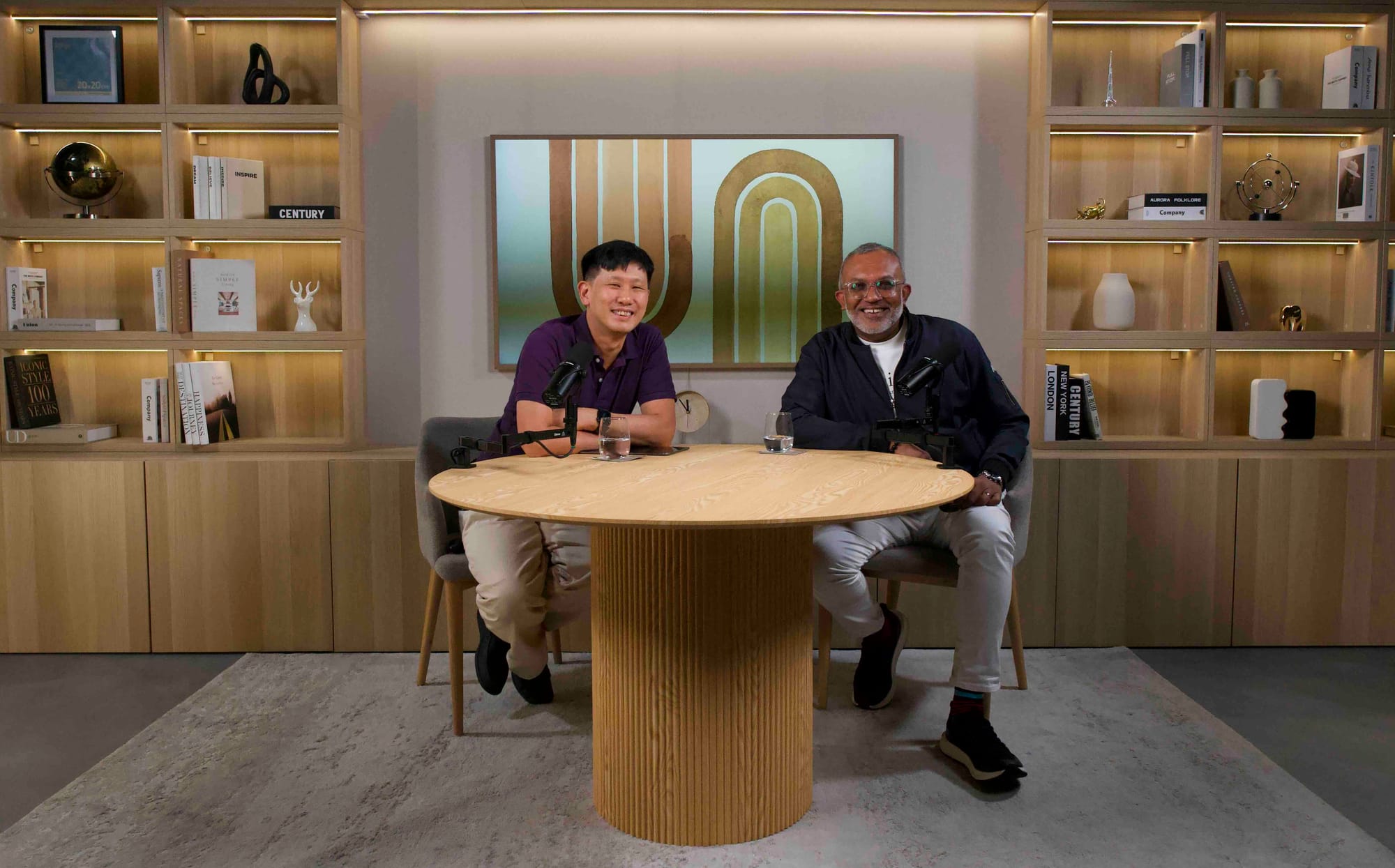
Bernard Leong: The National AI Strategy 2.0 came out about three years ago. Earlier this year you launched the Agentic AI Governance Framework in January 2026 at Davos. Whenever I am teaching in the Middle East — the UAE government, the Saudi Arabia government — Singapore is always seen to have built what is arguably the world's most coherent trusted AI architecture, from the Model AI Governance Framework in 2019, to AI Verify, to the Global AI Assurance Pilot, and now to the Model AI Governance Framework for Agentic AI. From where you sit at IMDA, how is Singapore approaching trusted AI deployment, and what makes the Singapore approach distinctive from other countries around the world?
Kiren Kumar: AI is at a very nascent stage, and the technology is evolving extremely fast. Model capabilities are increasing dramatically every few months — what you see with what Claude is doing, OpenAI is doing, Mistral, and many others. The philosophy we have taken — but before I go there — Singapore's brand globally, in the global economy and for any industry, has always been about trust. We are known as a trusted location, whether in aerospace, in pharmaceuticals, in semiconductors, and now also in AI. That is the starting point, and we think that is one huge advantage Singapore has in the world of AI.
We launched our very first Model AI Governance Framework at Davos in 2018. This was pre-GenAI. This was when our first AI strategy was in play, starting from 2017. Ever since then, GenAI came about, and technology is evolving so fast.
Our fundamental approach: there are countries that regulate technology, and there are countries that do not regulate technology. Our approach has been — how do we co-create with industry relevant model governance frameworks, tools, and platforms so that we can co-create on the policy, technology, and business model front before deploying these technologies at scale in various workflows? So that the deployment is a good one, the value is there, and it is a safe, trusted application of that technology. We do not believe that regulating it right now is the answer. It is about co-creating, which is why we launched the Model AI Governance Framework. But that is just a framework that we co-create with industry partners.
The next thing we did was create tools like Project Moonshot to actually bake those frameworks into a tool so you can test your models before you roll them out.
Bernard Leong: That is the sandbox, right?
Kiren Kumar: That is the sandbox. We have worked with many companies, workflows, and use cases around the world to do that in Singapore, and we publish the learnings from specific use cases so that the global ecosystem can benefit from it. Our next bound is really what we launched this year in Davos. We will have an update to the Model Governance Framework for Agentic AI also at ATx next week, because this technology is moving so fast, and agentic is quite different from GenAI. Agentic is a technology that can actually reason and act — take action in multiple steps, maybe with no human in the loop. Therein lies a lot of new risks that we need to take care of in terms of safety and reliability, and we are working with industry to update that. We have also launched the OpenClaw guidebook yesterday, because that is the talk of the town. There will be more technologies like that coming along.
Bernard Leong: I want to dive deep on that. The Global AI Assurance Pilot has 17 deployers across 10 sectors, together with 16 specialist AI sectors. Because we are talking about enterprise AI deployment — what surprised you most from those real-world deployments so far?
Kiren Kumar: What has surprised me most is — number one, there is a lot of interest around the world to deploy AI in enterprise workflows at scale. But a lot of it today is pilots. There are a lot of challenges to move from pilots to production. In order to move from pilot to production, what we have found as we work with companies is that they need a sandbox to play with the models and technology in a particular workflow or context — to ensure that their data, system architecture, and API connections to the rest of their corporate databases are done in a safe and reliable way. So that the tool does what it says it will do, the value is there, the safeguards and guardrails are put in place accurately. We need to ensure that they test it robustly before they put it into production. Pilot to production. No different from how an engine manufacturer will test his engines before they put them on a plane.
Bernard Leong: For example, in agentic AI — what we are really worried about, even as an AI deployment team — we work with a lot of customers. One of the fears we usually tell our clients of is that per every thousand, the error rate is almost one — a 1% error rate. One question I have: suppose sometimes, not within the intention of the deployment, something makes a mistake through the sandbox that we do not spot, but it goes into actual production. How do we deal with the non-deterministic nature of AI, from your perspective — just to get a mental model if certain mistakes were to happen?
Kiren Kumar: The technology is not perfect. No matter how much you test it in a sandbox and tweak it before you roll it out, the mental model is that there will be errors, there will be mistakes. 1% is not bad, actually. Deploying it and learning from there — having a mechanism, a technology response, a business response, to continually upgrade and tweak the system even after you have rolled it out. That is what we are learning from many companies we work with. There is no perfection before deployment, but you can take out as much risk as possible. It is no different from many other technologies today.
The technology is now coming to a point where it is becoming really useful. The hallucination has come down dramatically, and the techniques and tools of doing this are happening quite well.
The other bottleneck is, when you deploy a technology into your workflow, in your domain — whether you are a bank, a manufacturer — we are hearing a lot about a gap in the skills of the people. The technologists who built the product do not necessarily understand the domain where it is going to be deployed. We are hearing a lot about forward deployed engineers becoming a scarce commodity globally, because they need to really work hand-in-hand with the client — with the bank, the manufacturer, the government — to go in, understand the workflow, deploy the technology, test it. But the domain expertise of how it is being used sits in the client or the enterprise — that is critical. This model of co-creating and then deploying is becoming quite a feature when you talk about large-scale enterprise deployments. We are working with some of the big model developers to expand in Singapore — to create those forward deployed engineer roles for Singapore and the region. We think that will put Singapore in good stead to be a hub for AI deployment in the region.
Bernard Leong: I see that becoming more and more common, given that even as an AI builder myself, we work a lot as forward deployed engineers with our client customers' teams as well. I just wanted to go back to one more conversation to close the governance side. Why did IMDA decide to publish a separate Model AI Governance Framework specifically for agentic AI, rather than fold the agentic guidance into the existing framework, which you have published quite extensively?
Kiren Kumar: What is different in agentic AI, as I mentioned, is that this is really a technology that can reason and act in various workflows. GenAI could reason, but there was a human in the loop to make decisions. Now, with OpenClaw and many other agentic systems, you are going to have multiple agents working together. Then we need to rethink how we frame the Model Governance Framework. A lot of it comes from our first version, but we really need to update it. What we are launching at ATx — which is a relaunch of the agentic AI framework — is with real use cases. That is where the frameworks come to life in terms of how they are implemented, and that is going to be the difference here. Our model is that we will continue to iterate these frameworks because the technology is just moving so fast.
Bernard Leong: You alluded earlier, when we talked about enterprise deployment, to forward deployed engineers. Adoption is not deployment yet — but if you look at the SGD 2025 numbers, they already showed that Singapore's SME AI adoption has tripled in a single year. It was something like 4.2% to 14.5%, just to make sure I have the correct numbers. About 62.5% of non-small-medium businesses have also adopted AI. Most of the current consensus I hear — I teach a lot of SMEs and CEOs of different companies — is that the conversation is still stuck along what we call pilot purgatory. From your point of view, what does it actually take to move from AI exploration to real-world deployment across the economy?
Kiren Kumar: That is a great question. As I said earlier, we are still at the very early stages of this technology. There are a lot of pilots going around, or what they call POCs. That is an important part of the process. If you do not get your hands dirty, or you do not get onto a bike and fall down a few times, you are not going to learn how to ride a bicycle.
What I am seeing right now is — you mentioned the adoption numbers — the small and medium enterprises, the mid-stack companies, and the large companies are already moving. That pace is accelerating, with the numbers you just mentioned. The next bound is going to be: how do we move from the 10% to the 10X? Let me explain.
A lot of these pilots are: how do I drive productivity by 10%, 20%? That is useful, it is valuable, and we will do it. Coding agents, for instance, is an example of that. You drive tremendous productivity within your coders and software developers, and that is great. There have been a lot of 10% projects around, and that is very valuable. We should continue to drive that. But the next part of our strategy is: how do we get to 10X?
10X requires a fundamental transformation of the business, of the workflow, and then using the technology to drive a lot of innovation — where you create new business lines, new products, new services. Beyond the 10% to 10X. To get there, we have put in place a couple of different programs in our ecosystem. Let me explain it through a pyramid.
At the very top, your large multinationals, global leaders in every industry — from finance, banking, insurance, manufacturing, pharmaceuticals — we are getting them to set up what we call AI Centres of Excellence. Our target in our strategy was 100. We are already at 70, and we are well on our way to meeting that target and going beyond. They are setting up teams with technology expertise and domain expertise to go workflow by workflow, work on the 10% or the 10X. That has been very powerful to drive the transformation of the business from Singapore for the world.
For our local companies, which are very large, we have also recently launched the Champions of AI program. We are in the midst of identifying a few bellwethers who are local companies, and they have a large ecosystem under them to also drive that transformation. We think if we work with the queen bees, we can reach the ecosystem below. That is an intervention at the very top.
At the next level, EDB launched the Enterprise Compute Initiative. How do we provide compute capacity, GPU capacity, through big technology majors — everybody from Google, AWS, to Microsoft? Get the system integrators and consultants in. Give our mid-stack companies the opportunity to find workflows and innovate and change, with support.
We have also launched the Digital Leaders Accelerator Bootcamp. We hope to touch 2,000 mid-sized companies in our ecosystem to transform their workflows, and we are working with the likes of BCG, EY, and others to provide expertise, guidance, workshops. If they do well, we also have a Digital Leaders Program where we will fund them to set up a technology team. These tend to be companies that have already done the basic digitalisation. They are looking for the AI leap.
At the SME level, we have had a very successful program in SME Go Digital. We have touched more than 100,000 SMEs over the last 10 years. With AI, we are identifying new solutions — AI-enabled — that are relevant for SMEs. We fund them 50 cents to the dollar to adopt those, and that is going to be the next part of our program to drive AI adoption at the SME level. These are some of the programs we have put in place. We have shifted the approach a little bit, given the philosophy of "let's move from 10% to 10X."
Bernard Leong: I am surprised, because when you talk about the different programs, it is very customised for different segments of the enterprises. You talk about a 200-person Singapore small-medium business, and something as big as DBS, Intel, or a multinational like Google. OpenAI has set up here recently too. But if I were to ask a much deeper question — what is the single biggest blocker on the deployment side that even government policy alone cannot solve? Something that has to come from the industry itself. Where would that be?
Kiren Kumar: We work with the big companies, the mid companies, and the small companies. The biggest blocker today — policy aside, government support aside, all these are supply-side enablers — I fundamentally believe that this is a leadership question. The leaders of organisations, whether you are DBS or a 200-man SME in Singapore, in whatever sector — if the leadership is driven to drive change with AI, it starts with transformation. That leadership support and the gumption to actually change is going to be one critical factor.
The second blocker is capability. Mid-size companies — DBS has a large technology team, so they have the capability. Once they have the leadership and the capability combination, they can drive change. But for a lot of our mid-size companies and our small companies, they do not have a technology team. While they may have the leadership ambition to change, they may not have the team to help them get there. They understand the domain, they understand their business, but they do not have the technology assets. That is where guys like you come in to help them as well.
Bernard Leong: Interestingly, you mentioned this. I actually have a very large Singaporean company — contract manufacturing — where the chairperson with no technology background attended my technical class on large language models. She brought in her head of software and digital applications, and now they are talking about GPUs and hosting their own internal models. I find that across the different technology adoption cycles, this is probably the age of AI — the adoption seems to be driven much faster by senior-level people. I also notice it at the ground level, through teaching at NUS, with most of the students coming from all walks of life.
That comes to a question: Singapore has no natural resources. Our talent is really our most important resource, and that is one of the things — the Singapore government has put a lot of emphasis on the education piece. Help me think about this, because we see very different attitudes on AI now. If you go to the US, everybody is afraid of it. People are worried about increasing energy bills and have a very anti-AI attitude. In China, you get the opposite. You have grandmas using OpenClaw. You have a very optimistic attitude with technology — robotic servants, even in the restaurants in Shanghai and Shenzhen. But when we come back to Singapore — as a Singaporean myself — how do you think we are mentally prepared for this coming AI? I get two worldviews.
Just a small anecdote: I had a student who came in for one of my classes. He was unfortunately being made redundant. He had been in engineering for 20 years. He came in quite sceptical. In one of my classes, I taught him how to build an AI assistant to tailor his CV for companies using a custom GPT. A few months later he messaged me and said, "Thank you for showing me that demo." He got a job. That was one of the only few times I thought, "Hey, I think I have done something as a technologist for the world." But from your point of view, looking at the whole of Singapore through the lens of government, how are you thinking about it?
Kiren Kumar: If you look at various technology cycles over the last 60 years, Singapore has always leaned forward to embrace, adopt, and use technology in a responsible way. Whether it was computerisation, whether it was digitalisation — I do not think anything is going to be different with AI. AI is a huge opportunity for us to drive productivity. We are a small country with very limited resources, so this is going to be a huge enabler for us to become a much bigger red dot.
What does this mean for the workforce and our people? When we first started our strategy, technology was still early. In 2023, when we launched our National AI Strategy, we said we needed about 15,000 AI practitioners in our ecosystem. That was the number. We are more than halfway there now. It is growing really fast. These practitioners are defined as folks who can build and deploy enterprise-grade AI systems at scale. These are your experts. These are your FDE types.
But what we realise now is that every job, every worker, can be empowered by AI. You gave that example — even writing a CV, doing online marketing, accounting, auditing, you name it. Whether you are a lawyer, a marketer, an HR professional — not just a technologist. Everyone can be empowered and enabled by AI. We firmly believe in this, which is why we have launched, just earlier this year, the National AI Impact Program. This is about enabling every worker, every Singaporean, with AI competencies — be it AI literacy (basic understanding) or AI fluency (a much deeper understanding), applying it to your job and your workflow and becoming hyper-productive, to drive your own career and also to drive transformation in the business or company that you work for.
The National AI Impact Program — we have just launched it. We have said we will upskill 100,000 in our workforce with AI fluency, and we have identified four occupations to start with: HR professionals, accounting professionals, legal professionals, and marketing professionals. We are working with the professional bodies and the largest employers — whether government or private sector — to launch bite-sized, largely online courses with certification for their particular workflows in their occupation.
Take accounting, for instance. Let's identify three or four big workflows that every accountant has to touch. Let's automate that with AI. Bring the right tools, the right training, the right experience. So it is on-the-job training. It is contextual, not theoretical. We think this will actually help drive AI fluency in different occupations. That is the plan. We have just rolled out a few, and you will see more being rolled out in the future.
Bernard Leong: Would you be extending this for younger graduates? The issue now in the market is that younger graduates are trying to look for entry-level jobs, but there is a transition needed to bring them into becoming professionals — for example, the accountants, the legal, the HR roles that you mentioned.
Kiren Kumar: Absolutely. The National AI Impact Program is for every worker currently holding that occupation in our ecosystem today. You could be a 30-year-old, 40-year-old, 50-year-old accountant, and you can come and take those programs. What we are doing is that the pipeline of our final-year students — whether you are at a university or polytechnic — we are going to take them through these programs too. Before they graduate, they already know what the professionals with experience in those sectors are doing. We hope this will close the gap of their experience base before they go into the workforce. How do we get them to be job-ready or AI-ready is part of the feature of the programs we are rolling out.
Bernard Leong: I want to come back to a question on Singapore. When people in the US think about AI governance, they think it is a tax on speed. They will think that. But for Singapore, I do not feel that way. Trusted AI can be a competitive advantage. As more and more countries move from talking about AI to operationalising it at scale, how does trust actually become a moat rather than a constraint?
Kiren Kumar: If I take a step back — you may ask, where does Singapore play vis-à-vis the big innovation hubs creating a lot of technology for AI? Be it Silicon Valley, Shanghai, Shenzhen, or anywhere else in the world. We strongly believe that Singapore is positioned to be a deployer of these technologies at scale in a responsible, trusted way.
Our Prime Minister just announced our AI missions. The next bound of our AI strategy is going to be driven around the missions. Up till now, a lot of our strategies focused on the enablers — infrastructure, talent, adoption, education. All these are no-regret moves for us, and we are working with industry to make sure they are relevant. But the next bound is: how do we push it towards four missions?
We have identified four sectors where we think Singapore has scale, global reach, and these are large sectors in our economy, and they are highly trusted sectors: advanced manufacturing, finance, connectivity, and healthcare. If you look at the workflows within these four sectors, they are critical sectors around the world. They are globally connected, and trust and reliability is the raison d'être for these sectors.
Bernard Leong: They still need a lot of human judgment as well.
Kiren Kumar: Absolutely. Therefore, we are picking these four missions because we are going to position Singapore as a sandbox where globally leading companies come to play with our leaders in this sector to create new technologies for different workflows — where we can co-create policy, technology, business model, and apply it at scale for the global economy. We think that will be our 10X for these four sectors. We think that is a way to manifest trust and reliability in AI in real workflows, in real industries, in real jobs.
Bernard Leong: When it comes to thinking about that piece, we also talk about standards. In software, we have ISO 27001. Singapore is now championing ISO/IEC 42119-8 — the first international standard for GenAI systems, with 35 national bodies and 250-plus experts coming for a plenary in Singapore. Do you think owning the standards layer strategically is important, and what does that mean for Singapore moving forward?
Kiren Kumar: AI is moving so fast, and actually, standards eventually will be very important. Why are standards important? Because interoperability of these technologies across jurisdictions and industries is going to be the secret sauce for how AI really gets deployed at scale in a reasonable, responsible manner.
We stand for standards, and we are helping to shape them actively with like-minded countries from around the world. It will take time, because technology is moving quite fast. But this is an important conversation to have while we are developing these technologies — to actually get some alignment on certain key parts of the framework. It may not be totally the same in every country, because every country has unique nuances, biases, cultures, languages. No one AI system will behave the same everywhere. There will be some commonality through standards, but some customisation by cultural context in different countries. That is going to be an important driver for interoperability and safe, responsible deployment of this technology with local customisation when needed.
Bernard Leong: The ATx Summit is going to happen next week, with about 4,000 leaders from 50 countries. Singapore's digital economy, as you said, is now 18.6% of GDP. What is IMDA seeing on the ground in terms of enterprise uptake and ecosystem development that the headlines might be missing, and what is going to be happening at the ATx Summit?
Kiren Kumar: This is the sixth edition of ATx — Asia Tech Exchange Singapore. There are two key platforms: the ATx Summit, which happens at Capella and is invite-only, and ATx Enterprise, which happens at Expo. It is a large trade show with more than 30,000 people.
At ATx Summit this year at Capella, we are expecting about 4,000 global leaders — industry leaders, technology leaders, academia leaders, and government leaders — who are coming to discuss tomorrow's technology opportunities today. Some of the key themes we are exploring within this Summit reflect the global zeitgeist.
Number one is agentic AI and the next bound of the technology. Number two: where is agentic AI being used in the enterprise? What are some of the blockers? How do we overcome those? What about physical AI and embodied AI, which is really the next bound of technology — robotics? We are also talking a lot about AI governance. How do countries, how do companies, think about that? Our AI assurance sandbox that we talked about earlier, our Model Governance Framework that we talked about earlier, will be discussed as well. We are also going to have leaders discussing the societal impact of AI adoption, and how societies and countries can respond to make sure they are driving AI for public good — in their countries, in our region as well.
Lots of heavy topics that are in every leader's mind today — not just for Singapore, but for the world — and we expect a very robust discussion. We have some amazing leaders coming to Singapore next week. We are going to have Ajay Banga, the former CEO of Mastercard and President of the World Bank, in Singapore at ATx, sharing his views on jobs. His topic is the 1.2 billion challenge. We are going to have the Chief Revenue Officer of OpenAI, Denise Dresser. I'll be interviewing her on stage. It will be great to see the insights of a frontier model company that might IPO soon — what are some of their future strategies, and how do they see enterprise adoption and the workforce moving.
We are going to have Bill Dally, the Chief Scientist of NVIDIA, sharing about NVIDIA's technology roadmaps to the future — everything from chips to embodied AI to resource-efficient AI, given the power take you have within AI infrastructure. We are going to have Peter Schwartz, who is a futurist at Salesforce. He is always amazing to hear. We have many, many leaders like that, an amazing lineup of panels. We are looking forward to welcoming our global guests to Singapore. Singapore is very quickly becoming the Davos for technology when it comes to some of these issues of our time.
Bernard Leong: AI adoption is projected to deliver around $198.3 billion in economic benefits to Singapore by 2030. What does Singapore have to get right between now and then to capture the value, and what could derail that?
Kiren Kumar: What we need to get right is the four missions I mentioned. We need to play big. We need to play 10X. Second, we need to get every enterprise to start adopting these technologies. Third, to upskill our workforce at scale. This will evolve, but we need to start now and iterate from there. Fourth, we need to get our policies and governance frameworks right so that we can actually drive towards AI for public good in Singapore.
What could derail some of these things? One is leadership, as I mentioned, and ambition. Two is, of course, geopolitical forces at play — which we cannot control — but we will need to see how we navigate them responsibly for the benefit and interest of Singapore to become a major player in AI, at least in our region if not the world.
Bernard Leong: I have a couple of very quick questions, and you speak your mind. What is the one thing you know about deploying trusted AI at national scale that very few people actually do?
Kiren Kumar: It is hard work. You need to get a lot of stars aligned before this can be deployed at scale. The secret to this is there is no secret. You just have to start by experimenting, working small, learning while you do it, and slowly you will get better — then you can play the big game.
Bernard Leong: Also bring people together. Singapore always does.
Kiren Kumar: Absolutely. AI, unlike any other technology area, is moving so fast. It is a contact sport. You need to do it, learn it. It is an iterative process, and the more you do, the better you get. I always joke that if you want to learn how to ride a bicycle, you just have to get on it.
Bernard Leong: What is the one question you wish more people would ask you about IMDA's work in AI, but they don't?
Kiren Kumar: At the end of the day, we speak a lot about frontier technology. Technology is moving so fast — how does the government keep up? We call ourselves the architects of Singapore's digital future, but to be an architect, you need to know where technology is going.
What people do not know is that we have become very agile as an organisation. We have brought in a lot of technologists who understand the technology deeply. We do a lot of watchtower work. We do a lot of unboxing work to actually understand the technologies. We talk to some of the frontier companies in the world to have a point of view on where technology is going — whether it is agentic, embodied AI, quantum computing, quantum communications, and many others — so we can start developing the right policies, the right programs, and also iterate them after we roll them out, because the technology is moving so fast. Being agile, knowing the technology, is a new capability and competency we have brought into the organisation to help us do our work and mission better.
The last thing is — because we have many different functions in the organisation, everything from regulations to industry development to digitalisation to governance to international — how do we work together as One IMDA, where those competencies and capabilities, if brought together in a meaningful way, can help us punch above our weight as a country as well?
Bernard Leong: My traditional closing question: what does great look like for Singapore's AI economy and for IMDA's work in the next few years in this era of AI — before quantum computing, of course?
Kiren Kumar: That is a very good question. We have a lot of KPIs and trackers and all that. But if you ask me personally, in five years, what would be amazing to see in Singapore is:
Number one — we have our large companies truly transforming themselves and becoming way bigger than they are today in the global competitive landscape, in manufacturing, finance, healthcare, and connectivity.
The second — we are known globally as an economy where everybody in our workforce is AI-ready, is AI-fluent.
The third — we have amazing AI-native startups being born in our ecosystem, which are global in the niche areas they can play in. We may not have the next OpenAI, but I am hoping that we have a lot of new AI-native technology companies developing products, services, and solutions enabled by AI, powered by AI, transforming industries and creating a lot of growth.
These are the three things I am hoping for. I am wondering what you are hoping for.
Bernard Leong: I am also hoping for exactly the same. Kiren, many thanks for coming on the show. It is a really great topic to have a conversation about. For me as a Singaporean, very proud that we are actually leading a lot in terms of things like governance and working with the international community, bringing Singapore to be one of the very AI-enlightened countries out there. In closing, I have two quick questions. Any recommendations that have inspired you recently?
Kiren Kumar: One area we are looking at — I mentioned some of the frontier. We spoke a lot about AI adoption and agentic AI in the enterprise, but physical AI excites me. Embodied AI excites me. We have seen a lot of robots being deployed everywhere in the world. They are cute. They bring food to you. They are concierge robots. But with the technology and the next bound — what we see — this could be a dramatic game changer as the next bound of AI. We have invested a lot in embodied AI as a country, and we are now looking at launching an industry consortium where we are going to have use case owners, some of the best robotics companies from around the world, some of the best cloud companies, as well as chip companies and AI companies from around the world, coming together to form a consortium to look at embodied AI research, testing, and deployment in Singapore. We will be announcing that at ATx, so stay tuned to see what Singapore has in store for the next bound of AI.
Bernard Leong: I'll put a link there when the episode is up. Awesome. How can my audience find you and the work at IMDA?
Kiren Kumar: I am on LinkedIn. We have an IMDA page on LinkedIn, Instagram, and others — please follow us there. ATx has its own page, so please follow us there to keep up with the various announcements and activities happening at ATx Summit. We also organise ATx Inspire, where we have hosted Jensen Huang, Sam Altman, Li Fei-fei, and Bill Gates in Singapore whenever they are in town. If you want to come, please follow our page, and we'll see you there.
Bernard Leong: You can definitely find this podcast everywhere, so subscribe to us on YouTube, Spotify, and everywhere else. Kiren, many thanks for coming on the show, and we look forward to speaking again.
Kiren Kumar: Thank you so much, Bernard. Thanks for having me.


Podcast Information: Bernard Leong (@bernardleong, Linkedin) hosts and produces the show. Proper credits for the intro and end music: "Energetic Sports Drive" and the episode is mixed & edited in both video and audio format by G. Thomas Craig (@gthomascraig, LinkedIn).